
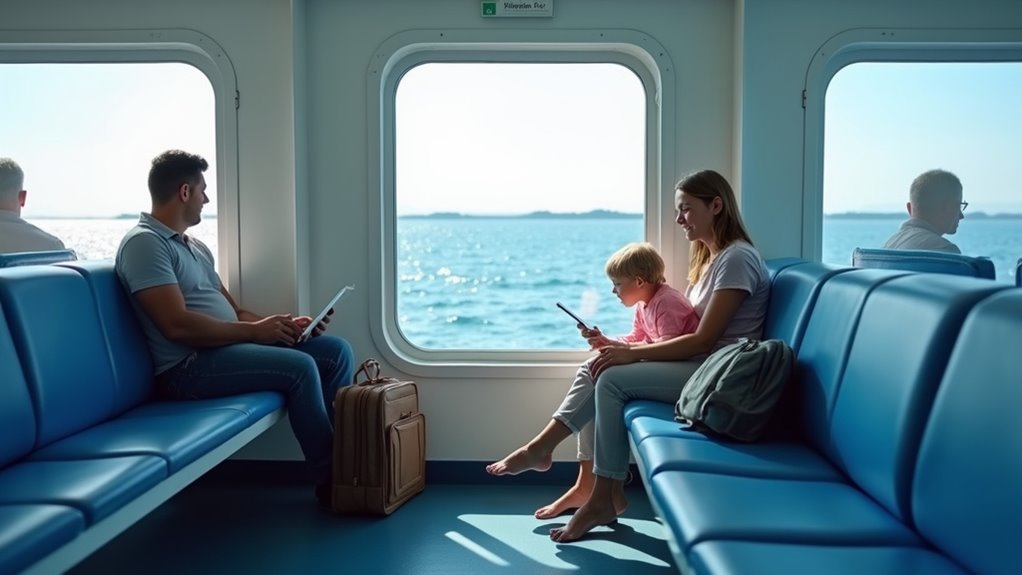
You’ll want to gather all essential documents and pack a separate onboard bag with medications, snacks, and entertainment since vehicle decks remain sealed during crossing. Choose premium cabins with ensuite bathrooms and balconies for comfort, guarantee proper life jacket fit by weight for children, and establish clear safety boundaries like no running or leaning over railings. Implement a buddy system pairing adults with specific children, pack activity kits, and plan supplies for 1.5 times the scheduled journey duration for unexpected delays.
- Prepare Essential Documents and Entertainment Before Departure
- Pack Smart and Avoid Vehicle Deck Storage
- Choose Premium Cabins for Maximum Comfort
- Ensure Proper Life Jacket Fit for All Family Members
- Establish Clear Onboard Safety Rules for Children
- Take Advantage of Onboard Entertainment Facilities
- Invest in Kids’ Activity Packs and Snacks
- Implement the Buddy System for Supervision
- Understand Ferry Safety Statistics and Risk Factors
- Appreciate Modern Vessel Safety Improvements
- The Sum Up
Prepare Essential Documents and Entertainment Before Departure
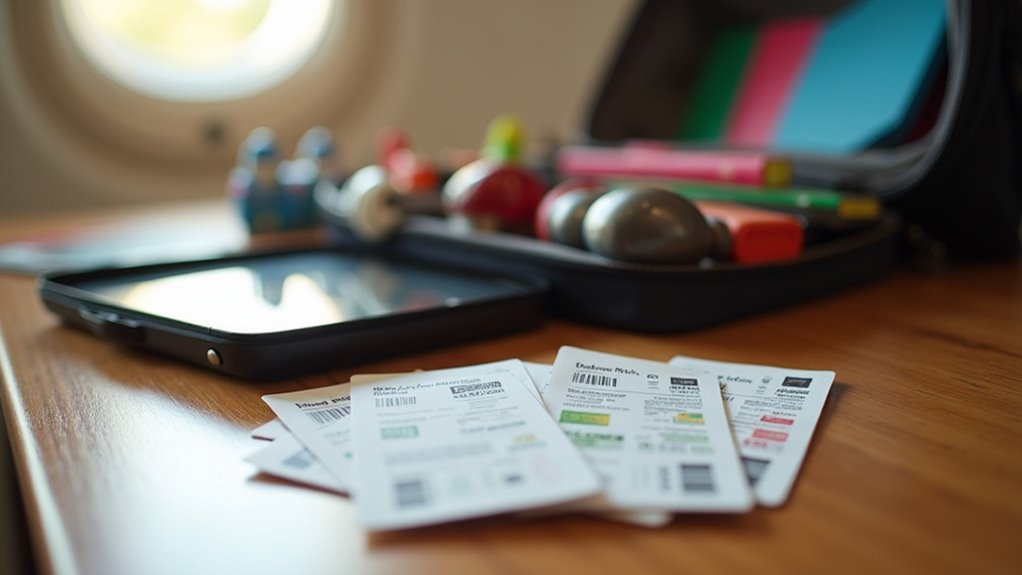
Before you even think about boarding that ferry, gather and organize every document your family needs—because nothing turns a relaxing voyage into a nightmare faster than realizing you’ve forgotten someone’s passport at the departure gate.
Check that everyone’s passports won’t expire within six months of travel, and verify visa requirements for each destination. Print your ferry confirmations and store them offline on your phone as backup.
Don’t forget the often-overlooked paperwork: consent letters for kids traveling without both parents, prescription documentation, and vaccination records. Store copies separately from originals—keep digital backups in the cloud and paper copies in different bags.
Finally, pack entertainment strategically. Download movies beforehand, bring headphones for everyone, and pack quiet activities like puzzle books to keep kids occupied during long crossings. The ferry’s free Wi-Fi is available but too slow for streaming, so prepare offline content in advance.
Pack Smart and Avoid Vehicle Deck Storage
Once you’re aboard that ferry, your car becomes surprisingly off-limits—so pack like you’re catching a flight instead of driving onto a boat. Create a dedicated onboard bag (20-30L max) with everything you’ll need during the crossing: medications, documents, car keys, baby supplies, and chargers.
Vehicle decks often stay sealed for safety reasons, emergency drills, or rough weather—sometimes even past arrival time.
Keep your bag water-resistant and under 10kg for easier handling on stairs. Pack layered clothing, snacks, entertainment, and spare outfits in transparent pouches for quick security checks. Store electronics and personal items in clear, labeled bins to prevent damage from moisture and make them easier to locate when needed.
Think 1.5 times longer than the scheduled crossing when calculating supplies. Motion-sickness remedies and basic first-aid items should stay with you, not locked away below deck.
Choose Premium Cabins for Maximum Comfort
While standard ferry cabins might seem adequate on paper, premium accommodations transform overnight crossings from endurance tests into genuine rest periods for your family. You’ll get larger, higher-quality beds and ensuite bathrooms that eliminate nighttime queuing with sleepy children.
Enhanced soundproofing keeps engine noise at bay, while independent air conditioning lets you control temperature precisely.
Premium cabins offer considerably more space—often 18-45 square meters in suites—with flexible layouts featuring sofa beds and separate seating areas. Your kids can play while maintaining distinct sleeping zones. These accommodations create a safe environment where children can rest and play comfortably while parents supervise without disturbing other passengers.
Private balconies provide natural light and reduce cabin fever during long crossings.
Added amenities like satellite TV, complimentary snacks, and in-cabin breakfast service minimize trips through crowded public areas.
You’ll also enjoy priority boarding and disembarkation, reducing pre-departure stress and chaotic exits.
Ensure Proper Life Jacket Fit for All Family Members
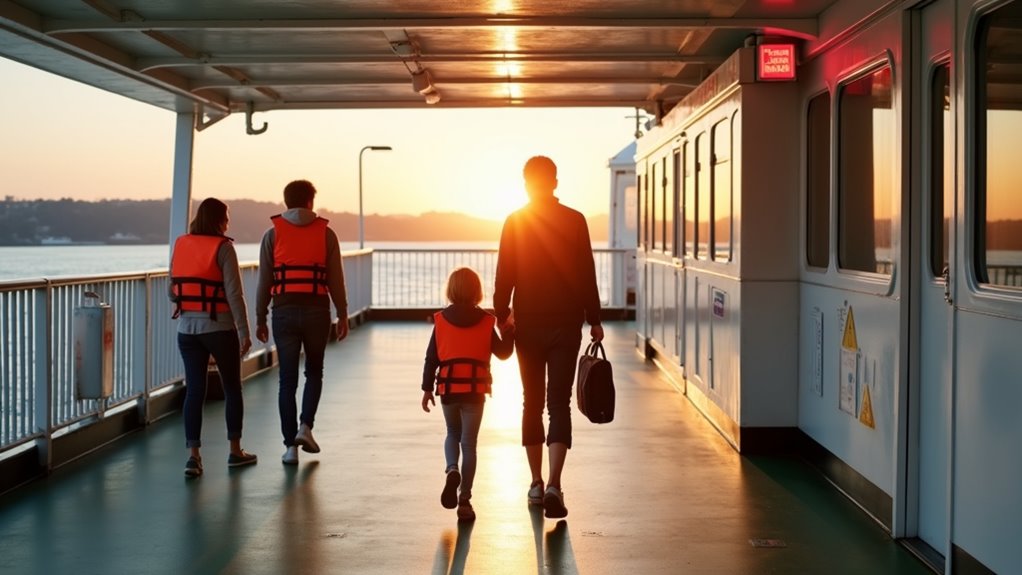
Beyond securing comfortable accommodations, your family’s safety depends on properly fitted life jackets for every member aboard. Size children’s jackets by weight—infant (8-30 pounds), child (30-50 pounds), youth (50-90 pounds)—while adults need chest measurements at the broadest point.
Only choose US Coast Guard-approved jackets, as children under 13 must wear them on moving boats.
Test the fit using the shoulder pull method: buckle everything snugly, then pull up from behind the shoulders. The jacket shouldn’t rise above your child’s chin or ears. Have them raise their arms overhead to double-check.
Ensure comfortable movement without shoulder gaps, and verify the jacket keeps their mouth above water level. Check sizing annually as kids grow quickly. Practice a floating test in calm water to confirm the jacket performs properly and helps your child feel confident wearing it.
Establish Clear Onboard Safety Rules for Children

After everyone’s properly fitted with life jackets, you’ll need to set firm safety boundaries that keep your children secure while moving around the vessel. Establish a strict no-running, no-horseplay rule in all areas—wet decks and moving surfaces create serious slip risks. Your kids should walk only, using handrails on stairs and moving one at a time to prevent pile-ups during ship motion.
Create clear zones: children can’t enter crew-only areas, maintenance spaces, or go behind restricted signage. Keep younger kids in designated family areas and supervised deck sections. Implement a buddy system where siblings stay together, and establish regular check-ins every 15-30 minutes.
Always designate one responsible adult who knows each child’s exact location and activity—communication prevents dangerous wandering. When children understand the importance of no leaning over railings, they’ll be less likely to engage in risky behavior that could lead to serious injury.
Take Advantage of Onboard Entertainment Facilities
Once you’ve established those safety boundaries, smart parents know that keeping kids engaged is half the battle won. Modern ferries offer fantastic entertainment facilities that’ll transform your crossing from survival mode into actual family fun.
Head straight to the kids’ clubs and play areas—these aren’t afterthoughts but professionally designed spaces with age-appropriate zones. You’ll find soft-play structures for toddlers, game areas for older kids, and even teen hangouts.
The best part? Many are positioned near cafés so you can supervise while grabbing coffee.
Don’t overlook digital entertainment either. Reliable Wi-Fi means streaming apps work, and charging stations keep devices powered. Many ferries offer pre-loaded entertainment portals with kids’ content. Some forward-thinking vessels now feature VR arcade games that provide immersive experiences similar to land-based family entertainment centers.
Check the daily activity schedule too—story time, crafts, and mini-discos break up the journey perfectly.
Invest in Kids’ Activity Packs and Snacks
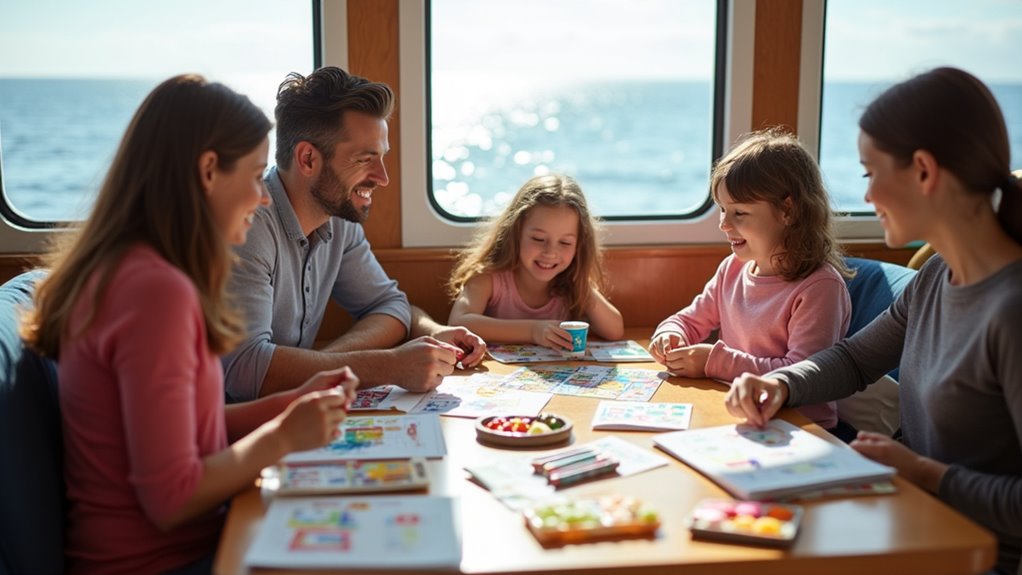
The right activity pack can be your secret weapon against restless kids and ferry-induced meltdowns. Choose compact, quiet options like coloring books, magnetic travel games, and puzzle books that won’t disturb other passengers or slide around on moving decks.
Pack separate mini-bundles for each hour of crossing time—this prevents kids from burning through everything immediately and gives you backup activities if delays occur.
For snacks, stick with dry, low-mess options like rice cakes and breadsticks in resealable containers. Light, bland choices help prevent motion sickness, while avoiding sugary treats prevents energy crashes.
Schedule snack breaks every 60-90 minutes to create predictable structure, and link new activities to snack time to encourage calm, seated behavior throughout your journey. Take advantage of ferries’ spacious decks and onboard elevators, which make it easy for families to move around and find comfortable spots when kids need a change of scenery.
Implement the Buddy System for Supervision
While activity packs keep kids occupied, maintaining proper supervision becomes your next priority on busy ferry decks. You’ll want to implement a buddy system that pairs each adult with specific children or vulnerable family members. This maritime safety protocol guarantees someone’s always watching each child during the crossing.
Designate clear entry and exit points where buddies stay together, and assign roles like spotter and responder within your group. The key is maintaining visual contact throughout the journey, especially in crowded or moving environments.
This system dramatically reduces response time when incidents occur compared to independent supervision. You’ll find it complements standard safety procedures while addressing concerns about high-speed ferry operations.
The buddy approach helps prevent abandonment fears and ensures equitable family access to safe ferry travel. Research from maritime safety experts demonstrates that paired vessel navigation significantly improves emergency response capabilities in challenging marine environments.
Understand Ferry Safety Statistics and Risk Factors
Although ferry disasters make headlines worldwide, you’ll find the actual risk varies dramatically depending on where and how you travel. If you’re sailing in developed countries, you’re incredibly safe—only 20 fatalities occurred globally in these regions during 2023, mostly involving small tourist boats due to operator error.
The real risks concentrate in specific areas: 90% of ferry fatalities happen in just 20 countries, with Africa and South Asia dominating statistics. Human error causes 75-92% of fatal accidents, often involving overcrowded, poorly maintained wooden vessels lacking life-saving equipment. Crew fatigue from irregular schedules and long working hours significantly impairs decision-making abilities and increases the likelihood of navigational errors.
When planning your family trip, choose modern ferries with proper safety certifications. Avoid overloaded boats and ensure life jackets are available. Your risk drops dramatically when you select reputable operators in regulated waters.
Appreciate Modern Vessel Safety Improvements
Since the devastating ferry disasters of the 1980s and 1990s, maritime engineers have revolutionized passenger vessel safety through cutting-edge technology and stringent international regulations.
You’ll find today’s ferries equipped with sophisticated monitoring systems that track everything from door closures to water leakage in real-time.
Modern vessels feature power-operated watertight doors that can seal within 60 seconds, plus advanced stability monitoring that alerts crews to potential risks before they become dangerous.
You’re also traveling on ships with ECDIS navigation systems and AIS technology that prevent collisions, while some cutting-edge electric foiling vessels like the Artemis EF-24 use autonomous flight control for unprecedented stability. These innovative vessels are built to meet the IMO High-Speed Craft Code, which provides internationally recognized safety standards for high-speed passenger transport.
These aren’t just incremental improvements—they’re game-changing safety advances that make your family’s journey considerably safer than ever before.
The Sum Up
You’ve got all the tools for a smooth family ferry adventure. Don’t let stress overshadow the excitement of your journey—these tips will keep everyone safe and entertained. Remember, ferry travel’s statistically safer than driving, so relax and enjoy the unique experience. Your kids will love the novelty, and you’ll appreciate the break from being behind the wheel. Pack smart, stay vigilant, and make memories that’ll last long after you reach your destination.