
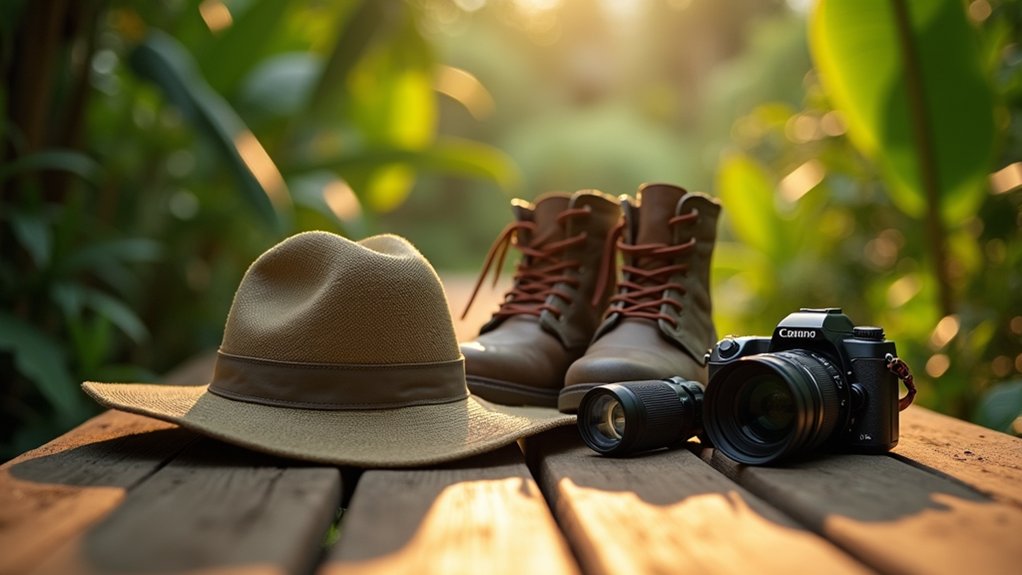
You’ll need your passport (valid 6+ months), Thai Baht cash for tips and snacks, and prescription medicines in original bottles for your Elephant Hills adventure. Pack lightweight, quick-dry clothing, sturdy water-friendly shoes, and a small day pack for transfers. Don’t forget high-SPF sunscreen, mosquito repellent, a wide-brimmed hat, and sunglasses for jungle protection. Bring your camera for amazing wildlife shots and entertainment items like cards or books for relaxing evenings in your tent—there’s much more to contemplate for this incredible journey.
- Passport and Immigration Documentation
- Cash for On-Site Purchases
- Personal Medicines and First Aid Supplies
- Lightweight Humidity-Friendly Clothing
- Non-Slip Hiking Shoes or Sturdy Sandals
- Water-Friendly Footwear for River Activities
- High-SPF Sunscreen and Sun Protection
- Mosquito Repellent for Jungle Protection
- Lightweight Long-Sleeve Protection Clothing
- Swimwear for Lake and Water Activities
- Waterproof Rain Protection Gear
- Small Day Pack for Camp Transfers
- Camera or Phone for Wildlife Photography
- Hat and Sunglasses for Outdoor Activities
- Entertainment Items for Tent Downtime
- Last Words
Passport and Immigration Documentation
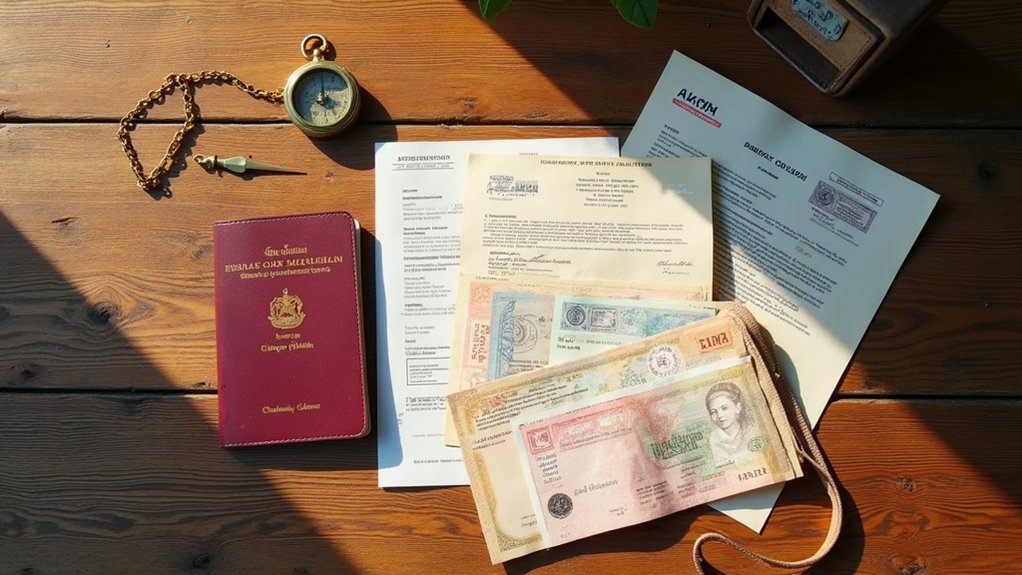
Why does proper documentation matter so much for your Thailand adventure? Without the right paperwork, you won’t even make it past the airport!
Your passport needs six months of validity left from when you arrive, plus at least one blank page for stamps. Don’t count endorsement pages – they won’t work.
Starting May 1, 2025, you’ll need Thailand’s Digital Arrival Card (TDAC) too. Submit it online at tdac.immigration.go.th within 72 hours before arriving. It’s completely free! This requirement applies to all foreign nationals, including travelers, business travelers, and long-term visa holders.
You’ll need your passport details, flight info, and where you’re staying. Print or save the confirmation email to show immigration officers.
Skip these steps and you risk being turned away at the border – nobody wants that expensive mistake!
Cash for On-Site Purchases
Even though Elephant Hills accepts card payments for most activities, you’ll want cash in your pocket for those special extras that make your adventure unforgettable. Bring Thai Baht (THB) for snacks, souvenirs, and tips for your guides.
You’ll find THB banknotes in 20, 50, 100, 500, and 1,000 denominations, plus coins worth 1, 2, 5, and 10 baht.
Before your trip, exchange money at SuperRich Thailand or currency booths in Bangkok, Chiang Mai, or Phuket for the best rates. Skip airport exchanges since they’re more expensive. Handle your Thai banknotes with care and respect, as they feature the King’s image and damaging them is prohibited by law.
Always pay in THB rather than dollars to save money. Bring your passport for larger exchanges, and check rates on Google Currency Converter or XE.com first.
Personal Medicines and First Aid Supplies

While Elephant Hills provides excellent on-site medical support, you’ll need your own travel insurance and personal medical supplies to stay safe during your Thai adventure.
Pack your regular prescription medicines in original bottles, plus extras in case of delays. Bring basic first aid items like hand sanitizer, bug spray, and sunscreen for jungle protection.
Don’t forget diarrhea medicine and stomach bug antibiotics – new foods can upset tummies! If you have allergies, pack your treatments and tell the camp when booking so they can help with meals.
A reusable water bottle saves money and keeps you hydrated using the camp’s safe water stations. The camp’s refill water stations help reduce plastic waste while keeping you properly hydrated throughout your stay.
Visit a tropical doctor before traveling for the best health advice.
Lightweight Humidity-Friendly Clothing
Because Thailand’s jungle climate stays hot and sticky all day, you’ll want clothes that breathe and dry fast to keep you comfortable during your elephant adventure. Pack lightweight cotton gauze shirts and loose-fitting cargo pants that won’t cling to your skin when you sweat. Merino wool tees work great because they fight bad smells naturally and wick moisture away from your body.
Choose clothes with UPF 50+ sun protection to shield your skin from harmful rays. Wide-leg pants and boxy shirts let air flow around you, keeping you cooler. Polyester blends dry super quickly after washing, so you can pack fewer items and save money. Wrinkle-free fabrics reduce maintenance and help your clothing stay fresh in Thailand’s humid jungle conditions. Avoid heavy fabrics that trap heat and make you miserable in the humidity.
Non-Slip Hiking Shoes or Sturdy Sandals
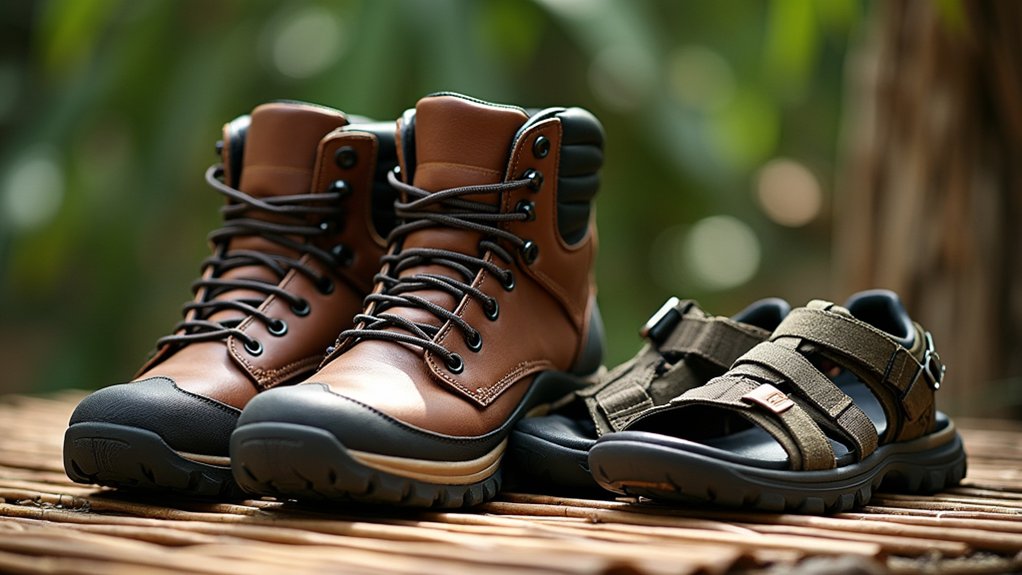
Since Elephant Hills’ jungle trails get slippery and muddy, you’ll need shoes that won’t let you slip and fall during your 2.5-hour trek. Your feet will get wet from stream walking at the start, so choose quick-drying options.
For dry season, old trainers work perfectly fine. Don’t spend money on expensive hiking boots – they’re overkill for these family-friendly trails. Regular sneakers with good grip will keep you safe on dusty paths and sharp rocks.
During wet season, non-slip trainers or waterproof shoes prevent uncomfortable soggy feet for two hours. Sturdy sandals also work well, but avoid open-toed ones on jungle sections with sharp rocks. The trails also wind through areas where you might spot Asian elephants roaming freely in their natural habitat.
The resort provides walking sticks, but your shoes need reliable traction for steep climbs and twisted roots.
Water-Friendly Footwear for River Activities
After you’ve tackled the jungle trails, you’ll need different shoes for Elephant Hills’ exciting water adventures. Quick-drying water shoes with secure straps are great for rafting on Class II-III rapids like Song Phraek River. The straps prevent losing your shoes in fast-moving water, and they’re much safer than flip-flops when bathing elephants in muddy ponds.
For kayaking on River Kwai or bamboo rafting, strapped sandals or aquatic shoes provide excellent grip on slippery surfaces. If you’re budget-conscious, old sneakers work great for elephant pond activities – just plan to throw them away afterward due to the smell from animal waste.
Mesh aqua shoes drain water quickly and prevent blisters during long paddling sessions, making them ideal for multiple water activities. These shoes are especially important since kayaking experiences require minimum booking of 2 persons and often involve extended time on the water.
High-SPF Sunscreen and Sun Protection
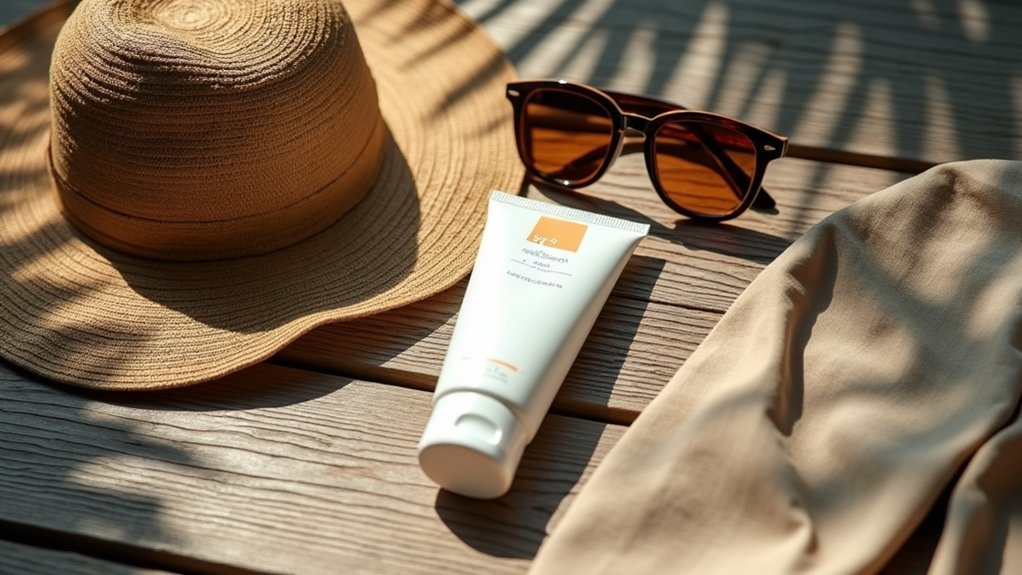
When you’re exploring Thailand’s emerald lakes and dense rainforests, the tropical sun hits much harder than back home. You’ll need SPF 25-50 sunscreen for all outdoor activities, especially if you have fair skin. Pack enough from home since Thai sunscreens cost more and often contain whitening agents that prevent tanning.
Don’t forget essential sun gear: a wide-brimmed hat for kayaking, UV-protective sunglasses, and lightweight long sleeves for jungle treks. The emerald lake’s surface reflects UV rays during boat trips, making burns happen faster than expected.
Apply sunscreen liberally before morning jungle hikes and reapply after swimming. Even on cloudy days, Thailand’s humidity increases burn risk, so stay protected during elephant experiences and multi-day adventures. Pack a rain poncho since unexpected downpours can wash off your sunscreen and leave you vulnerable to UV exposure during outdoor activities.
Mosquito Repellent for Jungle Protection
While sun protection shields you from UV rays, Thailand’s jungle mosquitoes pose an entirely different challenge that requires serious preparation.
You’ll need repellent with 20-30% DEET or 20% Picaridin for maximum protection lasting 8-12 hours. DEET-based options like Jungle Formula Maximum Strength work great against mosquitoes and ticks while protecting against serious diseases like Zika.
Picaridin repellents don’t damage plastic gear and smell better than DEET. For budget-friendly natural alternatives, oil of lemon eucalyptus provides 6 hours of protection without harsh chemicals.
Apply repellent after sunscreen dries completely, and reapply every hour during heavy jungle activity. Don’t forget to treat your clothes with permethrin for double protection against biting insects. Consider packing lotion-based repellents for extended outdoor exposure, as they’re ideal for sensitive skin and provide strong protection during long jungle treks.
Lightweight Long-Sleeve Protection Clothing
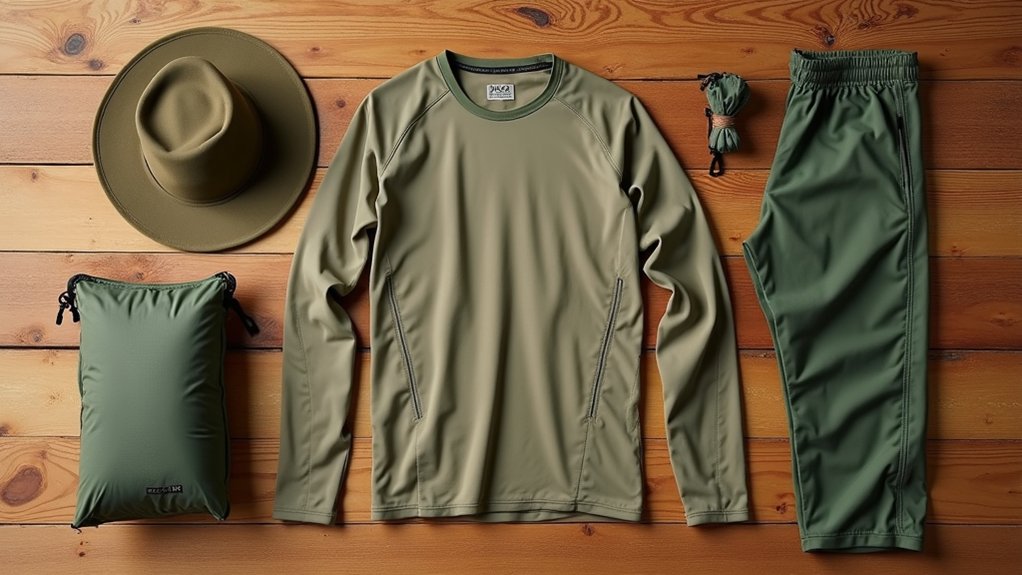
Since mosquito repellent can’t protect every inch of your skin all day long, lightweight long-sleeve clothing becomes your best defense against jungle insects and harsh tropical sun.
Pack quick-dry shirts with breathable fabric that you can roll up when it’s hot. Cotton and moisture-wicking synthetics work best in Thailand’s humidity. Your arms stay protected during jungle treks without constant repellent reapplication, saving you money and hassle.
Don’t forget long pants or lightweight joggers for your legs. Breathable trousers protect against mosquito bites and scratchy vegetation while keeping you comfortable on wet jungle paths.
Bring a light jumper for cooler evenings at camp. These versatile layers adapt to temperature changes throughout your rainforest adventure, ensuring you’re always protected and comfortable.
Swimwear for Lake and Water Activities
What swimwear should you pack for Elephant Hills’ amazing water adventures? You’ll need sturdy swimwear for multiple days of lake swimming, canoe safaris, and bamboo rafting. Quick-dry fabrics work best in Thailand’s humid rainforest environment.
Pack a rash guard or water shirt to protect your skin during long kayaking sessions on Cheow Lan Lake’s emerald waters.
Choose swimwear with secure straps that won’t slip off during elephant bathing or waterfall climbing. Neutral colors help you blend with nature during wildlife safaris.
Your swimsuit needs durable materials to handle limestone rocks around natural pools.
Don’t worry about towels or life jackets – tour operators provide these essentials. Focus on swimwear that stays put during active water sports and dries quickly between adventures.
Waterproof Rain Protection Gear
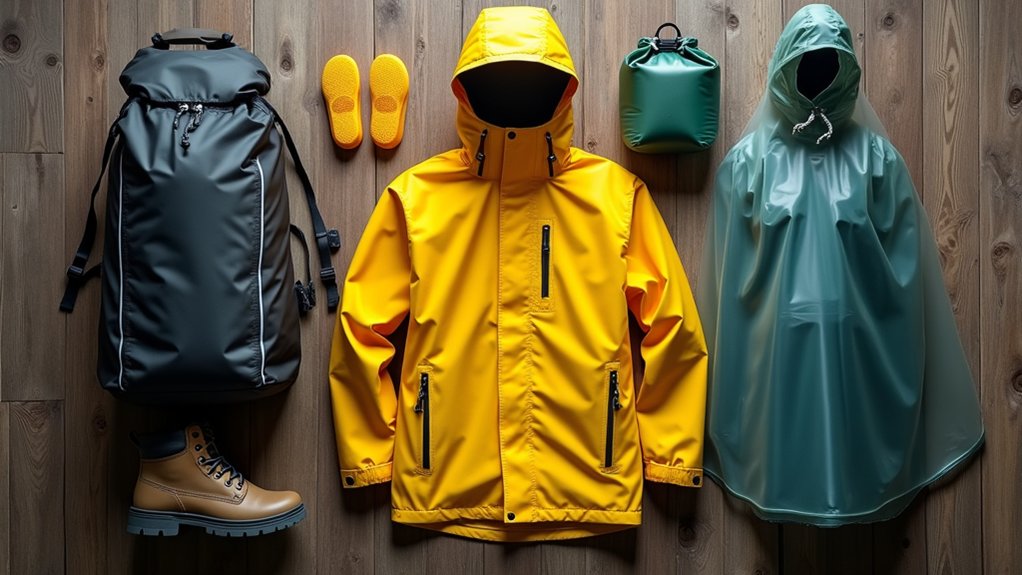
Beyond water activities, you’ll face Khao Sok’s impressive 3,500mm of annual rainfall during your Elephant Hills adventure. Rain can happen any day in this rainforest location, so you’ll need proper protection for jungle treks lasting up to 2.5 hours.
Pack a lightweight, breathable rain jacket with an adjustable hood and taped seams. Breathable fabric is essential since temperatures stay above 25°C even during rain. A reusable poncho works too and helps protect the environment better than disposable options.
Your rain gear becomes vital during kayaking and outdoor activities. Remember that paths get slippery during heavy showers, which typically last one to two hours. Look for packable options that fold into compact sizes for easy carrying in your daypack.
While disposable raincoats are sold at camp shops, bringing reusable gear from home saves money and reduces plastic waste.
Small Day Pack for Camp Transfers
When you transfer between Elephant Hills’ jungle and lake camps, you’ll need a compact day pack that holds your essentials for 2-5 days at the floating tents. A lightweight holdall or cabin-sized roll-on works perfectly and won’t strain your back during boat transfers.
Pack two changes of clothes including swimwear for lake activities and lightweight long sleeves for jungle treks. Don’t forget nightwear and fresh underwear for camp comfort.
Your day pack should easily fit personal items like phones, headphones, and books for tent downtime.
Choose a sturdy bag you’ll carry personally during transfers. This smart packing approach keeps your essentials accessible while your main luggage stays safely stored, making camp transitions smooth and stress-free for the whole family.
Camera or Phone for Wildlife Photography
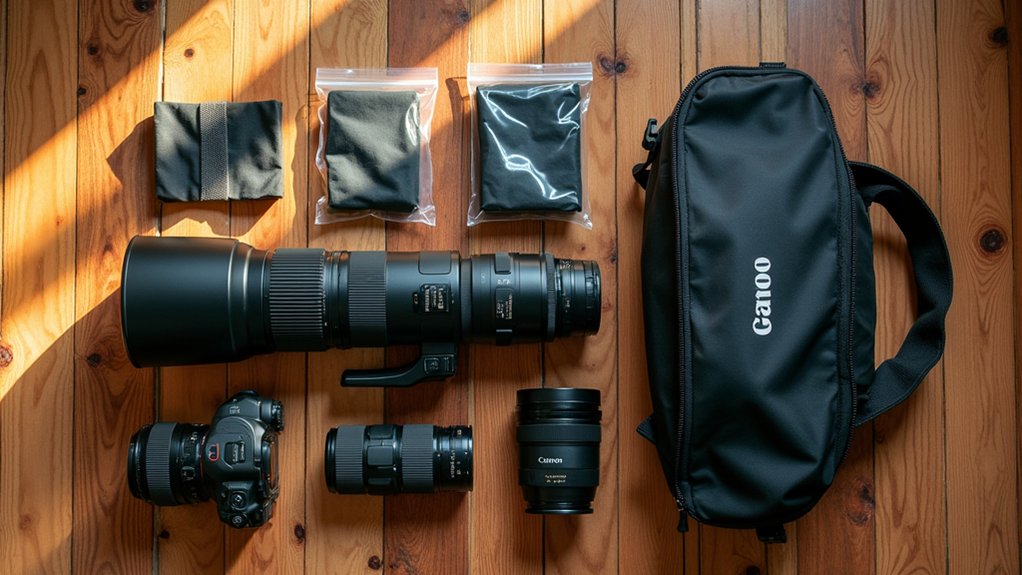
Once you’ve organized your day pack, you’ll want to capture the amazing elephants and wildlife you’ll encounter. Your smartphone’s camera will work perfectly for most wildlife shots at Elephant Hills. Modern phones have excellent zoom features and animal eye-tracking that’ll help you photograph elephants safely from a distance.
If you’re serious about wildlife photography, consider budget-friendly options like the Canon EOS R6 Mark II or used cameras from the secondary market. APS-C cameras like the Canon EOS R10 cost under $1,000 and deliver great results.
Remember to prioritize lens quality over fancy camera bodies. Weather-sealed equipment handles Thailand’s humid conditions better. For wildlife photography, aim for 15-20 fps burst speeds to capture elephants in motion without overwhelming yourself with too many images to sort through later.
Most importantly, always maintain safe distances from elephants while photographing – your safety matters more than the perfect shot.
Hat and Sunglasses for Outdoor Activities
Why do Thailand’s outdoor adventures demand extra sun protection? Thailand’s sun is much stronger than what you’re used to back home, making hats and sunglasses absolutely essential for your Elephant Hills adventure.
You’ll spend hours outdoors kayaking on Sok River, trekking jungle trails, and swimming in lakes where shade is limited.
Pack a lightweight hat that won’t weigh down your day bag during elephant experiences and cave explorations. Sunglasses protect your eyes from intense sunlight, dust, and debris while you’re paddling canoes or hiking steep paths. They’re especially important during those long Burmese junk boat lunches under the blazing tropical sun. During elephant trekking tours, your sunglasses become even more crucial as elephants love to cover themselves in dust and dirt that can easily get in your eyes.
Combine these basics with SPF 25-50 sunscreen for complete protection. Your family’s safety depends on consistent sun defense throughout every muddy, exciting outdoor experience.
Entertainment Items for Tent Downtime
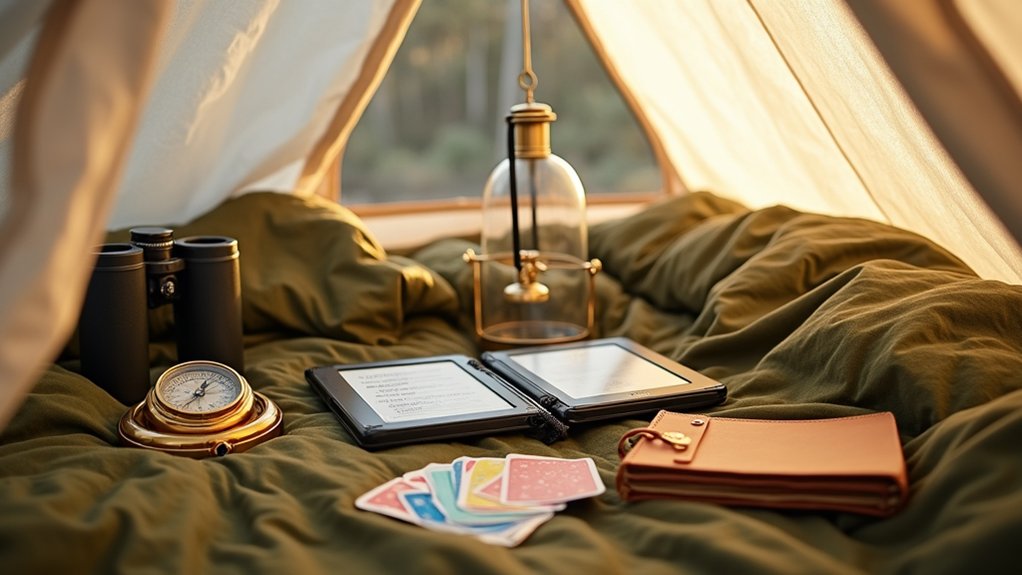
While Elephant Hills provides evening entertainment like jungle documentaries and traditional Thai dance performances, you’ll still want personal entertainment items for quiet tent time.
Pack a journal and colored pencils to record your amazing elephant encounters and wildlife sightings from canoe safaris. Write down details about the four traditional dances you’ll see performed by local school children, or sketch the intricate hand movements you observe.
Bring a deck of cards or travel-sized games for family fun after the 6:30 PM nature films end. Don’t forget a small portable speaker for playing soft Thai music you’ve discovered during your stay.
These simple, lightweight items won’t take up much luggage space but will enhance your rainforest experience during peaceful evening hours in your tent. Consider bringing books about local wildlife since you might spot diverse flora and fauna including deer, langurs, and gaur during your jungle trekking adventures.
Last Words
You’ve got everything you need for an amazing elephant adventure! Double-check your passport’s in a safe spot, and don’t forget your sturdy shoes for walking. Pack light clothes that’ll dry quickly, and bring a small backpack you can carry easily. Remember your camera to capture those special elephant moments! Most importantly, bring your medicines and stay hydrated. You’re all set for the best Thailand trip ever while staying safe and spending smart!