

You’ll need to complete Thailand’s Digital Arrival Card (TDAC) with health declarations, update routine vaccinations like MMR and tetanus, and get yellow fever shots if traveling from risk countries. Protect against mosquito-borne diseases with DEET repellent and long sleeves, consider malaria prevention for border areas, and schedule pre-travel consultations 4-6 weeks early. Pack essential medications, secure $50,000+ medical insurance, and know emergency numbers like 1669. These preparations will open a comprehensive safety strategy for your family’s adventure.
- Complete Your Thailand Digital Arrival Card (TDAC) Health Declaration
- Get Yellow Fever Vaccination if Traveling From Risk Countries
- Update Routine Vaccinations Before Departure
- Protect Your Family From Mosquito-Borne Diseases
- Consider Malaria Prevention for High-Risk Areas
- Practice Safe Food and Water Habits
- Schedule Pre-Travel Health Consultations 4-6 Weeks Early
- Secure Comprehensive Travel Health Insurance
- Pack Essential Medications and First Aid Supplies
- Know When to Seek Medical Care During Your Trip
- Last Words
Complete Your Thailand Digital Arrival Card (TDAC) Health Declaration

Starting May 1, 2025, you’ll need to complete Thailand’s Digital Arrival Card (TDAC) before your family trip, as this mandatory online health declaration replaces the traditional paper TM6 form for all non-Thai nationals entering by air, land, or sea.
Submit your TDAC at www.tdac.immigration.go.th up to 72 hours before arrival—it’s free and supports multiple languages. You’ll provide passport details, travel information, and accommodation addresses for your family members.
The health declaration section activates if you’ve traveled to specific countries within two weeks or match certain risk criteria. You’ll list recent destinations and declare any symptoms experienced during this period. Travelers from certain countries must also provide Yellow Fever vaccination proof as part of their International Health Certificate requirements.
After submission, save your digital confirmation on your phone or print copies for each family member to present at immigration.
Get Yellow Fever Vaccination if Traveling From Risk Countries
While completing your TDAC covers general health declarations, families traveling from yellow fever risk countries must present a valid vaccination certificate upon arrival in Thailand. This requirement applies to travelers aged 9 months or older arriving from WHO-designated risk countries in Africa and South America, including those with transit layovers exceeding 12 hours.
Thailand doesn’t have active yellow fever transmission, but authorities strictly enforce International Health Regulations. Without a valid certificate, you’ll face entry denial or quarantine.
Your WHO International Certificate of Vaccination provides lifelong protection—no boosters needed since 2016. The vaccine requires a full dose to ensure valid lifelong immunity.
Plan ahead by checking if your origin country appears on the current WHO risk list. Get vaccinated at an approved Yellow Fever Vaccination Center at least 10 days before departure to ensure immunity develops.
Update Routine Vaccinations Before Departure
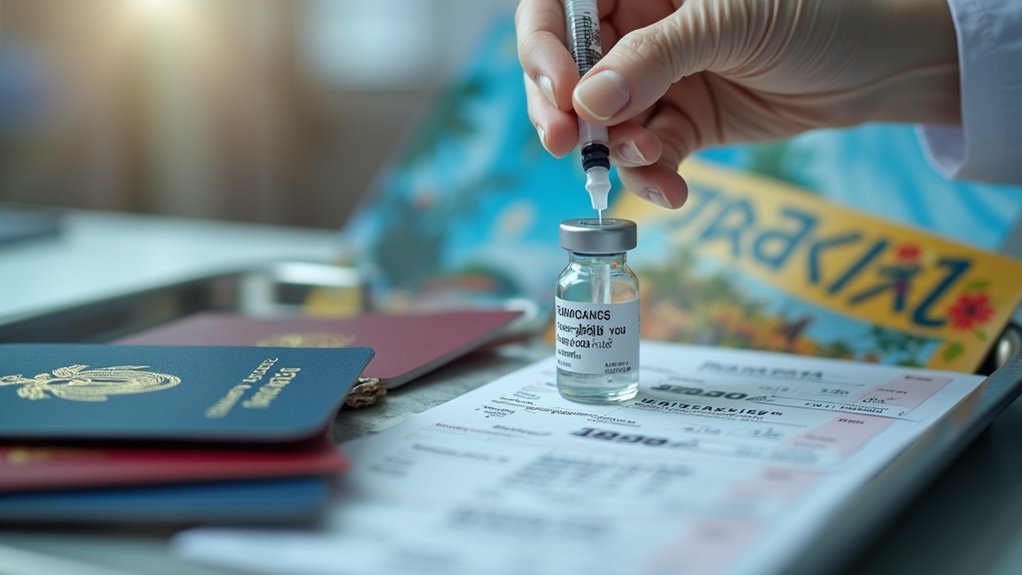
Before booking your Thailand adventure, confirm your family’s routine vaccinations are current and complete. You’ll need diphtheria-tetanus-pertussis vaccine within the last 5-10 years, completed childhood polio series, two MMR doses, full hepatitis B course, and chickenpox vaccine.
Adults over 65 should add shingles and pneumonia vaccines, while everyone needs annual influenza vaccination.
Start this process 4-6 weeks before departure to ensure full immunity develops. Tetanus-diphtheria boosters are required every 10 years, and adolescents need Tdap updates. Consider meningococcal vaccination for certain age groups as part of your routine vaccine review.
If you can’t locate vaccination records, your healthcare provider can run blood tests to verify immunity status.
Check with your pediatrician for children’s schedules, and pregnant travelers should consult providers about safe routine updates.
Many pharmacies offer convenient booster services for basic vaccines.
Protect Your Family From Mosquito-Borne Diseases
Beyond keeping your vaccinations current, you’ll need to guard against Thailand’s mosquito-borne diseases that pose real risks to traveling families. Dengue fever remains the primary concern, with over 100,000 cases reported in 2024.
Your family also faces risks from chikungunya, Zika virus, and malaria, though malaria cases have dropped notably in recent years.
Peak transmission occurs during monsoon season when mosquito activity increases. Aedes mosquitoes transmit dengue, chikungunya, and Zika, while Anopheles mosquitoes carry malaria. Thailand is home to 117 mosquito species documented across all 66 provinces through extensive surveillance programs.
Non-immune travelers face a 0.81% dengue incidence rate after one month’s stay.
Protect your family by using DEET-based repellents, wearing long sleeves during dawn and dusk, staying in air-conditioned accommodations, and eliminating standing water around your lodging.
These diseases don’t have vaccines, making prevention essential.
Consider Malaria Prevention for High-Risk Areas

Should your family venture into Thailand’s border regions or forested areas, you’ll need to contemplate malaria prevention measures for specific high-risk zones.
The Thai-Cambodian border districts, western Tak Province, and southern provinces near Malaysia pose the greatest transmission risks. Rural, forested areas along borders with Cambodia, Laos, and Myanmar maintain year-round transmission that peaks during rainy season.
Your children aged 25-44 face highest infection rates, though all family members remain vulnerable. Plasmodium vivax represents the predominant species you’ll encounter.
Mefloquine resistance complicates treatment options, making prevention vital. Agricultural workers face particularly elevated exposure risks based on occupational malaria surveillance data.
Consult travel medicine specialists before departing, especially if you’re planning agricultural activities or extended forest stays. They’ll recommend appropriate antimalarial medications and mosquito protection strategies tailored to your family’s specific itinerary and risk exposure levels.
Practice Safe Food and Water Habits
While Thailand’s vibrant street food scene offers incredible culinary adventures, you’ll want to follow smart food safety practices to keep your family healthy throughout your journey. Choose busy stalls with high customer turnover, as these vendors typically serve fresher food and maintain better hygiene standards. Watch vendors cook your meals fresh and serve them hot, ensuring thorough cooking especially for meats and seafood.
Start with sterilized options like boiled tom yum soup, grilled satay, or stir-fried pad Thai made to order. Avoid raw seafood and undercooked items. Practice proper hand hygiene before eating, washing hands frequently or using sanitizer when soap isn’t available.
For beverages, stick to bottled water from trusted brands, fresh coconuts, or hot drinks. Avoid ice unless it’s factory-made with characteristic holes, indicating proper regulation and safety standards. Be particularly cautious with fruits and vegetables, ensuring they are properly peeled or thoroughly washed to prevent contamination.
Schedule Pre-Travel Health Consultations 4-6 Weeks Early

To guarantee your family receives the most thorough health protection for your Thailand adventure, book your pre-travel health consultation 4-6 weeks before departure. This timing allows healthcare providers to assess each family member’s individual health risks, complete vaccine series, and ensure your immune systems develop proper responses.
During your appointment, you’ll complete health questionnaires covering vaccination history, current medications, and trip specifics.
The consultation includes weight and blood pressure checks, followed by a 20-30 minute discussion about Thailand’s health risks and tailored recommendations. Your doctor will evaluate necessary vaccines, malaria prevention, and prescriptions for common travel ailments. Special consideration will be given to high-risk groups including pregnant women, elderly family members over 70, and immunosuppressed individuals who may need additional protective measures.
Don’t worry if you’re booking last-minute—consultations remain valuable even with shortened timeframes, ensuring your family stays healthy abroad.
Secure Comprehensive Travel Health Insurance
Although Thailand doesn’t require travel health insurance for most U.S. visitors, securing extensive coverage becomes essential when you consider that your domestic health insurance—including Medicare and Medicaid—won’t work in Thailand’s healthcare system.
You’ll need minimum $50,000 emergency medical coverage for tropical diseases like dengue fever, plus $100,000 medical evacuation coverage since serious cases may require transport to Singapore facilities.
Private hospitals in Bangkok and Phuket demand upfront cash payments before treatment. All-encompassing policies should cover pre-existing conditions, emergency dental care, trip cancellations, and baggage delays. Thailand’s frequent road accidents, especially involving motorcycles, make emergency medical coverage particularly crucial for family travelers exploring the country.
For as little as $1 daily, you’ll access 24-hour assistance services with interpreters and family notifications. Over 80% of claims get processed within 48 hours, protecting your family from astronomical medical bills.
Pack Essential Medications and First Aid Supplies
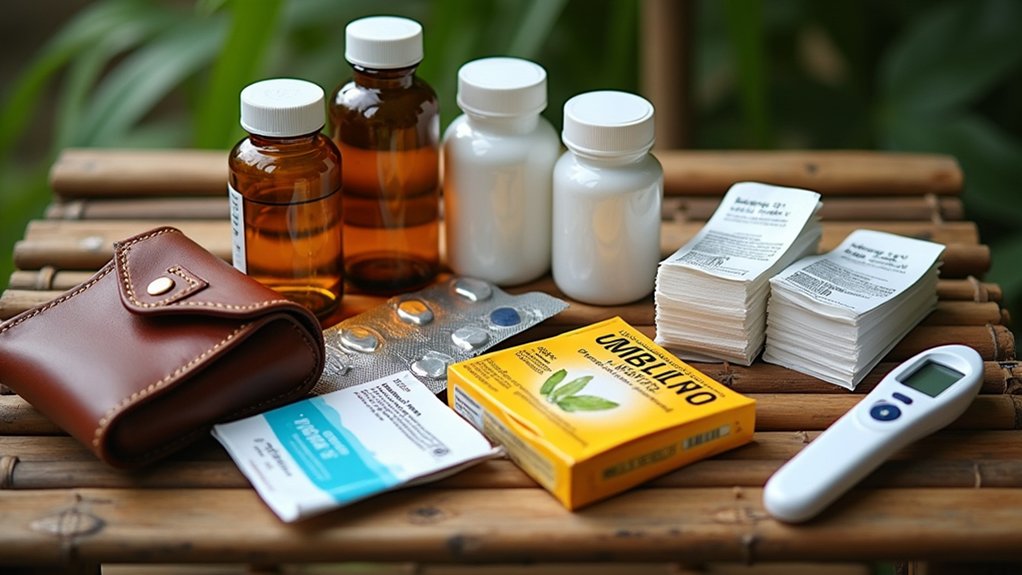
Since Thailand’s tropical climate and different food preparations can trigger unexpected health issues, packing a well-stocked medical kit becomes your first line of defense against common travel ailments.
Start with pain relievers like paracetamol and ibuprofen for headaches, fever, and muscle pain. You’ll find 400mg ibuprofen at Thai 7-Elevens for restocking. Include digestive aids like Loperamide for diarrhea and oral rehydration tablets for dehydration. Pack antihistamines such as Claritin for allergic reactions and insect bites, plus DEET-based repellent against disease-carrying mosquitoes.
Your first aid essentials should include antiseptic wipes, bandages, scissors, and tweezers. Don’t forget Bepanthen for sunburn relief and a digital thermometer. Always carry an English prescription for any regular medications to facilitate purchase and customs clearance if needed. Bring prescription medications in original containers with extra supplies, plus any specialized treatments like malaria tablets for affected regions.
Know When to Seek Medical Care During Your Trip
While minor health issues can often be managed with your first aid supplies, recognizing when professional medical attention becomes necessary can prevent minor problems from escalating into serious complications.
Seek immediate care for fever, flu-like symptoms, or persistent diarrhea, as these could indicate dengue, chikungunya, or other mosquito-borne diseases that surge in Thailand.
Any animal bite or scratch requires urgent rabies evaluation, as this disease is potentially fatal.
Don’t delay treatment for severe injuries, especially after traffic accidents, which are unfortunately common during holidays. Thailand experiences particularly high rates of road traffic injuries during holiday periods, with increased risks from drunk driving and high-speed crashes on highways.
Call 1669 for medical emergencies nationwide or 1724 for Bangkok ambulances.
Contact 1155 for tourist police assistance.
Last Words
You’re well-prepared for a healthy Thailand family adventure when you’ve tackled these essential health steps. Don’t let concerns overwhelm you—most travelers experience wonderful, incident-free trips with proper preparation. Keep your vaccination records handy, stay vigilant about mosquito protection, and trust your instincts about seeking medical care. With all-inclusive insurance, essential medications packed, and pre-travel consultations completed, you’ll confidently focus on creating amazing family memories in Thailand’s incredible destinations.