
Plan your Florida villa vacation by booking 2-3 months ahead for the best properties, especially during peak seasons. Verify your rental has proper DBPR licensing through state databases, and factor in hidden costs like 12-14% taxes, cleaning fees, and parking permits. Choose locations based on your family’s main activities—Disney area for theme parks, Cape Coral for beaches. Pack lightweight, moisture-wicking clothes and secure travel insurance within 14 days of booking for hurricane season protection. These essential strategies will transform your family getaway into a seamless adventure.
- Book Your Villa 2-3 Months in Advance for Best Selection
- Understand the True Cost Beyond Nightly Rates
- Verify Your Villa Has Proper State and Local Licensing
- Choose Location Based on Your Daily Activity Plans
- Prioritize Essential Amenities for Florida’s Climate
- Plan Around Hurricane Season and Weather Patterns
- Read Guest Reviews Carefully Before Booking
- Secure Travel Insurance for Weather-Related Disruptions
- Confirm Parking and Neighborhood Restrictions
- Pack Smart for Subtropical Conditions
- The Sum Up
Book Your Villa 2-3 Months in Advance for Best Selection

When you’re dreaming of that perfect Florida villa vacation with your family, timing your booking can make the difference between snagging your ideal property or settling for what’s left.
Florida vacation homes have the longest booking windows nationally at 44.7 days average, but savvy families book 63-71 days ahead in popular destinations like The Villages and Venice.
You’ll want to plan even further for peak seasons. March stays require 133 days advance booking in The Villages, while February in Venice needs 110 days.
Winter months demand 86-94 days lead time.
Spring break bookings should happen by January for the best villa selection.
Don’t wait too long – 80% of beach houses fill up by February for spring break, leaving slim pickings for last-minute planners.
September offers the shortest lead times at around 32 days, making it ideal for spontaneous getaways.
Understand the True Cost Beyond Nightly Rates
Finding the perfect villa at the right time is just the beginning—those tempting nightly rates you’ll see advertised rarely tell the whole story of what your Florida vacation will actually cost.
State and local taxes add 12-14% on top of advertised rates, while cleaning fees tack on another £75-£150 per stay. You’ll need a rental car (£300-£500+ weekly) since most villas aren’t walkable to attractions.
Pool heating costs about £20 daily during cooler months, but it’s worth it for the kids. This heating is only recommended between November and April when temperatures drop.
Don’t forget your initial grocery shop for breakfast items and snacks—this upfront cost catches many families off-guard. While villa kitchens save money versus eating out (which runs £150-£300+ daily for families), budget for those essential supplies and occasional BBQ gas refills.
Verify Your Villa Has Proper State and Local Licensing

Before you book that picture-perfect villa with the sparkling pool, you’ll want to confirm it’s actually legal to operate as a vacation rental. Florida requires all vacation rentals to have a Department of Business and Professional Regulation (DBPR) license if they’re rented more than three times per year for stays under 30 days.
You can verify licensing by asking your host for their current DBPR license copy and checking its validity through the DBPR online lookup tool. Plus, reputable platforms like Airbnb are required to display the license number directly on property listings for easy verification.
Many cities like Orlando, Tampa, and Miami Beach also require additional local permits, so confirm those too.
Look for the license displayed somewhere on the property when you arrive. This simple check protects your family vacation investment and ensures you’re staying somewhere that meets safety standards.
Choose Location Based on Your Daily Activity Plans
Since your family’s dream vacation depends on easy access to your must-do activities, you’ll want to pick a villa location that puts your top priorities within a reasonable drive.
If Disney’s your main focus, choose Orlando-area resorts like Reunion or Champions Gate, where you’ll reach Magic Kingdom in minutes.
Beach lovers should consider Cape Coral or villas near Hudson Beach for quick coastal access.
Sports fans will love staying near ESPN Wide World of Sports or Saint Petersburg for Tropicana Field games.
Golf enthusiasts can book at Champions Gate or Highlands Reserve for course convenience.
Nature families should target areas near Bok Towers or Shingle Creek trails. Many Florida villas offer free cancellation options, giving you flexibility if your activity plans change.
Match your location to your kids’ biggest excitement factors.
Prioritize Essential Amenities for Florida’s Climate
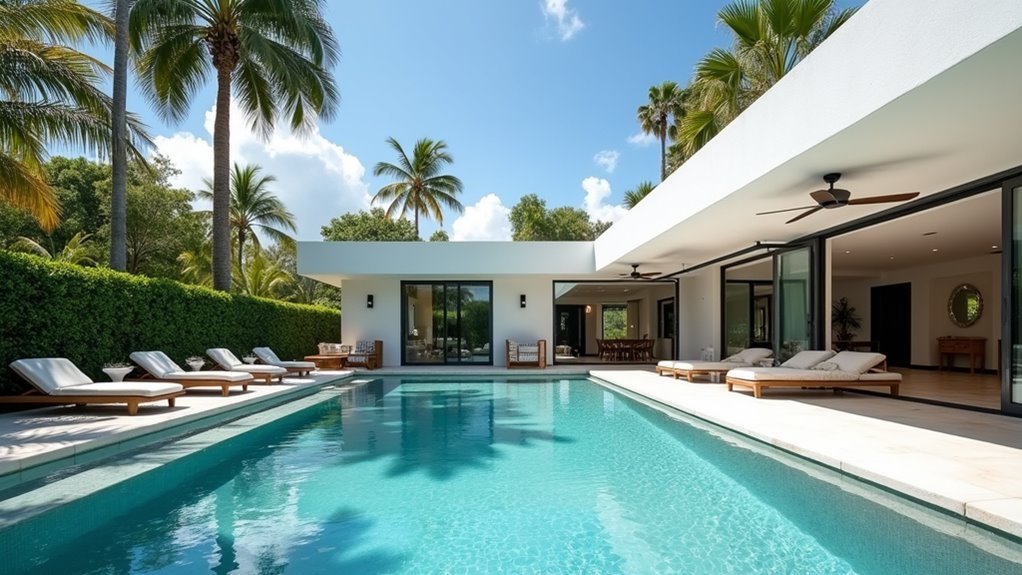
After securing the perfect location for your family adventures, you’ll need a villa equipped to handle Florida’s intense heat and humidity year-round. Centralized air conditioning isn’t just comfort—it’s survival when temperatures soar past 90°F with crushing humidity. Look for properties with ceiling fans that’ll slash energy costs while keeping everyone cool.
Your outdoor spaces need shade solutions like pergolas or umbrellas, plus outdoor fans for bearable poolside lounging.
Impact-resistant windows and proper drainage systems protect against Florida’s unpredictable storms.
Inside, you’ll want moisture-resistant materials and light-colored walls that reflect heat instead of absorbing it. High-quality mattresses with breathable materials ensure restful sleep even during Florida’s sweltering nights.
Don’t forget practical extras: beach equipment storage, waterproof cases for electronics, and reliable smoke detectors. These climate-focused amenities transform a basic rental into your family’s comfortable home base.
Plan Around Hurricane Season and Weather Patterns
While Florida’s sunny beaches beckon year-round, you’ll want to understand hurricane season’s rhythm before booking your family getaway. The official season runs June 1 through November 30, with September being the riskiest month. Nearly three-fourths of storms strike between August and October when ocean temperatures peak.
If you’re planning summer trips, June and July offer lower hurricane risks, though storms can still develop. August through October brings the highest activity, so you’ll need flexible travel plans and extensive insurance. Late-season storms can still form in November, particularly in the Caribbean region, before activity drops significantly.
Consider booking for late fall or winter when hurricane threats virtually disappear.
Don’t let hurricane season scare you away entirely – Florida’s prepared for storms with excellent warning systems. Just pack patience, monitor weather forecasts, and choose accommodations with solid cancellation policies to protect your vacation investment.
Read Guest Reviews Carefully Before Booking
Guest reviews hold the real story behind those picture-perfect villa listings, and you’ll want to dig deeper than star ratings when choosing your family’s home base. Look for properties with 30+ reviews from the past year—consistent patterns matter more than isolated complaints.
Pay attention to cleanliness and maintenance scores, especially indispensable in Florida’s humid climate where mold and pests can quickly become problems.
Filter reviews by family travelers and sort by lowest scores first to spot recurring issues. Check if amenities like pools, game rooms, and Wi-Fi actually work as advertised. Watch for hidden costs like pool heating fees that could bust your budget.
Notice how hosts respond to problems—quick, helpful communication means smoother sailing when issues arise during your stay. Keep in mind that recent reviews carry more weight in overall property scores, so prioritize feedback from guests who stayed within the last few months.
Secure Travel Insurance for Weather-Related Disruptions
Since Florida’s weather can flip from sunshine to severe storms faster than kids change their minds about ice cream flavors, you’ll want solid travel insurance that covers weather disruptions.
Buy your policy within 14 days of booking your villa, before any storms are forecast or named. Look for coverage that includes trip cancellation if hurricanes make travel unsafe, trip interruption if you’re forced to evacuate early, and travel delay benefits when flights get cancelled.
Florida’s hurricane season runs June through November, so named storm coverage is essential for coastal villas. Check that your policy covers the full cost of your villa rental and includes mandatory evacuation protection. Consider adding “Cancel for Any Reason” upgrades to your policy, which provide maximum flexibility for high-end villa bookings when weather concerns arise.
Confirm Parking and Neighborhood Restrictions
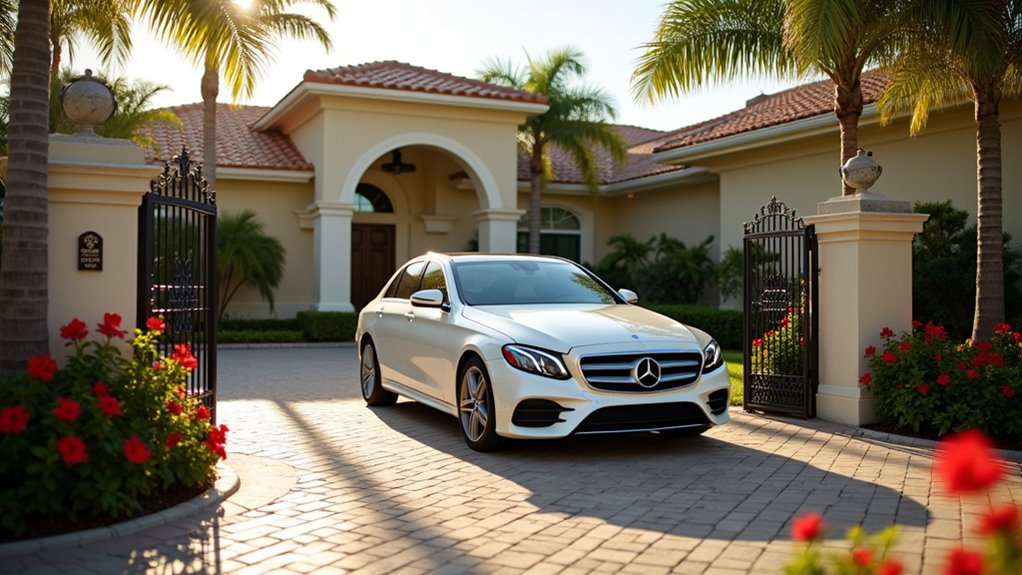
Before you load up the family minivan with beach toys and sunscreen, double-check your villa’s parking rules to avoid the nightmare of finding your car missing on vacation morning.
Many Florida villa communities require parking permits or RFID stickers, typically costing around $75 per vehicle. You’ll need to display these visibly on your dashboard or rear windshield.
If you’re bringing multiple cars for extended family visits, confirm how many vehicles you can park in driveways – some communities limit this to two compact cars. Street parking is often prohibited entirely, with immediate towing penalties.
For visitors staying longer than 48 hours, secure temporary passes through the community office. Don’t forget to ask about designated visitor lots and any restrictions on larger family vehicles. Also remember that visitor passes are typically valid for seven days, giving you flexibility for extended guest stays.
Pack Smart for Subtropical Conditions
While Florida’s year-round sunshine promises endless fun, you’ll need strategic packing to keep your family comfortable in the state’s intense heat, humidity, and sudden weather changes.
Pack lightweight, moisture-wicking clothes in light colors that reflect sun rays. Choose breathable cotton or linen shorts and bring at least two swimsuits per person so one stays dry between pool sessions.
Don’t forget wide-brimmed hats and UV-protection sunglasses for intense sun exposure.
Essential items include high SPF sunscreen (minimum 30), bug spray for year-round mosquitoes, and comfortable walking shoes supporting 5-10 daily miles in theme parks. Consider purchasing CityPASS® tickets for access to top attractions while saving money and skipping lines.
Pack a lightweight rain jacket for sudden afternoon showers and a reusable water bottle for staying hydrated in subtropical heat.
The Sum Up
You’re all set for an amazing Florida villa adventure! Remember to book early, budget for extras, and pack plenty of sunscreen and swimsuits. Don’t forget to check those reviews and make sure your villa’s legit. With proper planning, you’ll create incredible family memories splashing in your private pool, exploring theme parks, and enjoying those famous Florida sunsets. Your kids will be talking about this vacation for years to come!