
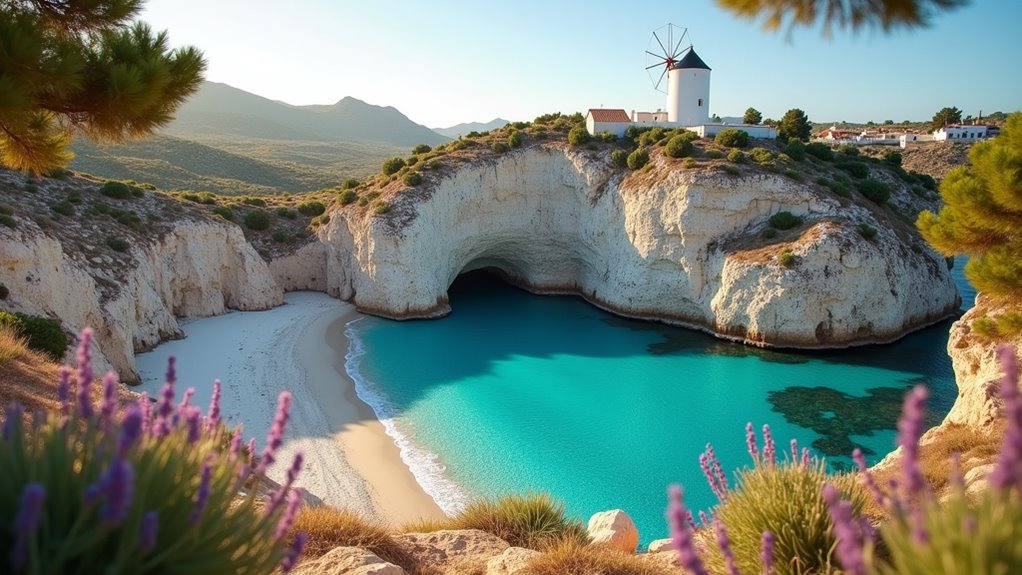
You’ll find Menorca offers 365+ beaches and coves—more than Mallorca and Ibiza combined—great for treasure-hunting adventures with kids. As a UNESCO Biosphere Reserve, it’s home to 220 bird species and ancient Bronze Age sites your children can explore. The island maintains strict development limits, ensuring pristine swimming spots from May through October. You’ll need to respect wildfire safety during summer months and can support local families by purchasing traditional leather crafts. Discover how these unique features create unforgettable family experiences.
- Menorca Offers More Beaches Than Mallorca and Ibiza Combined
- The Island Holds UNESCO Biosphere Reserve Status
- Two Historic Towns Serve as Cultural Centers
- Ancient Bronze Age Sites Dot the Landscape
- British and French Colonial Heritage Shapes Local Architecture
- Catalan Language Dominates Daily Communication
- Traditional Leather Craftsmanship Employs Thousands of Locals
- Swimming Seasons Extend From Spring Through Fall
- Wildfire Safety Requires Extra Attention During Warmer Months
- Sustainable Tourism Protects Uncommercialized Natural Areas
- The Sum Up
Menorca Offers More Beaches Than Mallorca and Ibiza Combined
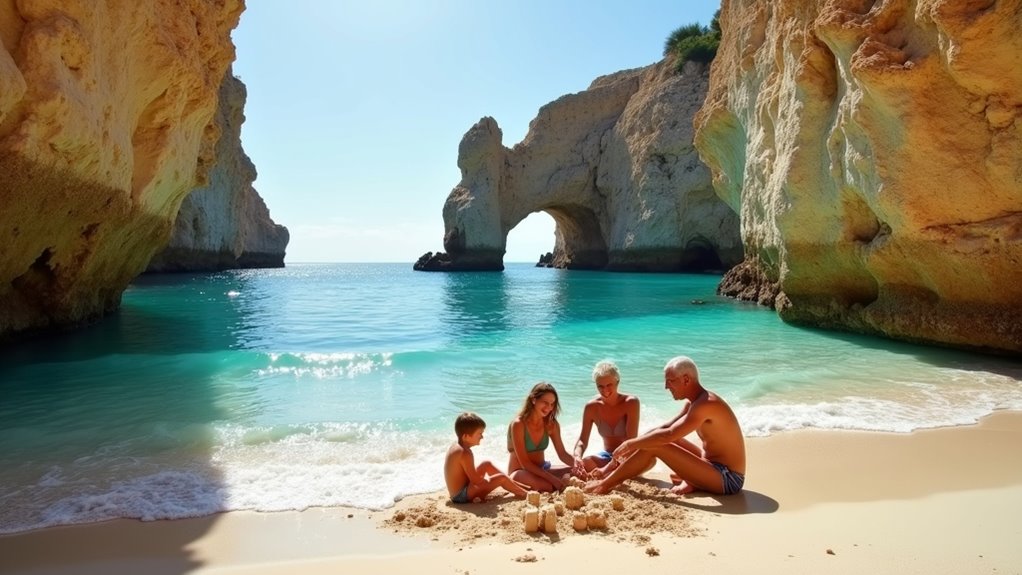
When you’re planning a beach-hopping adventure with your family, Menorca delivers an incredible surprise – this compact island actually has more beaches than the famous party island of Ibiza and glamorous Mallorca combined.
You’ll find over 365 beaches and coves scattered across Menorca’s jagged coastline, literally giving you a different beach for every day of the year. While Mallorca boasts around 200-250 beaches and Ibiza offers 50-80, Menorca’s deeply indented shores create countless small calas and hidden coves great for families seeking quieter spots.
Many beaches are accessible only by foot via scenic trails, making beach discovery feel like a treasure hunt that’ll keep your kids excited about exploring something new each day. The island features 46 sandy beaches, which are the most prevalent type and ideal for families with children who want to build sandcastles and play comfortably.
The Island Holds UNESCO Biosphere Reserve Status
Since 1993, Menorca has held the prestigious title of UNESCO Biosphere Reserve – think of it as Mother Nature’s gold star for being an absolutely amazing place that perfectly balances people living their lives with protecting incredible wildlife and landscapes.
What makes this so cool for families? You’re exploring an island that’s home to 220 bird species and over 1,000 plants, including 60 that exist nowhere else on Earth!
The reserve got even bigger in 2019, making it the Mediterranean’s largest marine biosphere reserve.
Your kids can spot Balearic lizards, watch cormorants dive for fish, and discover unique caves and wetlands. The island is organized into three zones – nucleus, cushioning, and transition areas – each protecting different aspects of this natural paradise. It’s like visiting a massive outdoor classroom where conservation actually works – fish populations have doubled in protected areas since 2019!
Two Historic Towns Serve as Cultural Centers
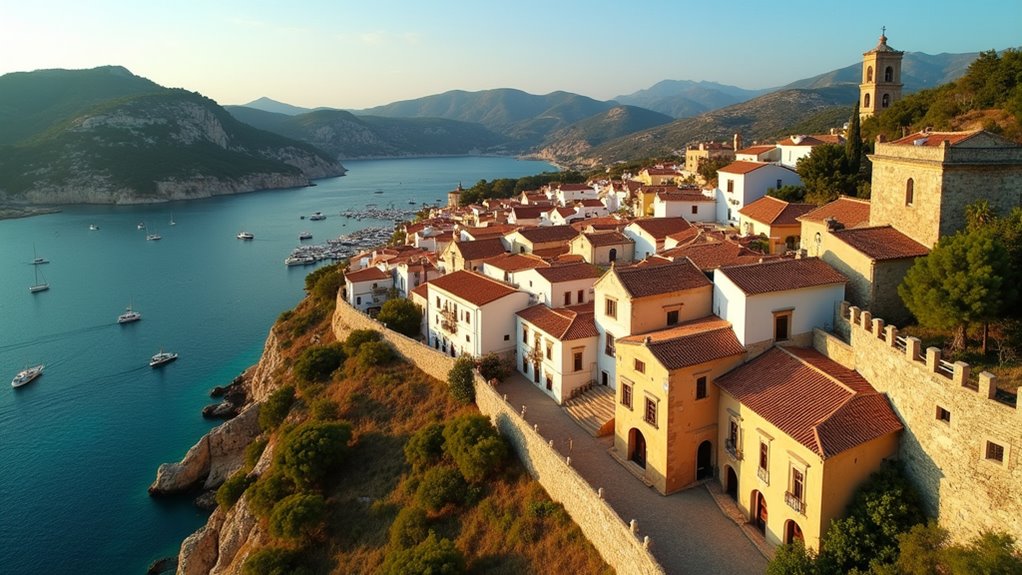
While most islands have one main town, Menorca gives your family two incredible historic centers to explore – Mahón in the east and Ciutadella in the west. Mahón houses the fantastic Museu de Menorca in a 17th-century monastery, where your kids can discover thousands of artifacts spanning prehistoric times to today. Don’t miss the vibrant market for local tapas and backstreet adventures.
Ciutadella tells a different story as Menorca’s former capital until the British took over. Your family will love wandering through honey-colored Baroque palaces and visiting the 13th-century Cathedral built on an old mosque site. The elegant Plaça des Born makes the perfect spot for photos, while the Museu Diocesà showcases religious treasures in a former convent.
Between these two main centers, the charming town of Alaior offers families a glimpse into Menorca’s footwear industry through its cultural center housed in a beautifully restored 17th-century convent.
Ancient Bronze Age Sites Dot the Landscape
Beyond the charming historic towns, Menorca transforms into an incredible open-air museum where your family can explore over 1,600 prehistoric sites scattered across the island. You’ll discover massive stone towers called talayots that reach up to 10 meters high, built between 1100-900 BCE.
Kids will be amazed by the T-shaped taula structures – unique stone monuments found nowhere else in the world.
Don’t miss Naveta d’Es Tudons, one of Europe’s oldest preserved prehistoric buildings, shaped like an upturned boat and used for ancient burials. The circular stone houses at Son Mercer de Baix show how Bronze Age families lived 3,400 years ago.
These remarkable sites span over 1,500 years of continuous occupation, making Menorca one of the Mediterranean’s richest archaeological destinations. Many structures feature astronomical orientations that suggest ancient communities used these monuments for spiritual and cosmological purposes.
British and French Colonial Heritage Shapes Local Architecture
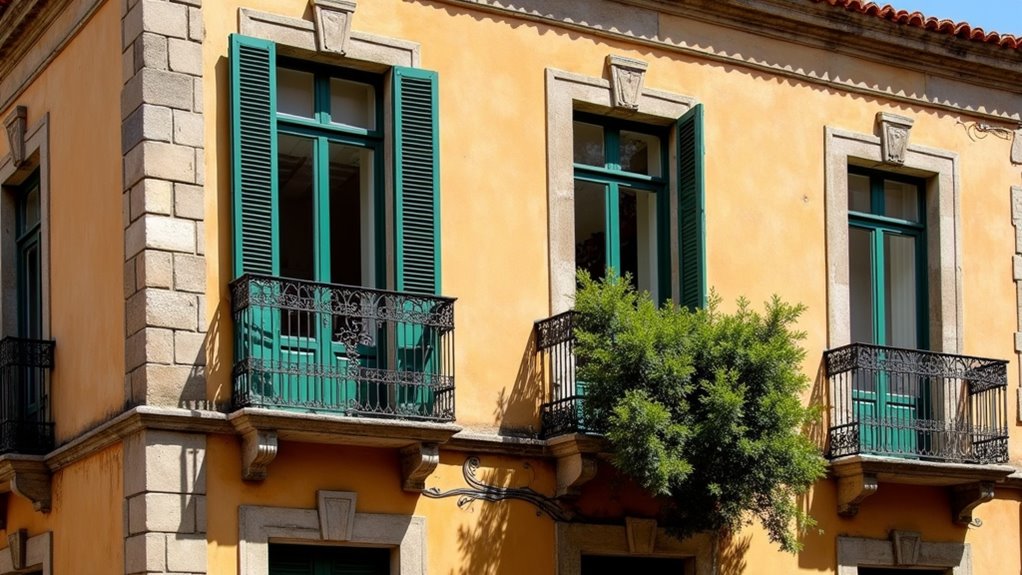
Moving forward through history, you’ll notice Menorca’s towns and buildings look distinctly different from other Spanish islands – and there’s a fascinating reason why. British and French rulers left their architectural fingerprints everywhere during the 18th century.
You’ll spot British influence in Mahón’s Georgian-style windows and symmetrical houses, plus the grid-planned town of Es Castell (originally called Georgetown). The British built impressive coastal forts like Fort Marlborough and expanded the Castle of San Felipe to protect their Mediterranean naval base.
The French created Sant Lluís during their brief rule, complete with a distinctly French-style church. These colonial influences merged with existing Spanish elements including late Catalan Gothic, Baroque, Neoclassical, and Renaissance architectural styles.
This mix of colonial influences created Menorca’s unique “eclectic” architecture – a fascinating blend you won’t find anywhere else in Spain.
Catalan Language Dominates Daily Communication
Three out of four people you’ll meet in Menorca speak Catalan as their primary language, making it far more common than you might expect on a Spanish island. While nearly everyone speaks Spanish fluently, locals prefer using Catalan in daily conversations, especially with friends and family.
You’ll hear Catalan everywhere—shops, restaurants, playgrounds, and schools. Don’t worry if your kids can’t understand it initially; most locals happily switch to Spanish when they realize you’re visitors. However, learning basic Catalan phrases like “bon dia” (good morning) will earn you warm smiles from residents.
Government offices and local services primarily operate in Catalan, though staff accommodate Spanish speakers. Interestingly, 67.6% of residents believe government officials should respond in Catalan when addressed in the language. Your family’s vacation will feel more authentic when you embrace this unique linguistic landscape that sets Menorca apart from typical Mediterranean destinations.
Traditional Leather Craftsmanship Employs Thousands of Locals
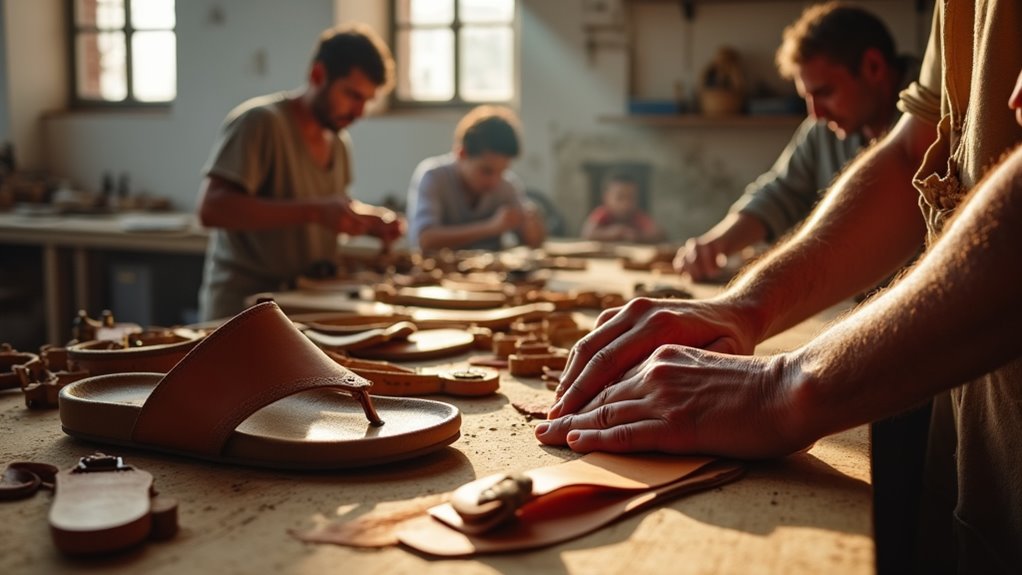
While your kids watch artisans carefully stitching leather by hand, they’re witnessing an industry that supports thousands of Menorcan families. The island’s leather workshops employ skilled pattern cutters, stitchers, and finishers who create shoes and bags for European brands.
You’ll notice most craftspeople learned their trade through apprenticeships rather than formal schooling, passing down techniques like hand-stitching through generations.
Your children might observe that men typically handle cutting and finishing while women focus on stitching and assembly. These workshops face challenges attracting young workers, making knowledge transfer essential. Like many regions across Spain, the local leather industry has experienced employment decline in recent years, making these traditional skills even more precious to preserve.
Beyond the artisans themselves, the industry supports families working in tanning, packaging, and tourism retail. When you buy authentic Menorcan leather goods, you’re directly supporting this indispensable local economy.
Swimming Seasons Extend From Spring Through Fall
Unlike many Mediterranean destinations where swimming feels rushed into just July and August, Menorca offers your family a generous window stretching from late spring through early fall. You’ll find comfortable swimming from June through September, when sea temperatures reach 22-26°C and kids can splash happily for hours.
The real family secret? Consider May and October for your visit. Sea temperatures hover around 18-20°C—perfectly swimmable for most children—while you’ll enjoy smaller crowds and better prices.
August delivers peak warmth at 26°C, ideal for toddlers and extended beach days. With 2,700 hours of sunshine annually, you’ll have plenty of bright days to enjoy the beach throughout the extended swimming season.
Even adventurous families stretch the season into April and November, though you’ll need wetsuits or brave kids who don’t mind cooler water. Spring and fall swimming lets you combine beach time with hiking and exploring.
Wildfire Safety Requires Extra Attention During Warmer Months
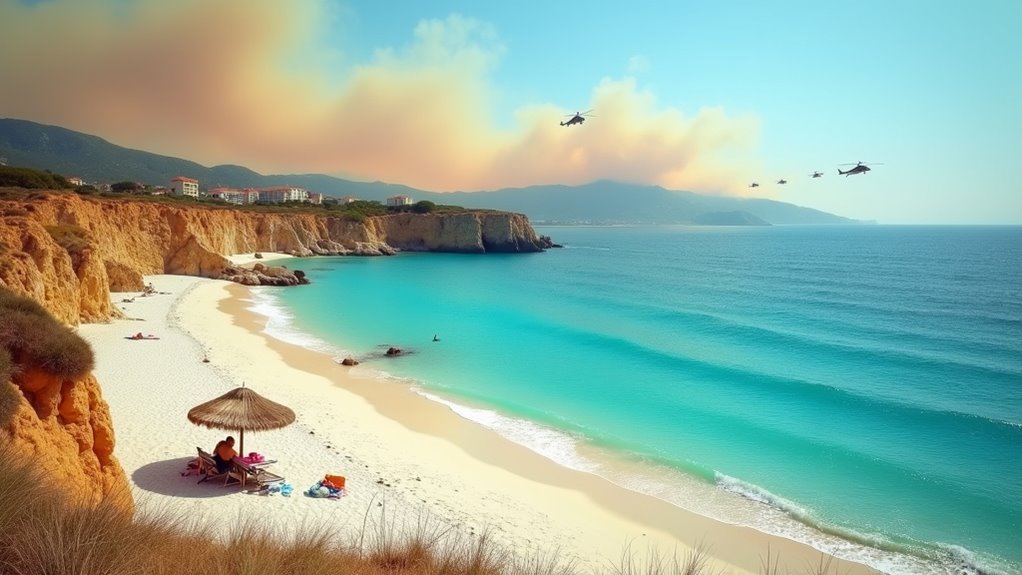
Although Menorca enjoys a relatively lower wildfire risk compared to mainland Spain, families visiting during summer months should stay alert to fire dangers that can develop quickly across the Mediterranean.
Spain’s 2025 wildfire season burned over 382,000 hectares, showing how rapidly conditions can change.
Teach your kids never to leave glass bottles or cigarette butts outdoors—they can spark fires instantly in dry vegetation.
Download emergency apps and know evacuation routes from your accommodation.
Pack a family emergency kit with water, flashlights, and important documents.
If you smell smoke or see flames, don’t try to get closer for photos.
Call emergency services immediately and follow official evacuation orders.
Dense, dry vegetation ignites easily, so respect all fire restrictions and camping bans during high-risk periods. The depopulation of regions has reduced forest maintenance that once provided natural fire prevention through traditional practices.
Sustainable Tourism Protects Uncommercialized Natural Areas
Since Menorca earned its UNESCO Biosphere Reserve status in 1993, your family can explore vast stretches of protected coastline and rural areas that haven’t been turned into hotel strips or shopping centers. The island’s strict planning limits keep large-scale development away from beaches and countryside your kids will love discovering.
You’re visiting during an exciting time when local authorities are capping tourist beds at around 84,000 and limiting vehicles in protected areas. This means cleaner beaches, less crowded hiking trails, and pristine swimming spots for your family adventures.
The sustainable tourism tax you’ll pay (up to €4 per adult per night) directly funds conservation projects that protect the natural playground your children will remember forever. These policies ensure Menorca stays magical for future family vacations. The island’s commitment to sustainability includes protecting its main aquifers from over-extraction, ensuring clean freshwater remains available for both residents and visiting families.
The Sum Up
You’ll discover Menorca’s great for families seeking adventure without crowds. Your kids can explore ancient ruins, splash in crystal-clear coves, and learn about traditional crafts. You’re visiting a UNESCO treasure that’s stayed authentic while welcoming families. Pack sunscreen, respect the wildfire warnings, and you’ll create memories that’ll last forever. Menorca isn’t just another beach destination—it’s where your family can connect with history, nature, and each other in special ways.