If you’re planning to visit Berlin and want to understand the darker chapters of German history, a tour to Sachsenhausen is often recommended. This particular experience, led by a knowledgeable guide, promises a comprehensive look at the concentration camp’s history, including its role within the Nazi system, its brutal daily realities, and the ongoing importance of remembrance.
What makes this tour stand out is its blend of on-site exploration and historical storytelling, giving visitors a clearer picture of how such atrocities could happen.
Two aspects I especially appreciate about this tour are its focus on the psychology of perpetrators and victims—a topic that often gets overlooked—and the way it connects the camp’s history to broader questions of justice and remembrance. While it is a serious and intense experience, it’s also balanced with thoughtful reflection, making it approachable for those willing to engage deeply.
One thing to keep in mind, though, is that this tour involves a good deal of walking and an emotionally demanding subject matter, which might not be suitable for very young children or those sensitive to difficult historical realities.
This experience is best suited for travelers who want more than just a quick visit; it’s for those ready to confront history with an open mind and an interest in understanding the complex reasons behind such crimes. If you’re curious about the systemic aspects of Nazi concentration camps or hoping to gain meaningful insights into how society processes such dark chapters, this tour could be a meaningful addition to your Berlin trip.
- Key Points
- The Experience: What to Expect
- A Closer Look at the Itinerary
- Starting Point at Oranienburger Straße
- The Train Journey and Introduction
- Exploring Oranienburg and the Camp System
- Entering Sachsenhausen
- Visiting Station Z
- Reflection on Justice and Memory
- Returning to Berlin
- Practical Details and Considerations
- The Bottom Line: Who Should Consider This Tour?
- Frequently Asked Questions
- The Best Of Berlin!
- More Tour Reviews in Berlin
Key Points
 1 / 3
1 / 3 2 / 3
2 / 3 3 / 3
3 / 3- In-depth historical context: The tour begins with a brief but powerful introduction to German history from WWI through Cold War division, setting the stage.
- Focused storytelling: It covers the central administration of over 1,000 camps, providing an understanding of the entire system.
- Original sites and stories: Visitors see original barracks, the infirmary, and Station Z—each telling a different part of the camp’s story.
- Psychological exploration: The guide discusses how ordinary men became perpetrators and explores the psychology behind the crimes.
- Reflective and educational: It emphasizes the ongoing importance of remembrance and justice, encouraging questions and reflection.
- Logistics and value: A 5.5-hour experience that balances walking, learning, and reflection, with a private group setting for a more intimate experience.

👉 See our pick of the We Rank The 9 Best Wine Tours In Berlin
The Experience: What to Expect
We’ll start at the meeting point right next to the historic New Synagogue in Berlin, a site steeped in Jewish history and a fitting place to frame the day’s reflections. The guide will be waiting with a rainbow-colored umbrella, making it easy to spot. From there, you’ll begin with a short discussion on questions of Jewish integration and how the 1938 pogroms marked the beginning of mass murder, linking these events to Sachsenhausen’s history.
Next, you’ll hop on a train for around 40 minutes to Oranienburg, the town where Sachsenhausen is located. During this ride, your guide will give an overview of how Adolf Hitler’s rise to power unfolded, providing background that helps make sense of how the Nazi regime built such a vast system of camps.
Walking through Oranienburg, you’ll follow the route prisoners once took, giving you a tangible sense of the camp’s geography. Here, you’ll see remaining buildings of the Inspectorate of Concentration Camps and a large map illustrating the rapid expansion of the camp system from 1933 to 1942. This context is crucial for understanding the scale and efficiency of the Nazi camp business model.
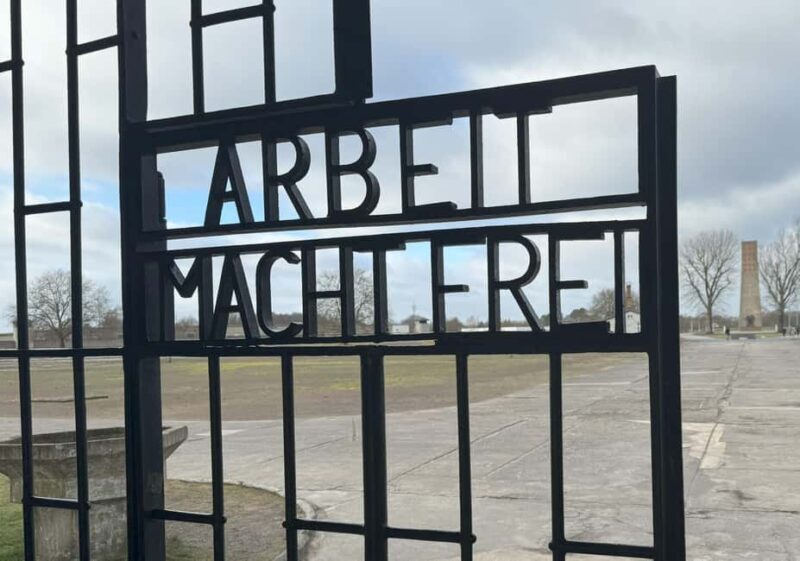
Arriving at Sachsenhausen, you’ll enter through the infamous “Arbeit macht frei” gate, a chilling reminder of the cruel irony embedded in the camp’s architecture. From the roll-call square, you’ll get a sense of how vast the site really was. Original barracks, the shoe-testing track, and the prison that once detained Hitler’s personal detainees all reveal the practical and brutal aspects of life inside.
The tour will take you to Station Z, the site of mass murder and where over 50,000 bodies were burned in the crematorium. You’ll see some of the original structures and hear stories of the victims and perpetrators, giving weight to the scale of the atrocities committed here. Despite being more than 80 years later, many traces of the camp remain, offering a sobering reminder of history.
The guide will also explore how society has remembered Sachsenhausen over the past decades, from initial silence to a culture of remembrance and ongoing debates about justice. This part of the tour encourages us to reflect on how we confront such a horror in the present day.
After roughly two and a half hours on-site, you’ll return to Berlin by train, with assistance from your guide to catch your onward connection or plan the rest of your day. You could stay longer at Sachsenhausen if you wish, exploring on your own, or continue with other activities.
You can also read our reviews of more tours and experiences in Berlin.



A Closer Look at the Itinerary
Starting Point at Oranienburger Straße
The tour begins with a brief walk to the meeting point, located at a historic building in front of the former Imperial Post Office. The guide’s welcoming presence and the colorful umbrella make it easy to identify the group, creating a friendly and organized start to the day.
The Train Journey and Introduction
The train ride serves as both a practical transport link and a chance to hear a concise overview of Hitler’s ascent, giving you essential background before arriving at the camp. The 40-minute ride is a good opportunity to settle in and prepare mentally for what’s to come.
More Great Tours NearbyExploring Oranienburg and the Camp System
Walking through the town, your guide highlights Sachsenhausen’s unique role, especially within the broader network of over 1,000 camps. The large overview map visually demonstrates how quickly the camp system expanded, emphasizing the Nazi regime’s logistical efficiency.

Entering Sachsenhausen
Passing through the gates, you will stand in the roll-call square — the central point from which the camp’s scale hits home. Original barracks and the infirmary are reminders of daily life and the grim medical experiments conducted there.
Visiting Station Z
The site of mass murder, Station Z is perhaps the most emotionally intense part of the tour. Seeing the crematorium and hearing detailed stories about the victims and the mechanics of mass killing deepen your understanding of the camp’s horror.
Reflection on Justice and Memory
Toward the end, the guide discusses how Germans and the world have dealt with this dark history, touching on the psychological aspects of participation and denial. This part helps frame why remembrance remains so vital today.
Returning to Berlin
The train ride back completes the journey, giving you a moment to reflect and process the experience before returning to the city. The guide’s assistance with connections ensures you can plan your next steps without worry.
Practical Details and Considerations
This tour is priced to reflect the comprehensive experience, including transportation, expert guidance, and access to original sites. It’s a great value if you’re interested in a well-structured, educational excursion that covers both the physical site and broader historical themes.
The experience is wheelchair accessible, but the site covers a large area, so comfortable shoes are recommended. Bring weather-appropriate clothing and enough water, as there are no adequate food options on-site. The tour is approximately 5.5 hours long, including travel and on-site visits, so plan accordingly.
Note that the tour is not suitable for children under 10 and offers a serious look at a tragic chapter—this isn’t light sightseeing but a chance for deeper understanding. For those with questions about the emotional intensity or logistics, the guide is very approachable and encourages discussion.
The Bottom Line: Who Should Consider This Tour?
This Sachsenhausen tour is an excellent choice for travelers who want more than just a superficial glance. It’s best suited for those with a genuine interest in history, who are comfortable with intense subject matter, and who appreciate guided storytelling grounded in facts and reflection.
If you’re seeking an experience that combines walking, storytelling, and emotional engagement, you’ll find this tour to be both informative and moving. It’s especially valuable for visitors eager to understand how the Nazi camp system grew and why remembrance remains a global concern.
However, if you prefer lighter sightseeing or are traveling with very young children, this may not be the best option. The emotional weight and walking distance require a certain readiness, but for those prepared, it’s a meaningful journey into Germany’s complex past.
Sachsenhausen Concentration Camp Memorial by train
Frequently Asked Questions
Is this tour suitable for children?
Not for children under 10, as the subject matter can be emotionally exhausting and difficult to understand. It’s designed for mature audiences interested in history and reflection.
How long is the tour?
The entire experience lasts about 5.5 hours, including train rides, walking, and on-site visits.
Is the tour wheelchair accessible?
Yes, the tour is wheelchair accessible, but the site covers a large area, so mobility considerations should be taken into account.
What should I bring?
Bring weather-appropriate clothing, water, and a snack, as there are no adequate food options on-site.
Can I stay longer at Sachsenhausen?
Yes, after the guided tour, you’re welcome to explore on your own or extend your visit.
What languages are available for the guide?
Guidance is provided in both English and German, and the tour is conducted as a private group for a more personalized experience.
How is the history presented?
The tour offers a broad range of perspectives, focusing on the systemic, psychological, and remembrance aspects, encouraging questions and reflection.
Is this tour focused only on Sachsenhausen?
Primarily, yes, but it also provides context about the entire system of Nazi camps and their place in history.
What is the significance of Station Z?
Station Z was the site of mass murder and a crematorium where over 50,000 bodies were burned—it’s a stark reminder of the scale of atrocity.
Is the experience worth the cost?
Given the depth of historical insight, original site visits, and expert guidance, it offers good value for those interested in understanding this dark chapter comprehensively.
In choosing this tour, you’re signing up for a thoughtful, well-organized journey through one of history’s most tragic sites. It’s not light entertainment but a serious educational experience that leaves a lasting impression. Perfect for those ready to face the realities of the past and reflect on lessons for the future.
You can check availability for your dates here: