Hop-On Hop-Off Bus Madrid for Families

We’d been in Madrid for two days and my five-year-old had reached peak walking resistance. “My legs don’t WORK anymore.” She sat down on the pavement outside the Prado and refused to move. That’s when I spotted the red double-decker bus turning the corner at Cibeles, loaded with travelers on the open top deck catching the breeze. Twenty minutes later we were on it, feet up, sun on our faces, with a commentary in our ears telling us about buildings we’d been walking past without noticing. My daughter’s legs made a miraculous recovery. Funny how that works.
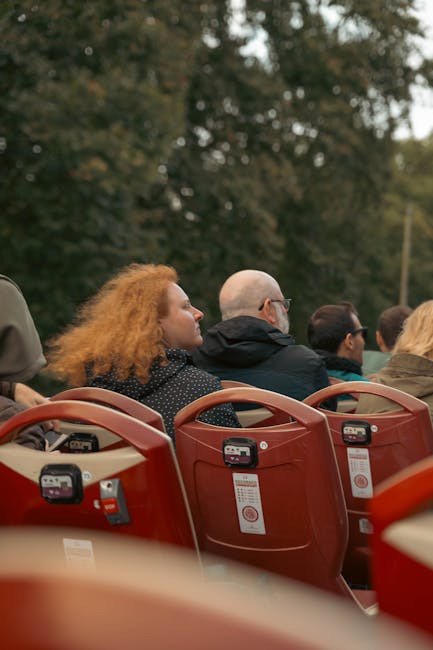
Red open-top sightseeing bus on a city street tour
The Madrid hop-on hop-off bus runs two routes covering every major family attraction. The Royal Palace, the Prado Museum, Retiro Park, the Bernabeu Stadium — all connected by a bus that comes every 7-15 minutes. You sit on top, the kids point at things, and nobody’s feet hurt. It’s not lazy parenting. It’s strategic parenting.

Madrid is a spread-out city. The Royal Palace is at one end, the Bernabeu at the other, and the museums are somewhere in between. Walking between them with children is doable but exhausting — especially in summer when the Madrid heat hits 38°C. The hop-on hop-off bus solves this entirely. It’s transport, sightseeing, and a rest stop rolled into one.

Here’s how to use it with your family.
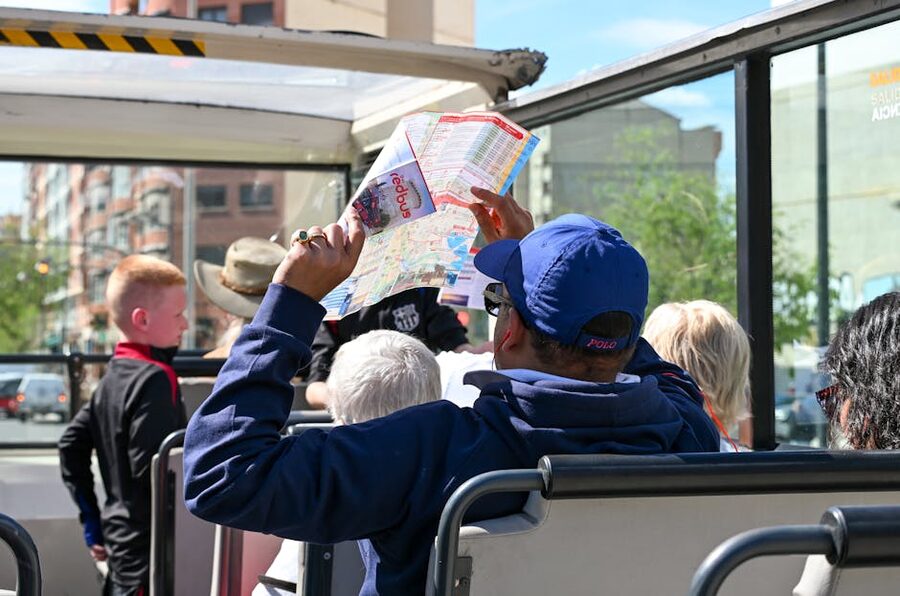
Family enjoying a ride on an open-top tourist sightseeing bus
Children genuinely love sitting on the top deck. The wind, the height, the sensation of the city passing by — it hits some kind of childhood thrill button. My eight-year-old rated the bus higher than some of the actual attractions. “You can SEE everything from up here.” He wasn’t wrong. Madrid’s grand boulevards look spectacular from the top of a double-decker. The buildings, the fountains, the parks — all visible without walking a single step.

Short on Time? Here Are Our Top Picks

Madrid Panoramic Route City Tour — $39
The main hop-on hop-off. Two routes, 37 stops. Over 12,000 reviews. Under-6s ride free.
Book Now
Madrid Panoramic Bus via Viator — $34
Same concept, cheaper. Good backup if option 1 is sold out.
Book Now
Panoramic Open-Top Day or Night Tour — $28
Cheapest option. Includes a live guide. Night tour option for older kids.
Book Now

How the Routes Work
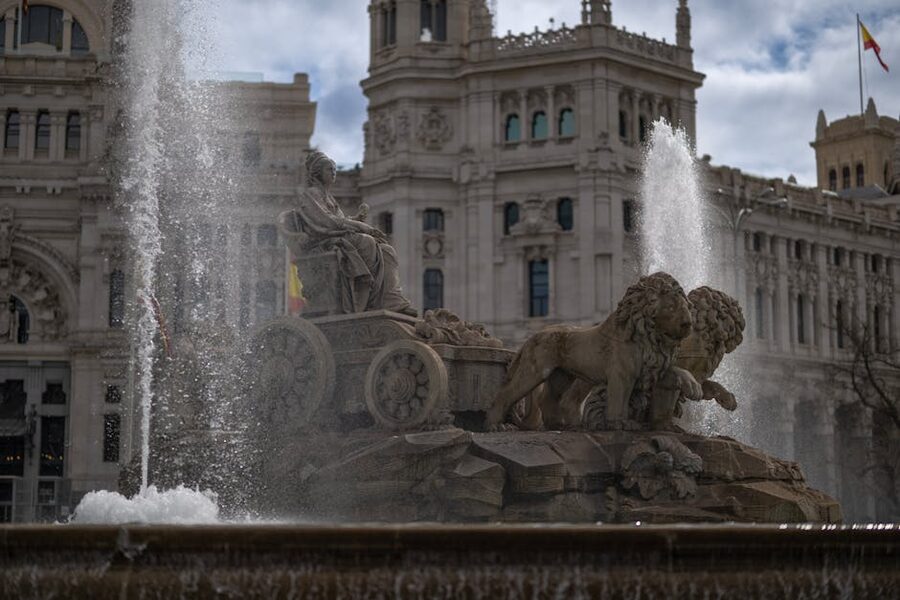
Cibeles Fountain illuminated in the Plaza de Cibeles Madrid
The Cibeles Fountain is one of the most dramatic bus stops on the route. The fountain sits at the intersection of four major roads, surrounded by the Palace of Communications (now City Hall), the Bank of Spain, and the Buenavista Palace. From the top deck of the bus you see it all at once — a 360-degree panorama that’s impossible to appreciate from street level. My son said “it’s like a roundabout but FANCY.” He’s not wrong. It’s Madrid’s most famous roundabout and it’s genuinely spectacular.

Madrid’s hop-on hop-off bus runs two main routes. Route 1 (typically the blue or historic route) covers the old town — the Royal Palace, Plaza Mayor, Puerta del Sol, the Prado Museum, and the Reina Sofia. Route 2 (typically the green or modern route) covers the newer parts — the Bernabeu Stadium, the business district, and the Salamanca shopping quarter.

A full loop on either route takes about 80-90 minutes without stopping. Buses run every 7-15 minutes depending on the time of day. The audioguide commentary is available in 14 languages through headphone jacks on every seat.

With children, plan to hop off at 3-4 stops per route. That turns a 90-minute loop into a full day of sightseeing with the bus as your transport between attractions. Much more practical than the Metro with buggies, and much cheaper than taxis.
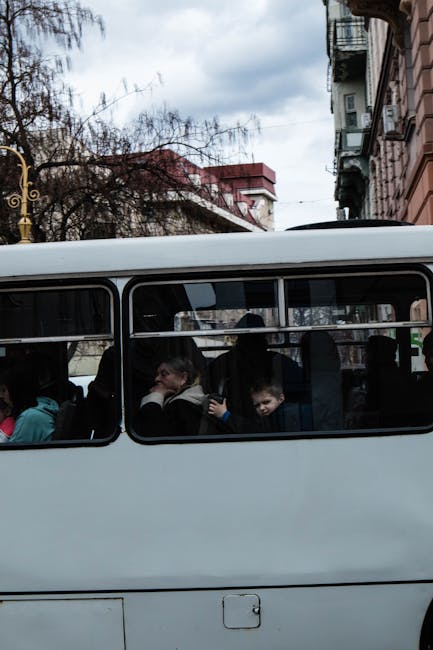
Children looking out of a bus window watching the city go by
The audioguide commentary is geared toward adults but older children can follow along. Each seat has a headphone jack and the commentary covers history, architecture, and local stories. My eight-year-old listened for about 20 minutes before switching to just looking. My five-year-old never bothered with the headphones — she was too busy pointing at things. Both approaches work. The bus does the sightseeing for you regardless of whether anyone listens to the commentary.

The Best Stops for Families

Royal Palace of Madrid seen from the plaza with blue sky
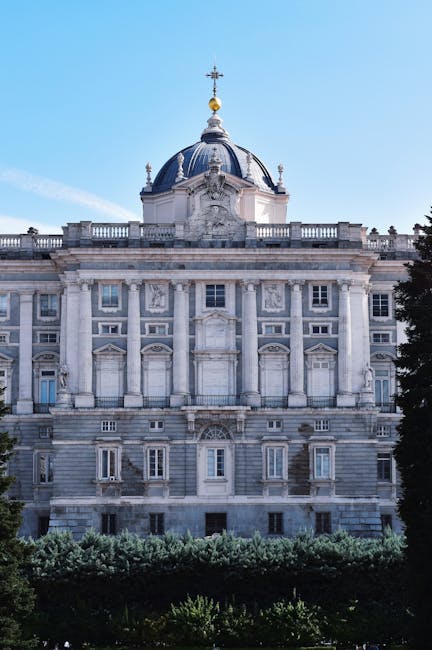
The Royal Palace stop is the obvious family highlight. Hop off, visit the Royal Palace with kids (3,418 rooms, throne room, armoury — children are mesmerised), explore the Sabatini Gardens, then catch the next bus. The bus stop is right on Calle de Bailén, about a 2-minute walk from the palace entrance. If you haven’t pre-booked palace tickets, do it now — the queue without skip-the-line can be 30-45 minutes.

The Royal Palace. The most impressive building on the route. The Royal Palace with kids is one of Madrid’s top family attractions — 50 rooms of gold, crystal, and royal history. Hop off, visit, hop back on. The palace grounds and gardens give children space to run between the structured palace visit and the next bus.
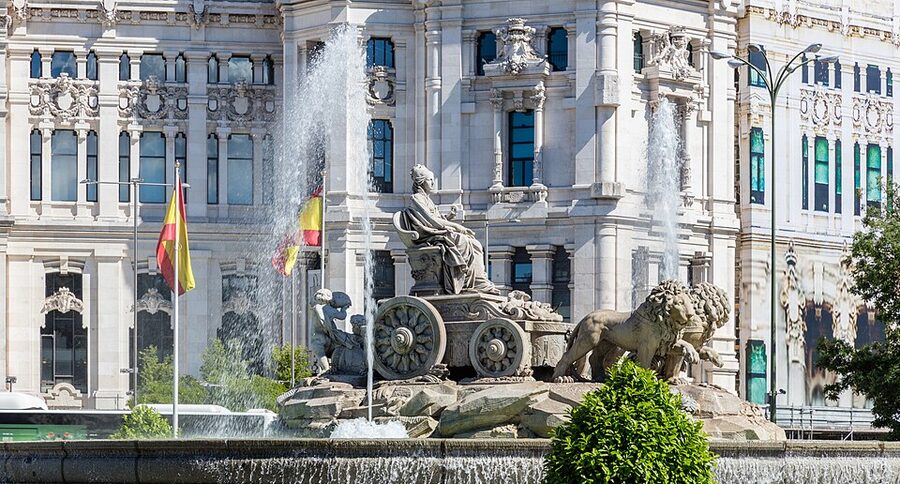
Cibeles Fountain in the Plaza de Cibeles Madrid at blue hour
The Plaza de Cibeles is where Madrid celebrates Real Madrid victories. When the team wins a trophy, the players bring it to the Cibeles Fountain and the whole city gathers. Tell your football-mad children this as the bus passes and watch their eyes widen. If they’ve already done the Bernabeu Stadium Tour, the connection between the stadium and this fountain makes the city feel like one connected football story. Photo by Diego Delso / Wikimedia Commons (CC BY-SA 4.0)

The Prado Museum area. The bus stops near the Prado Museum, the Reina Sofia, and Retiro Park. This is Madrid’s “museum mile” and the densest concentration of family attractions. Hop off here in the morning for the Prado (under-18s free), walk to Retiro Park for the afternoon (rowing boats, Crystal Palace, playgrounds), and catch the bus from the Retiro stop when everyone’s ready to move on.
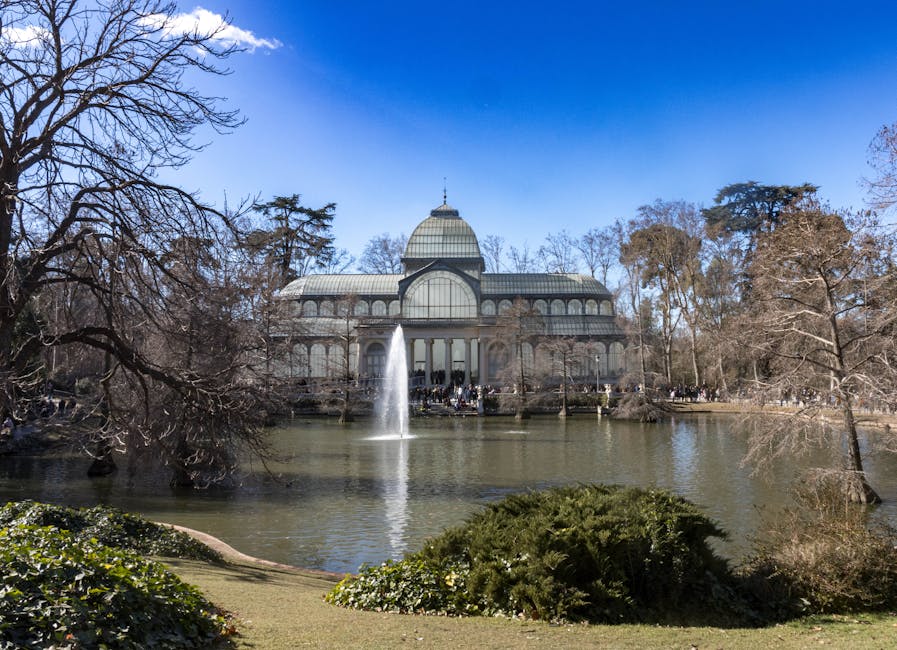
Crystal Palace glass building in Retiro Park Madrid
Retiro Park’s Crystal Palace is a free attraction that children love. A glass pavilion built in 1887, originally for an exhibition of plants from the Philippines. Now it hosts temporary art installations. Free entry. The lake in front reflects the glass beautifully and the surrounding park has playgrounds, rowing boats (about 6 euros for 45 minutes), and enough space for children to run until they’re too tired to complain about anything.

The Bernabeu. Football families: hop off at the Santiago Bernabeu stop. The Bernabeu Stadium Tour takes about 90 minutes. The bus picks you up from the same stop afterwards. The audioguide commentary as the bus approaches the stadium usually mentions Real Madrid’s trophy count, which gets football-mad children bouncing in their seats.
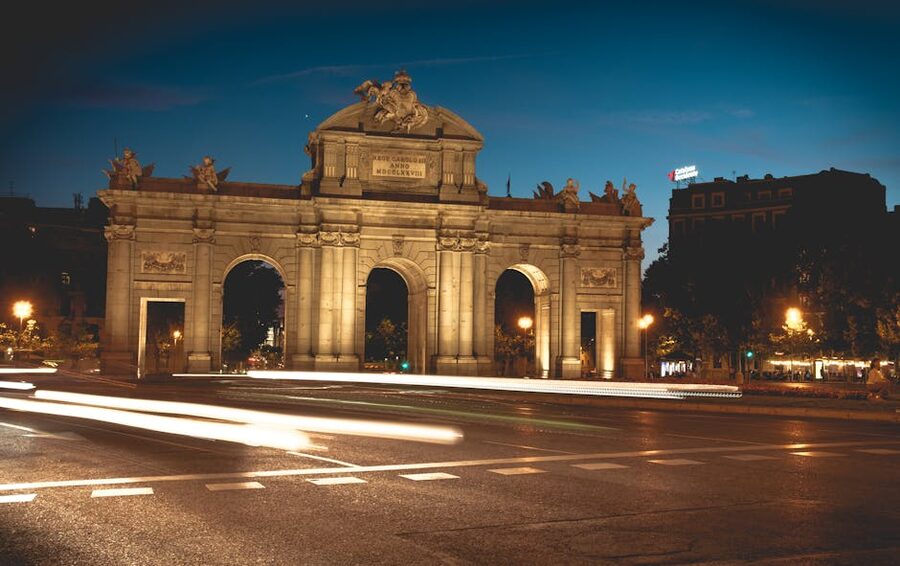
Puerta de Alcala neoclassical gate monument in Madrid
The Puerta de Alcala is one of Madrid’s most photogenic monuments. A neoclassical gate built by Charles III in 1778, standing in the middle of a roundabout where the old city wall used to be. The bus drives right past it. From the top deck you can photograph it perfectly — the angle is better than from street level because you’re above the traffic. My daughter said it looked “like a giant doorway to nowhere.” Architecturally, she’s not far off.

Temple of Debod. A genuine Egyptian temple, donated by Egypt in 1968 as a thank-you for Spain’s help saving monuments during the Aswan Dam construction. It’s free, it’s unexpected, and it’s surrounded by parkland with the best sunset viewpoint in Madrid. The bus stops nearby at Plaza de España.
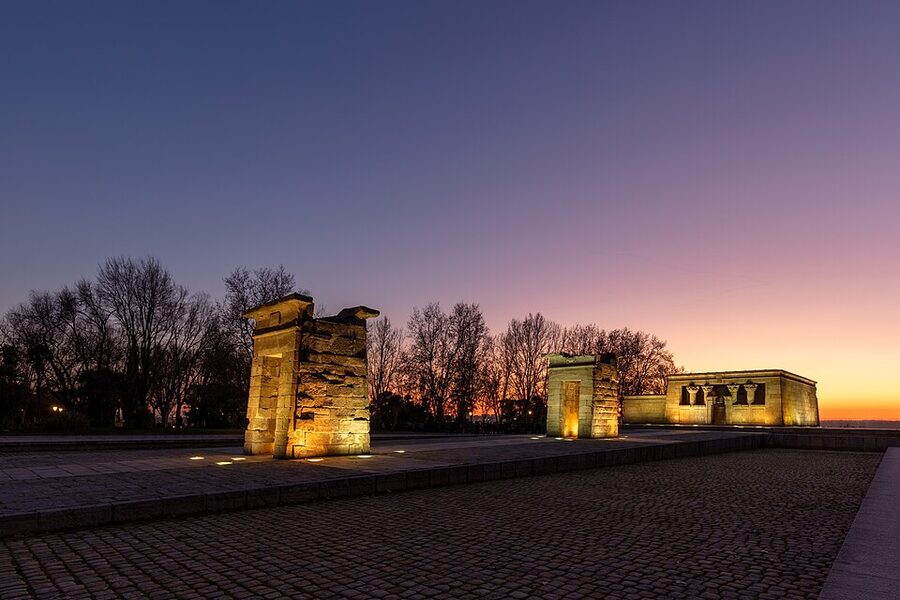
Temple of Debod Egyptian monument with reflection pool in Madrid
The Temple of Debod is a 2,200-year-old Egyptian temple in the middle of Madrid. My children found this genuinely confusing. “Why is there an Egyptian temple HERE?” Because Egypt gave it to Spain in 1968. The Montaña Park around the temple has the best sunset views in Madrid — the western horizon stretches over the Casa de Campo park. If your bus day finishes in the late afternoon, hop off at Plaza de España and walk to the temple for sunset. Free. Extraordinary. Photo by Diego Delso / Wikimedia Commons (CC BY-SA 4.0)

Puerta del Sol. Madrid’s central square and kilometre zero — the point from which all distances in Spain are measured. The bear and strawberry tree statue is here. The kids will want to find it (it’s small and easy to miss in the crowds). This is also the closest bus stop to the Atocha station if you’re combining the bus day with a train trip to Toledo or Segovia and Avila.
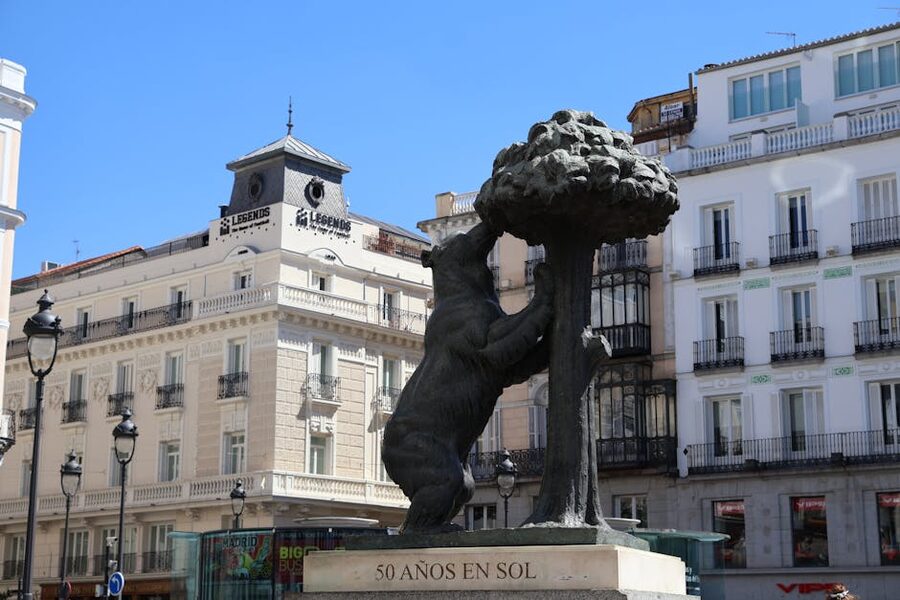
El Oso y el Madrono bear and strawberry tree statue at Puerta del Sol Madrid
The bear and strawberry tree is Madrid’s official symbol. You’ll see it on manhole covers, taxis, and the city flag. The bronze statue at Puerta del Sol is the one everyone photographs. It’s smaller than you’d expect — about 4 metres tall. My kids found it immediately because every other family was already standing around it. The tradition is to touch the bear’s nose for good luck. My daughter touched its foot. Close enough.

Day Tour vs Night Tour: Which for Families?
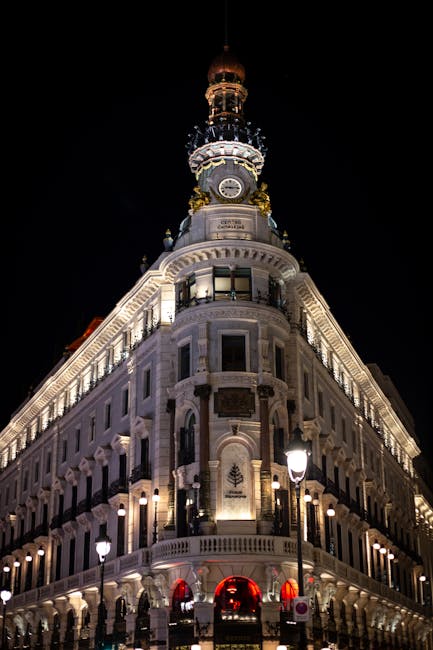
Gran Via street in Madrid illuminated at night with traffic and buildings
Madrid at night is a different city. Gran Via lit up with neon signs, the fountains illuminated in changing colours, the rooftop bars glowing above the skyline. The night tour ($28) runs a shorter route through the illuminated streets with a live guide. For families with children aged 8+ who can handle a 9pm start, it’s genuinely magical. For anyone with under-7s, it’s past bedtime and you’ll pay for it the next morning. We did it with our eight-year-old and she still talks about it.

Day tour for families with children under 8. Buses run from about 9:30am to 7pm. You get the full hop-on hop-off flexibility, all the stops, and natural light for photography. This is the one most families should book.

Night tour for families with children over 8. A dedicated evening route with a live guide (not recorded commentary). Shorter — about 75 minutes without stopping. Madrid’s illuminated monuments look spectacular from the open top deck. The atmosphere is completely different from the daytime version. But the start time (typically 9-10pm) makes it impractical for younger children.

The night tour is a separate ticket from the day tour. Some operators offer a combo discount. Check when booking.

How the Bus Compares to the Metro
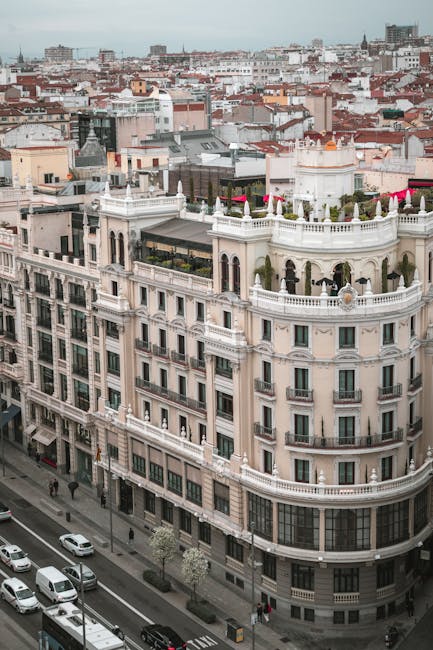
Panoramic city view from a rooftop terrace in Madrid
The bus gives you views that the Metro never can. Madrid’s Metro is efficient but underground. You miss everything between stations. The bus runs on the surface through Madrid’s grandest boulevards — Paseo del Prado, Paseo de la Castellana, Gran Via. Every minute on the bus is sightseeing. Every minute on the Metro is a dark tunnel. For families spending 3+ days in Madrid, use the bus on days 1-2 for the overview, then switch to the Metro for targeted return visits to specific attractions.
Madrid Atocha train station interior
Atocha station is near one of the bus stops and it’s worth a quick visit even if you’re not catching a train. The tropical botanical garden inside the station (free, with turtles in a pond) is one of Madrid’s quirkiest attractions. If you’re planning a day trip to Toledo or Segovia and Avila, the high-speed trains depart from here. The Reina Sofia Museum is literally next door.

Madrid’s Metro is cheap, efficient, and covers the whole city. But with children, it has drawbacks. Steps and escalators with buggies. Underground transfers in the heat. No views. No breeze. No sightseeing between stops.

The hop-on hop-off bus costs more per ride but includes the sightseeing. A family of four using the Metro for a full day of travel costs about 20-25 euros. The bus is about 40-50 euros for the same family. The difference is that the bus IS the activity — you’re sightseeing while you travel. The Metro is just transport.

My recommendation: use the bus for your first 1-2 days in Madrid to get oriented, then switch to the Metro for return visits to specific attractions. The bus gives you the overview. The Metro gives you the depth.

A Bit of History: Madrid’s Grand Boulevards
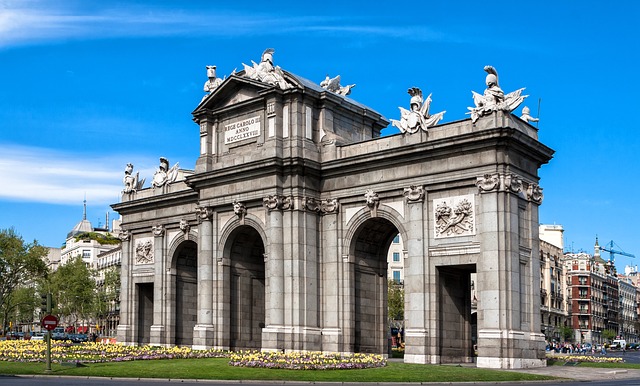
Puerta de Alcala neoclassical monument in Madrid at dusk
The Puerta de Alcala was built in 1778 as the grandest of Madrid’s five ancient gates. Charles III commissioned it as part of his plan to transform Madrid from a medieval backwater into a European capital that could rival Paris and Vienna. The wide boulevards the bus drives along — the Paseo del Prado, the Paseo de la Castellana — were all part of that same 18th-century makeover. Madrid’s grandeur isn’t accidental. It was designed, deliberately, by a king who wanted his city to impress.

The grand boulevards that the bus drives along tell Madrid’s story. The Paseo del Prado was designed in the 18th century by Charles III as a public promenade — one of the first in Europe. He planted trees, installed fountains (Cibeles, Neptune, Apollo), and built the Prado Museum building as a natural science museum. The boulevard transformed Madrid from a small Castilian capital into a city that could stand alongside Paris and London.

The Paseo de la Castellana continues the boulevard northward — a 20th-century extension that now houses Madrid’s financial district, the Bernabeu, and modernist skyscrapers. Riding the bus from the old town to the Bernabeu is a journey through 300 years of architectural evolution. Children notice the shift — “the buildings are getting taller” — and the conversation about how cities grow is built into the bus route itself.

Madrid Gran Via buildings architecture
Gran Via from the bus is one of Madrid’s great architectural spectacles. The boulevard was cut through the old town in the early 1900s and lined with buildings that range from Belle Epoque to Art Deco to Brutalist. Every building is different. From the top deck you see the rooftop ornaments that are invisible from street level — domes, turrets, statues, and neon signs stacked on top of each other. My son said it looked “like every building was trying to be the tallest.” In the 1920s, that was literally the competition.
Royal Palace of Madrid with gardens in foreground
The Royal Palace gardens are visible from the bus as it passes along Calle de Bailén. You can see the Sabatini Gardens’ formal hedges and the palace’s north facade from the top deck — a preview that makes the Royal Palace visit even more exciting for children. “We’re going IN there?” Yes. And the inside is even more impressive than the outside. Promise.

Gran Via, which the bus crosses or passes near, was built in the early 1900s by demolishing 300 houses to create Madrid’s version of Broadway. The cinemas, theatres, and neon signs give it an energy that’s completely different from the stately Paseo del Prado. My son called it “the fun street.” The Prado boulevard he called “the serious street.” Both are correct.
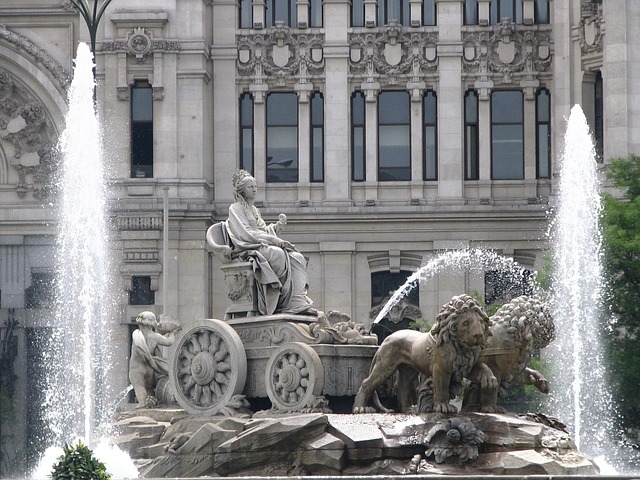
Cibeles Fountain with horse-drawn chariot sculpture in Madrid
The Cibeles Fountain shows the goddess Cybele riding a chariot pulled by two lions. Built in 1782, it was originally a water supply point for locals. Now it’s Madrid’s most recognisable monument and the place where Real Madrid celebrate their trophies. The bus drives right past it on Route 1. From the top deck you look directly at Cybele’s face — an angle that’s impossible from the street. My son waved at her. She didn’t wave back. He wasn’t discouraged.

Practical Tips for Families

Traditional Spanish churros with a cup of thick hot chocolate
Build a churros stop into your bus day. Chocolatería San Ginés near Plaza Mayor (a 5-minute walk from the Sol bus stop) has been serving churros with thick hot chocolate since 1894. It’s not optional with children. It’s mandatory. Budget about 6-8 euros for two. The chocolate is thick enough to stand a spoon in. The churros are crisp, hot, and exactly the kind of treat that turns a good day into a great one. Go mid-afternoon when the queue is shortest.

Suncream. The top deck has no shade. In summer you’re exposed for the entire ride. Madrid sun at 2pm in July is brutal. Hats, suncream, water. Factor this into your timing — morning and late afternoon rides are cooler than midday.

Under-6s ride free. Children aged 6-15 get a reduced rate. Two adults and two kids (aged 5 and 8) cost us about $85 total for a 24-hour ticket. Not cheap, but cheaper than the equivalent in taxis and considerably more fun.

Buggies. Fold and store in the lower deck luggage area. The top deck is not buggy-accessible (stairs). If you have a baby, one parent rides up top with the older kids while the other stays below with the buggy. Swap at the next stop.

The audioguide is included in all tickets and available in 14 languages. Each seat has headphone jacks. Bring your own headphones if possible — the provided ones are basic. Kids over 7 can usually follow the commentary. Under-7s won’t care.
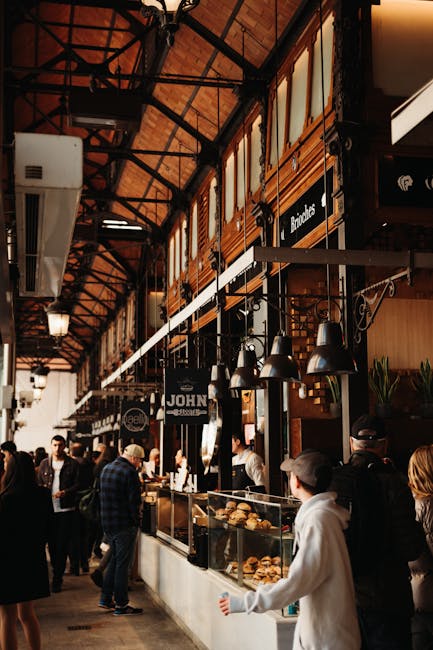
Interior of Mercado San Miguel gourmet food market in Madrid
Mercado San Miguel is a 2-minute walk from the Plaza Mayor bus stop. A glass-walled gourmet market selling tapas, seafood, wine, juice, and pastries. It’s touristy and not cheap, but the quality is excellent and the kids can point at what they want rather than reading a menu. Budget 15-20 euros for a family snack. The ham croquettes are exceptional. The fresh fruit juices keep children happy. Consider it an expensive but worthwhile mid-bus-tour refuelling stop.

Best time to ride. Start at 10am for the coolest temperatures and shortest queues at attractions. The midday section (12-2pm) is hottest on the top deck. Either stay indoors at a museum during this period or ride the lower deck with air conditioning. Late afternoon (4-6pm) is the second-best riding time — the golden light makes Madrid’s stone buildings glow.

The app. Most operators have a live bus tracker app. Download it before you go — it shows real-time bus positions so you know exactly when the next one arrives. Essential when children are asking “when’s the bus coming?” every 30 seconds.
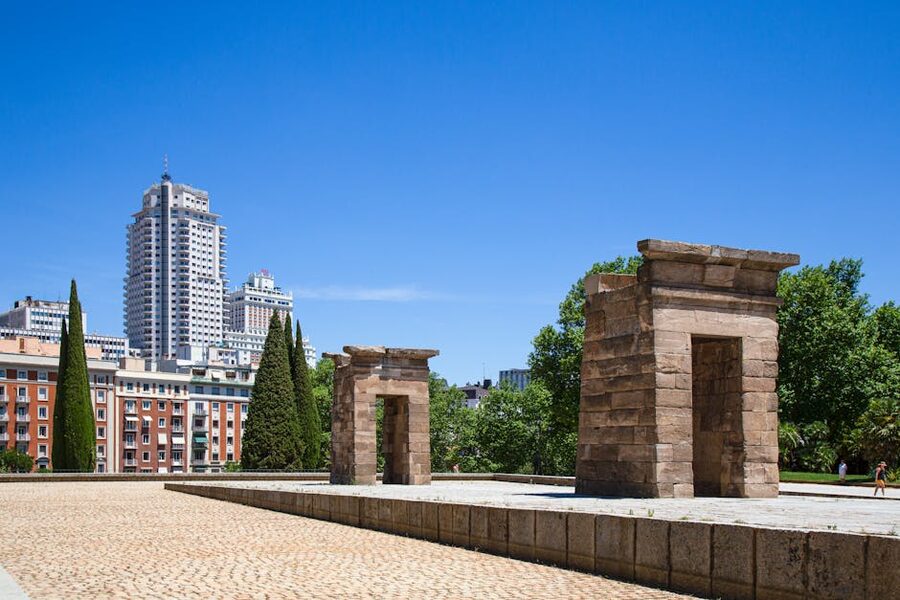
Temple of Debod Egyptian temple reflected in water at sunset in Madrid
End your bus day at the Temple of Debod for sunset. Hop off at the Plaza de España stop (one of the last on Route 1) and walk uphill to the Montaña Park. The Egyptian temple is free to visit and the western-facing viewpoint has the best sunset in Madrid. Families gather here in the golden hour — the sky turns pink and orange over the Casa de Campo park, and the temple is silhouetted against it. My daughter said “the sky is ON FIRE.” It looked like it. Free, unforgettable, and the perfect end to a bus day.

The Best Bus Tickets for Families

1. Madrid Panoramic Route City Tour — $39
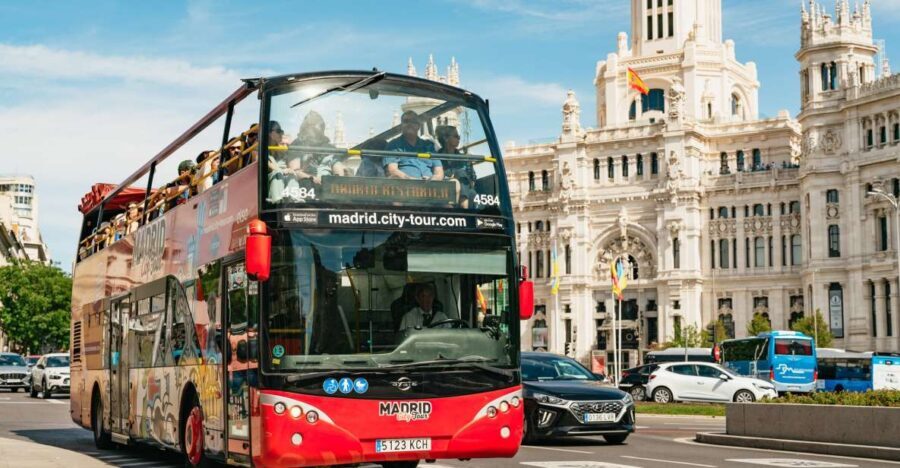
Madrid panoramic city tour bus
The most popular Madrid bus tour with over 12,000 families’ worth of reviews. Two routes, 37 stops, audioguide in 14 languages. Under-6s ride free. The 24-hour ticket activates on first use so you can buy in advance without committing to a date. This is the one we’ve used on every Madrid visit. It connects the Royal Palace, the Prado, the Bernabeu, and Retiro Park in a single loop. No planning needed.

The essential Madrid bus experience with over 12,000 reviews. Two routes covering every major attraction, buses every 7-15 minutes. Our full review covers the routes, stops, and timing strategy. The obvious first choice for families who want flexibility and full city coverage.

2. Madrid Panoramic Bus Tour (Viator) — $34
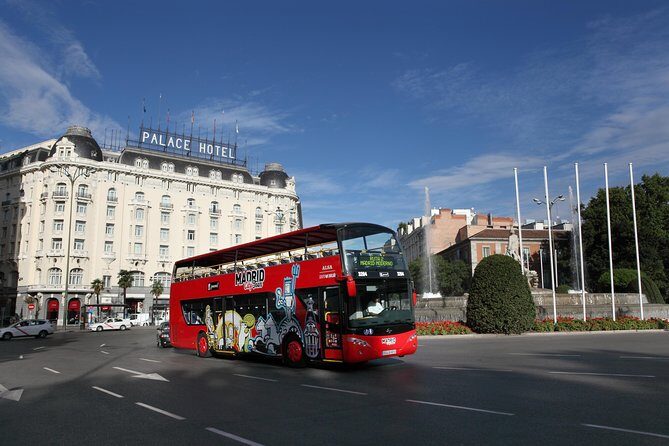
Madrid panoramic city bus tour
A cheaper alternative at $34 per adult. Over 3,100 reviews. Same hop-on hop-off concept with similar routes. The Viator version sometimes has different stop locations, so check the route map before booking. For families on a budget, the $5 saving per adult adds up — that’s almost enough for a round of churros at San Ginés.

A more affordable alternative with over 3,100 reviews. Similar routes and coverage. Our review compares this with the GYG option. Worth checking if option 1 is sold out or if the $5-per-person saving matters to your budget.

3. Panoramic Open-Top Day or Night Tour — $28
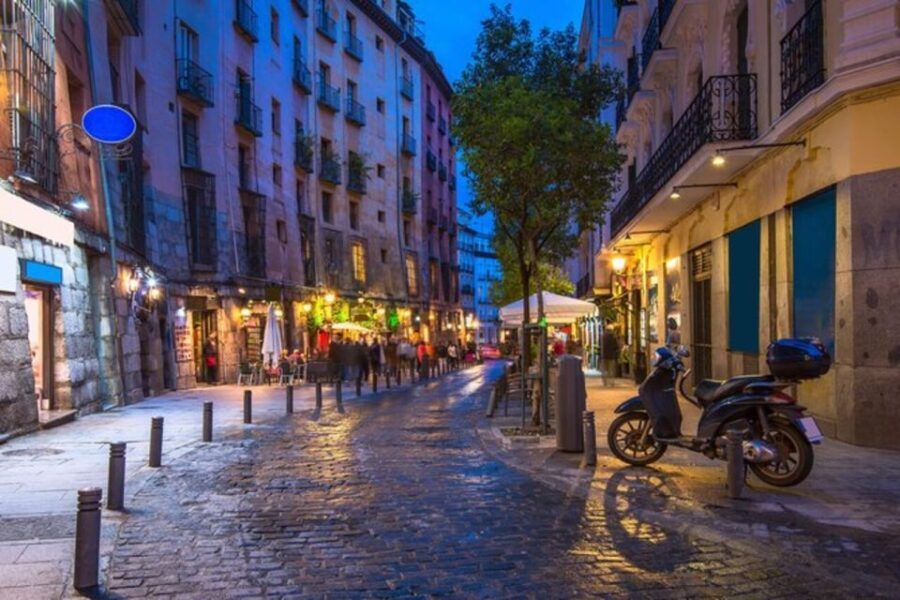
Madrid panoramic open top bus tour day or night
The cheapest and most unique option — a live guide instead of a recording. 916 reviews. A real person on the bus telling stories about Madrid, answering questions, and adapting to the group. Children engage more with a live voice than a recording. The night tour version runs a shorter illuminated route and is genuinely atmospheric for older kids. At $28 per adult it’s the budget choice and the most personal experience.

A live-guided panoramic tour with day or night options. 916 reviews. The live guide makes this more personal than recorded commentary. Our review covers both the day and night versions. Best for families who want a guide’s personality or families with older children who’d enjoy the night tour.

The Perfect Family Bus Day in Madrid
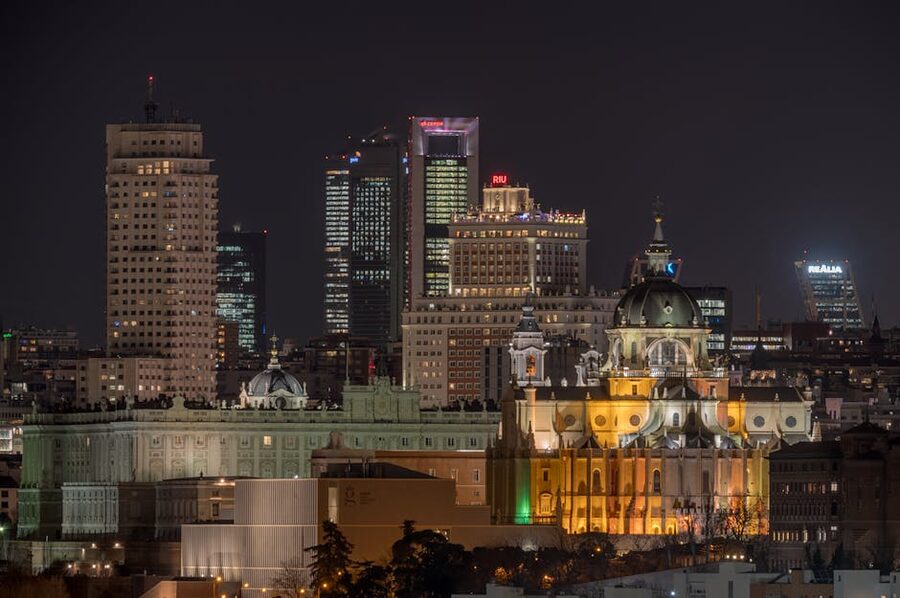
Panoramic view of Madrid city skyline at night with lights
By the end of a bus day, your family will know Madrid’s geography. Where the palace is relative to the park. Where the museums sit in relation to the stadium. How Gran Via connects to Sol connects to the Prado boulevard. This spatial understanding makes the rest of your holiday easier — the kids start navigating by landmarks instead of Google Maps. “The palace is THAT way.” They’re right. They learned it from the top of a bus.

Here’s the itinerary that works for families with children aged 4-10:

10am: Board at Puerta del Sol. Ride Route 1 to the Royal Palace. Hop off.

10:30am-12:30pm: Visit the Royal Palace (90 minutes). Walk through the Sabatini Gardens.

12:30pm: Catch the bus from the Royal Palace stop. Ride to Plaza Mayor. Hop off for lunch.

1-2pm: Lunch at Mercado San Miguel or a tapas bar on Plaza Mayor. Churros at San Ginés.

2pm: Catch the bus from Sol/Plaza Mayor stop. Ride to the Prado/Retiro area. Hop off.

2:30-4:30pm: Retiro Park — rowing boats, Crystal Palace, playground. Or visit the Prado (under-18s free) or Reina Sofia ($14 adults, under-18s free).

4:30pm: Catch the bus from Retiro. Ride to Plaza de España. Hop off.

5pm: Walk to the Temple of Debod for sunset. Free.

6:30pm: Walk downhill to the old town for dinner. Or catch the last bus back to your hotel area.

That’s four hop-off stops, three major attractions, a food market lunch, churros, a sunset at an Egyptian temple, and zero walking meltdowns. Total bus cost: about $85 for a family of four. Total memories: significantly more than $85 worth.

What Else to See in Madrid with Kids
Rowing boats on the lake in Retiro Park Madrid
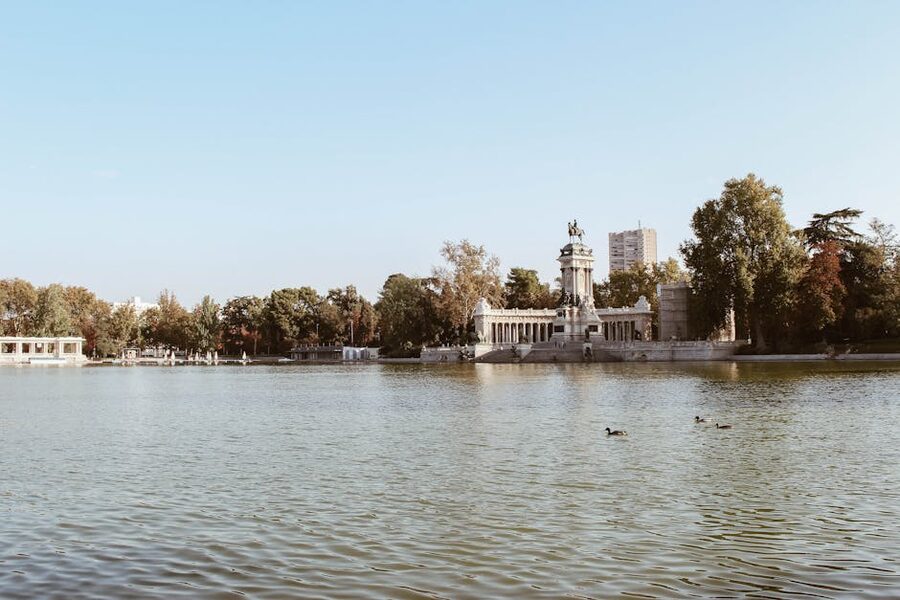
Retiro Park is the green heart of Madrid. 125 hectares of gardens, lakes, playgrounds, puppet shows, and the Crystal Palace. It’s reachable by bus (Route 1 stops nearby) and it’s free. The rowing boats cost about 6 euros for 45 minutes and the kids will fight over who steers. The park is where Madrid families go on weekends — you’ll be surrounded by Spanish children and their parents, which gives your kids a sense of how local families enjoy the city.

The bus connects to every Madrid family attraction we’ve covered. The Royal Palace is grandeur and history. The Prado Museum is art that children actually react to — Goya’s monsters, Bosch’s bizarre creatures. The Reina Sofia has Guernica — the painting that stops children in their tracks. The Bernabeu Stadium Tour is non-negotiable for football families. And for day trips, Toledo and Segovia and Avila take you to medieval fortress cities where the bus’s modern comfort is replaced by something much older and much more thrilling for children’s imaginations. Madrid gives families enough for a week. The bus is how you see it all without anyone’s legs giving up.