
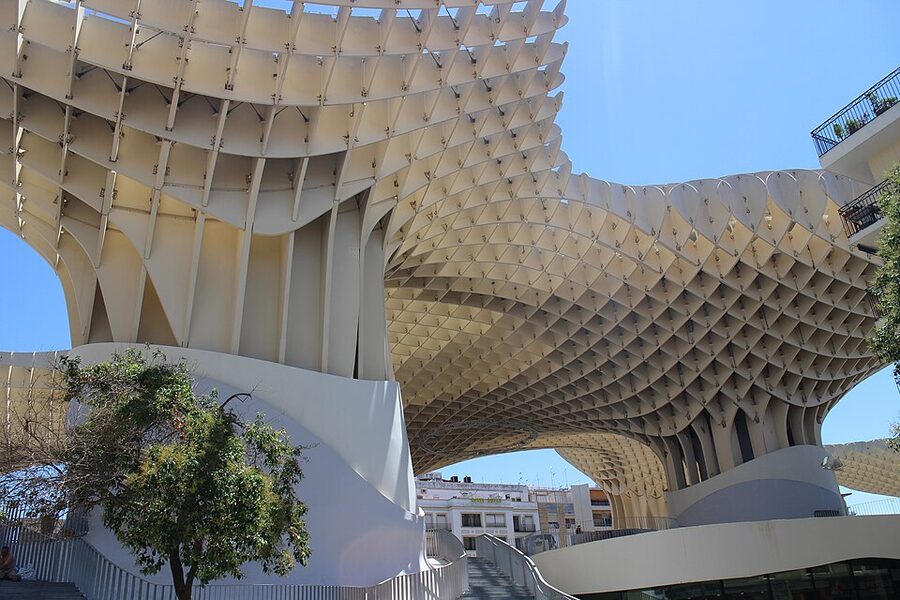
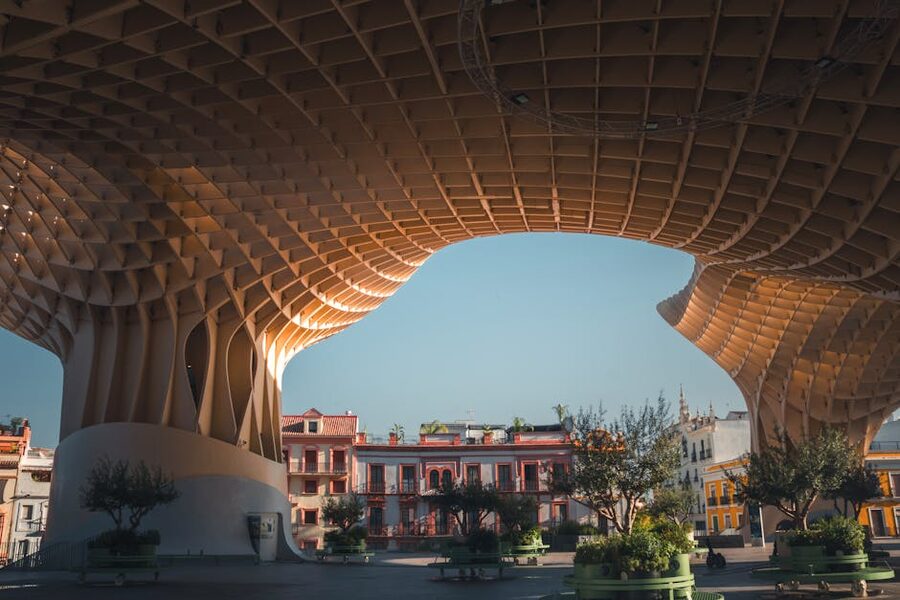
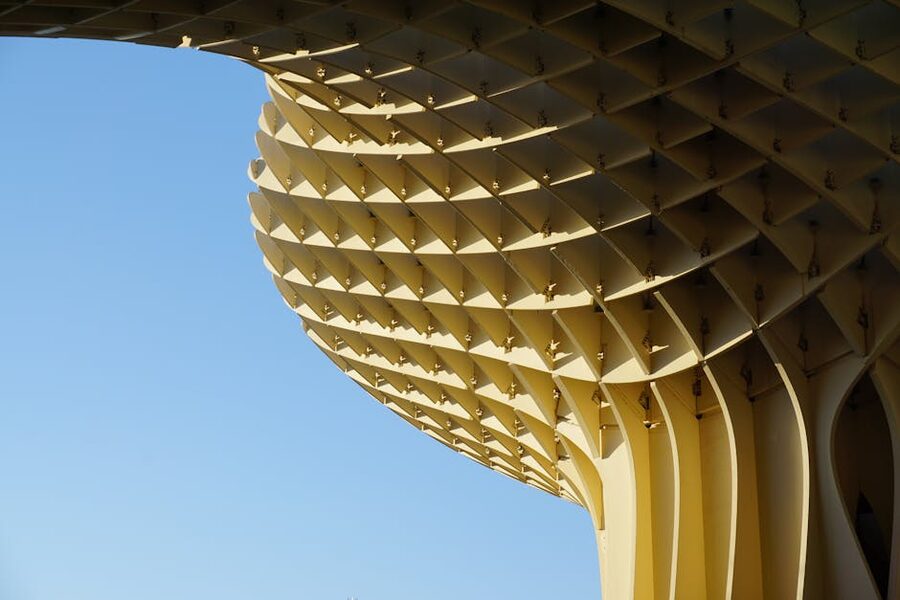
My seven-year-old spotted the Setas from three streets away and asked if it was “where the giants live”. Which is exactly the right question — the Metropol Parasol looks like something dropped from a fantasy novel into the middle of old Seville, all wooden curves and honeycomb holes, and it’s the single most kid-friendly piece of architecture in the whole city. Even better: the top walkway is open to the public for €18, with panoramic views and a bounce-free toddler route.
In a Hurry? Our Family Picks
Best for most families: Setas de Sevilla Entry Ticket ($18) — self-paced, includes rooftop walkway and audio-visual experience, 8,900+ reviews.
With a guide and city tour: Las Setas Guided Tour & Optional City Tour ($34) — adds context and an optional walking tour.
Pair with a flamenco show: Flamenco at Tablao Flamenco Las Setas ($33) — same venue, nightly show in the basement.
- In a Hurry? Our Family Picks
- Why the Setas works brilliantly with kids
- What the visit is actually like
- The rooftop walkway in detail
- The audio-visual experience
- The market and food options
- Our top picks to book
- 1. Setas de Sevilla Entry Ticket —
- 2. Las Setas Guided Tour + Optional City Tour —
- 3. Tablao Flamenco Las Setas —
- Getting there
- Best time to visit
- Practical tips
- Combining with other Seville activities
- Skip the Setas if…
- A short history (for the kids who ask)
- Age-by-age guide
- What to prep your kids for
- Seville from above — how does it compare to the Giralda?
- What if it rains?
- Before you book, an honest list
Why the Setas works brilliantly with kids
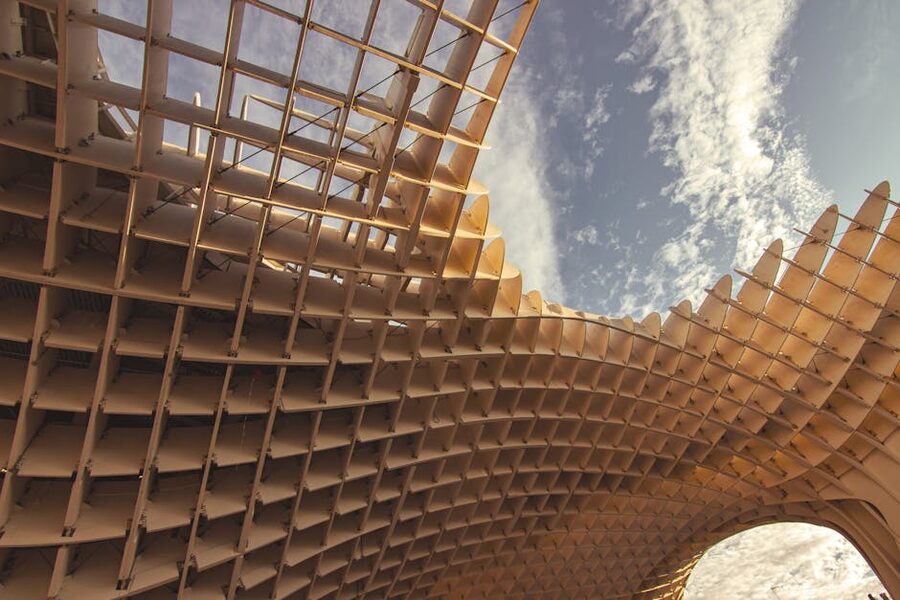
Most Seville must-sees (Cathedral, Alcázar, river cruise) are serious-historical. The Setas is the opposite — playful, weird, new. It gives kids a mental break from medieval architecture while still being a “proper attraction” with a ticket and a queue.
Three reasons it specifically works for families:
The rooftop walkway. You climb up via lift, then walk a curving raised path across the top of the structure. No drops, no narrow edges, no vertigo moments — the path is 2 metres wide with high railings. Kids aged 3+ can walk it on their own, safely.
The light show at sunset. Free (well, included in your ticket) and properly impressive — the structure is lit with coloured LEDs that shift through patterns for about 20 minutes around sunset. Kids love this.
The short visit length. You can do the whole thing in 45 minutes if you’re efficient, or 90 minutes if you linger. It’s the perfect “we’ve got two hours between activities” attraction.
What the visit is actually like
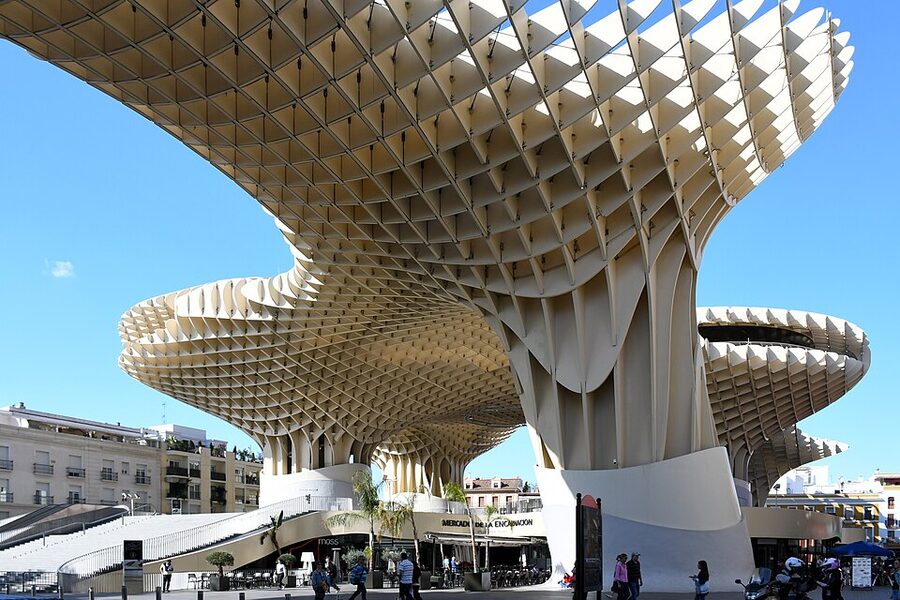
The Metropol Parasol is built on four levels:
Level -1 (basement): Antiquarium — a small archaeological museum showing Roman and Moorish remains found when the site was excavated. Free to wander, interesting for kids 8+ who’ve done some history at school.
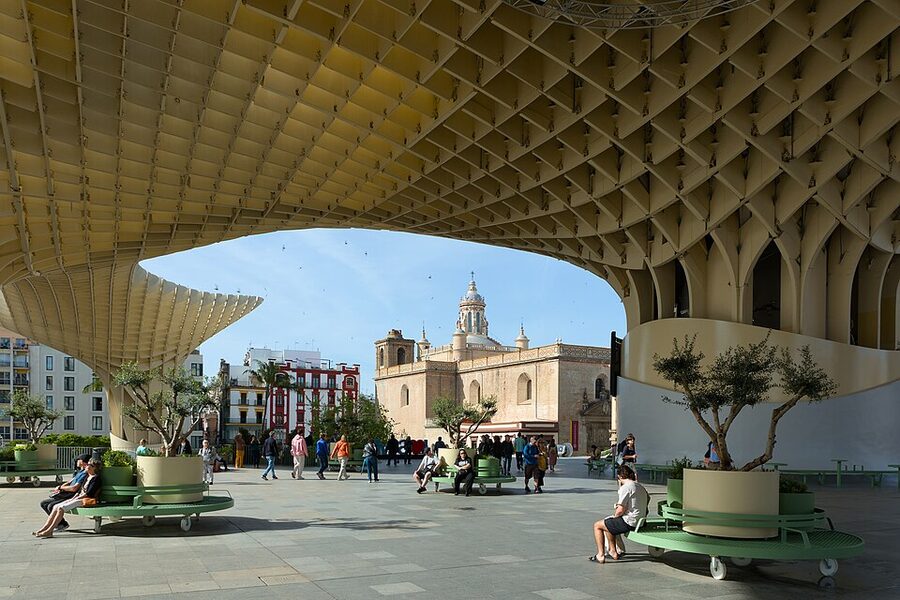
Level 0 (ground): the public plaza and a central market (Mercado de la Encarnación) — a covered food market with stalls selling fish, meat, vegetables, and a few good tapas bars.
Level 1: the terrace café and entrance to the rooftop walkway.
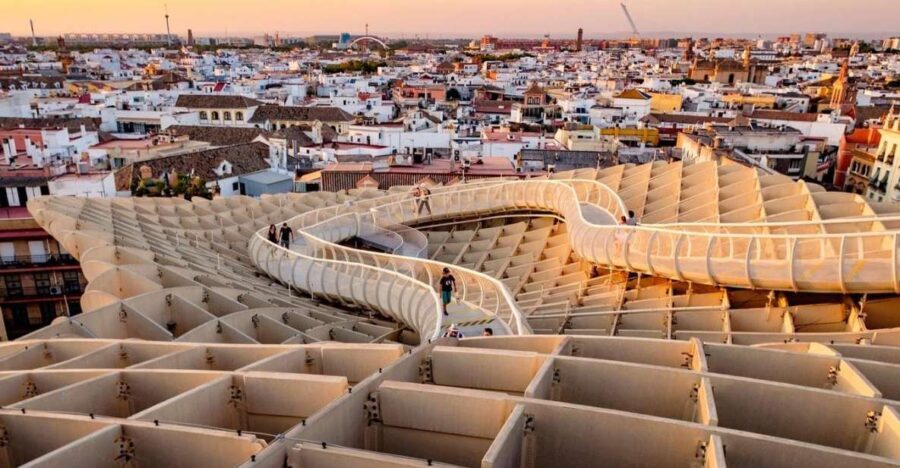
Level 5 (rooftop): the panoramic walkway itself, about 250m end to end, curving across the top of the “mushroom” canopy.
The rooftop walkway in detail
You go up via a lift on the south-west side of the structure. The lift holds 8-10 people; queues are short outside peak hours. You come out at the start of the walkway, where there’s a small café (good coffee, €4).
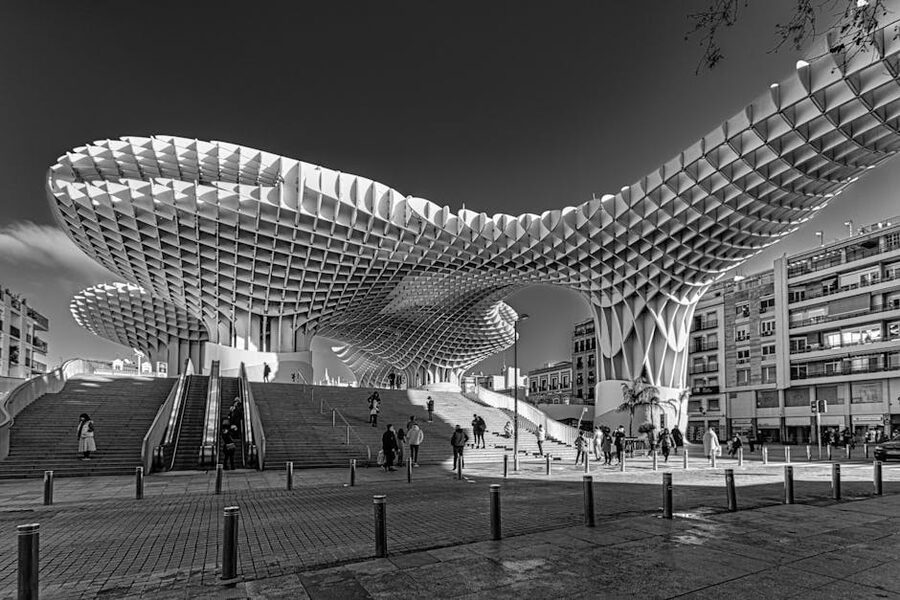
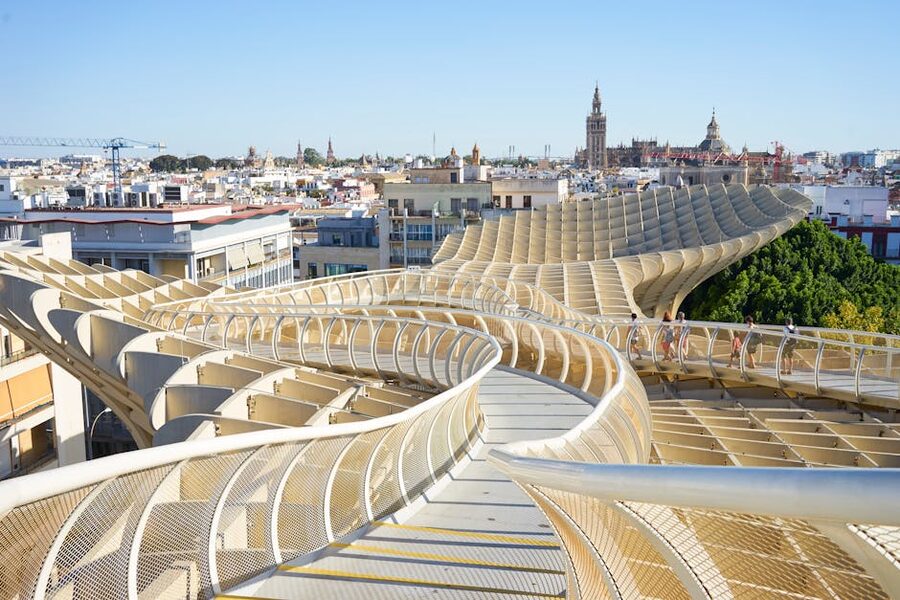
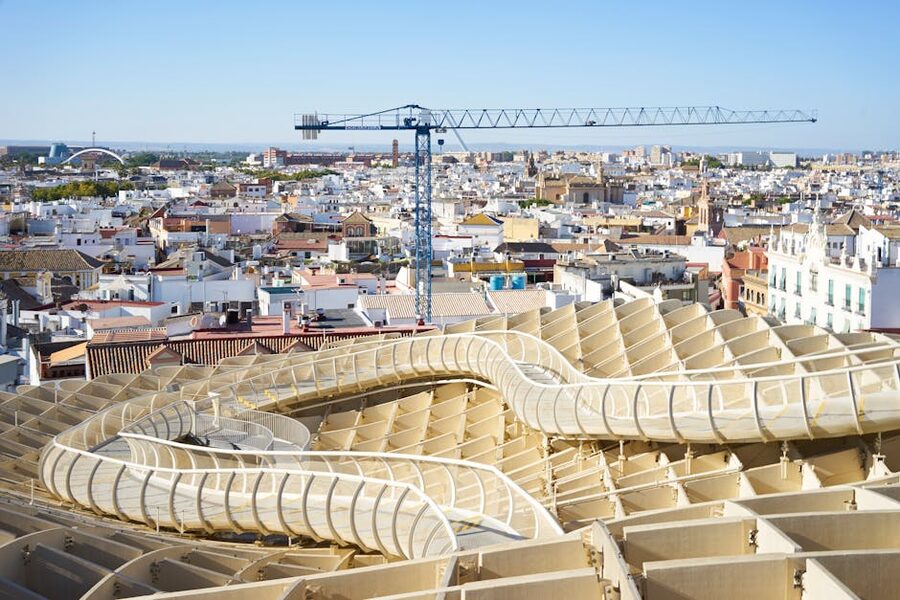
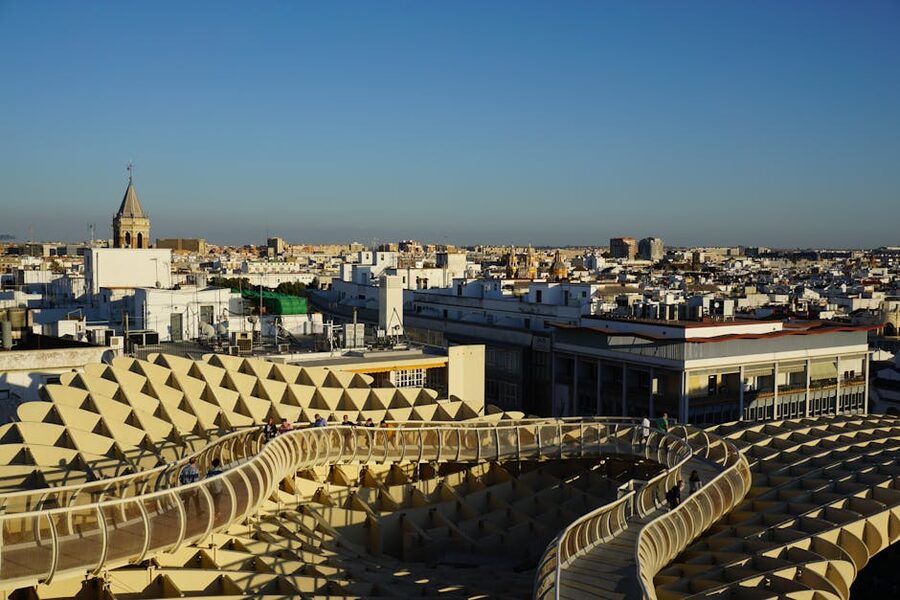
The walkway itself is about 250m long and takes 15-20 minutes if you stop for photos at every viewpoint. It rises and falls gently over the canopy — no stairs, all ramps — and the views open up in all directions.
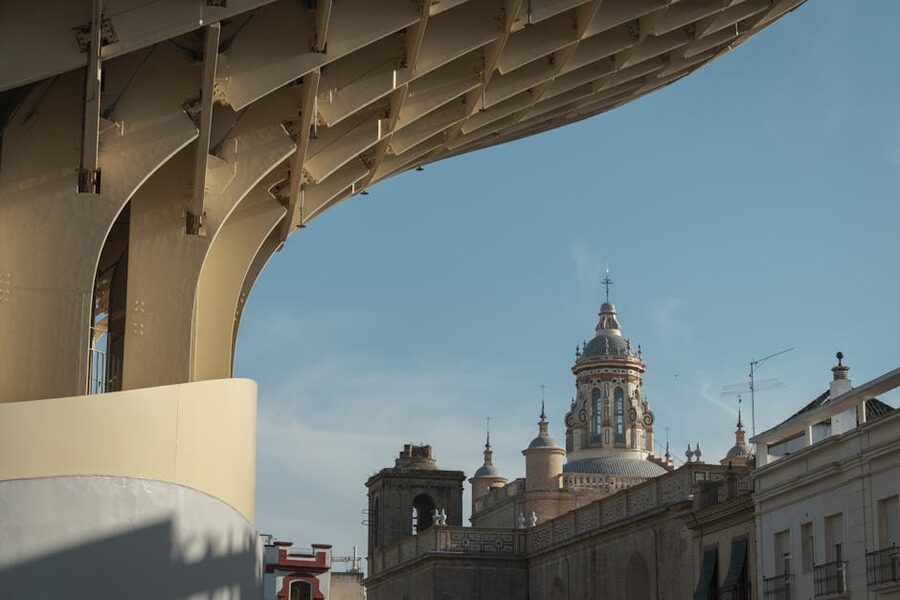
What you can see: the Giralda and Cathedral to the south-west, Santa Cruz rooftops below, the Alcázar gardens in the distance, Triana across the river, Sierra Morena hills on the horizon north. On a clear day you can see about 30km.
The audio-visual experience
Included with every entry ticket is an 8-minute light and sound show that plays 5-6 times a day inside the canopy structure. Kids love it. Projections play on the underside of the wooden curves showing Seville’s history — Roman, Moorish, Christian, modern. It’s nothing mind-blowing as a piece of art, but for €0 extra, it’s a nice break.
Show times are posted at the entrance and are typically 11am, 1pm, 3pm, 5pm, 7pm, and 9pm. If you time your visit right, you catch one show during your walk around.
The market and food options
The Mercado de la Encarnación on the ground level is worth 15 minutes. Working food market — meat, fish, vegetables, cheese stalls. Several small tapas bars where locals eat lunch at zinc counters. Prices are reasonable; this is where locals shop, not where tourists eat.
For families, the best move is to have tapas at the market before going up. Bar Zurbarán at the market does solid tortilla española, ham, and tomato bread. Kids can watch the fish being sold at the adjacent stall while they eat.
Our top picks to book
1. Setas de Sevilla Entry Ticket — $18

This is the one to book for most families. €18 gets you the rooftop walkway, the audio-visual experience, and access to the Antiquarium. Our Setas entry ticket review covers timing, what each level offers, and which time of day works best. Works with kids 3+. Buggies go up in the lift, fine on the walkway.
2. Las Setas Guided Tour + Optional City Tour — $34
If you want to understand the controversial history of the Setas (the project was wildly over budget, took 9 years to build, and was argued about in Seville newspapers for another decade), this guided tour does that. Our guided tour review covers what the city walking tour adds if you take the combo option. Best for 9+ who can engage with architectural history. Under-9s will prefer the entry ticket.
3. Tablao Flamenco Las Setas — $33

If you’re already at the Setas and want to make an evening of it, the attached tablao is a solid option. Our Tablao Flamenco Las Setas review covers what the show is like, how the venue compares to other Seville tablaos, and what’s included. For families wanting a one-stop Setas evening, this is the most efficient option. Best for 7+ kids.
Getting there
The Setas are in the Plaza de la Encarnación — a 10-minute walk north of the Cathedral, 15-minute walk from Plaza Nueva. Central Seville; you won’t need transport.
Metro. Line 1 doesn’t stop directly at the Setas — nearest stops are Nervión (15 min walk) or Puerta de Jerez (12 min walk). Walking is always easier.
Taxi. €5-8 from most central hotels. Useful if you’re coming from the Triana side of the river with a buggy.

Best time to visit
The rooftop walkway is open daily 9:30am to midnight (in summer; slightly shorter hours in winter). Best time slots:
Morning (9:30-11am): cool, empty, best for photos without crowds.
Late afternoon (5-6:30pm): warm light on the structure, good for photos, gets slightly busier.
Sunset (varies by season, 7-9pm): the classic slot. Busy but worth it. The light show plays during this window.
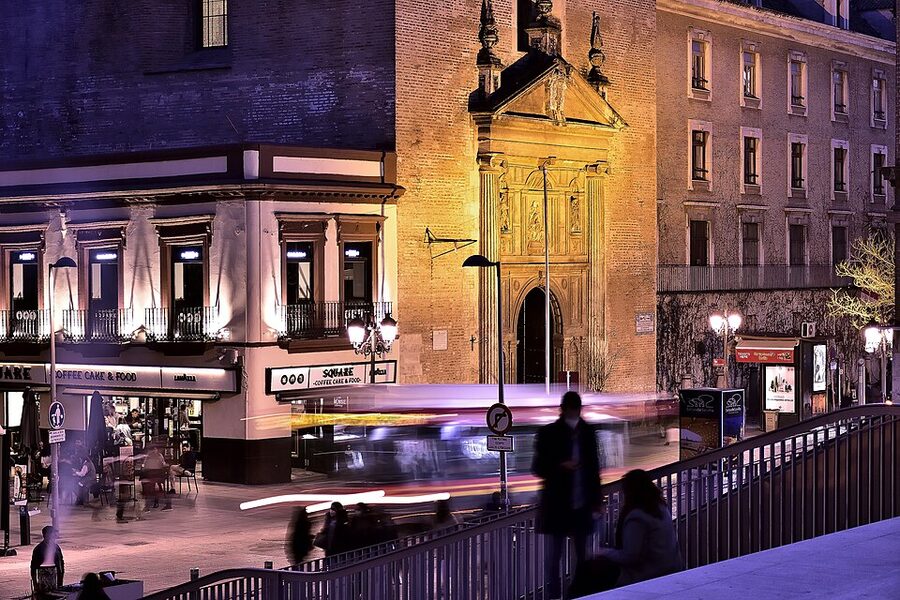
Night (9pm-midnight): the LED lighting is genuinely striking. Fewer visitors than sunset. If you’ve got kids up for a late night, this works.
Avoid the midday summer slot (1-3pm in July-August) — the walkway is exposed to the sun. It’s surprisingly hot even with the parasol’s “cooling effect” for the plaza below.
Practical tips
Book online. Not essential — walk-in tickets are usually available — but saves you 15 minutes in the ticket queue. €18 is the same price online or at the door.
What to bring. Sun hat if you’re doing midday (the rooftop has no shade), water bottle, phone with a camera (the rooftop views are photo-worthy), no tripod (banned).
Buggy/stroller access. Fully accessible. Lift takes buggies up. The walkway is flat enough that even a compact travel buggy is fine. Baby carriers work too.
Toilets. Yes, near the rooftop café. Baby-change facilities. Clean.
Food/drinks. Rooftop café has coffee, juice, beer, ice cream. Prices are standard tourist-spot level (€4 coffee, €3 ice cream). The market below is much better value if you want a real snack.
Photography. Phones allowed everywhere. Drones not. Tripods not.
Dress code. None. It’s an outdoor rooftop; wear whatever’s comfortable.
Combining with other Seville activities
The Setas pairs well with almost anything because it’s short and central. Our favourite flows:
Morning: Setas at 10am, Cathedral visit at 11:30am, lunch in Santa Cruz.
Afternoon: Alcázar 9:30am, lunch, Setas at 5pm, sunset light show.
Evening: daytime activities, Setas at 9pm for light show, dinner in the market below, home by 11pm.
Full day combining river: Guadalquivir cruise at 11am, lunch, Setas late afternoon, Triana tapas dinner.
With flamenco: Setas at 5-6:30pm, dinner nearby, flamenco or Las Setas in-house tablao at 8pm.
Skip the Setas if…
You’ve already done the Giralda climb and got enough “Seville from above” views. The views are different but overlapping; no need to do both unless you’re a view-obsessive.
A short history (for the kids who ask)
The Metropol Parasol was Seville’s big modern-architecture project. The Plaza de la Encarnación used to be an important market square — a covered market stood here from the 16th century. In the 1970s the market was demolished; the plaza became a car park for 30 years while the city argued about what to replace it with.
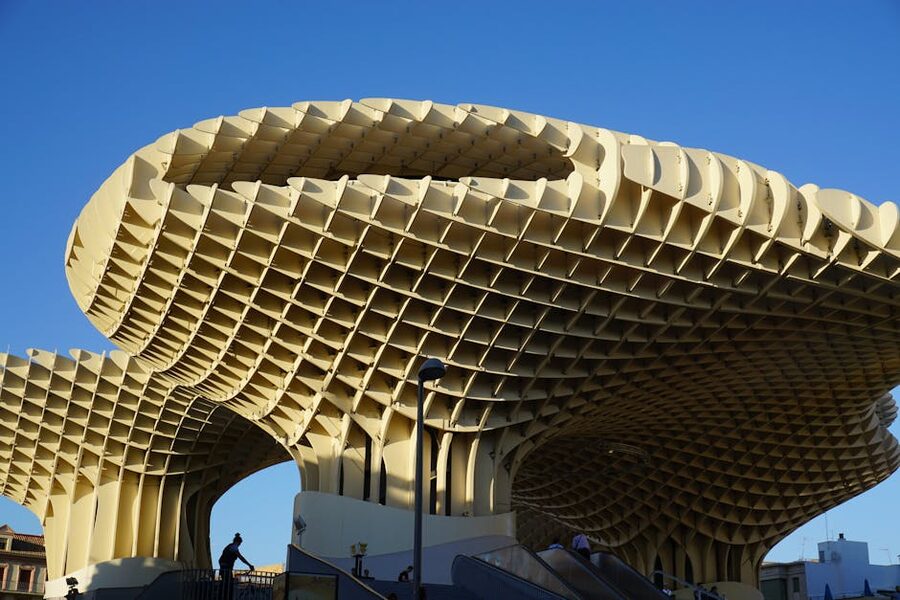
In 2004, the city ran an international architecture competition for a new market and public space. The winning entry was from Berlin-based architect Jürgen Mayer H., whose design was… these giant wooden mushrooms. Construction started 2005. It was supposed to cost €50 million; it ended up costing around €100 million. It was supposed to open in 2007; it opened in 2011.
The project was deeply controversial. Critics thought it was too expensive, too weird, and didn’t fit with Seville’s character. Supporters thought it was bold, modern, and made Seville’s case as a 21st-century city. The nickname “Setas” (mushrooms) started as mockery and became affectionate.
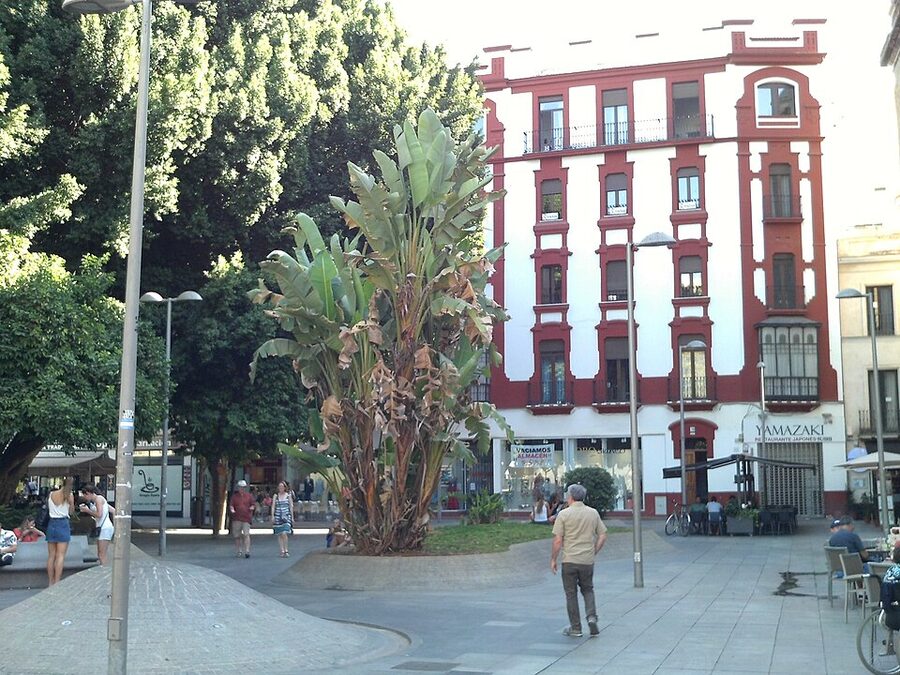
A key reason the project overran: during foundation excavation in 2005, workers found Roman and Moorish ruins about 5 metres below the square. Excavations stopped for two years while archaeologists worked. The ruins are now the Antiquarium on the basement level, open to visitors.
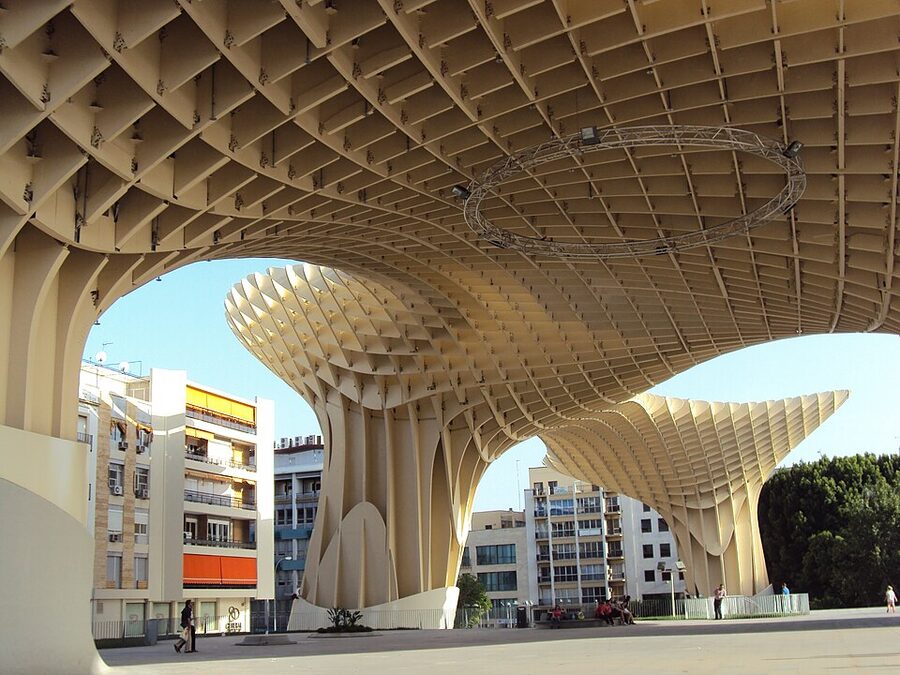
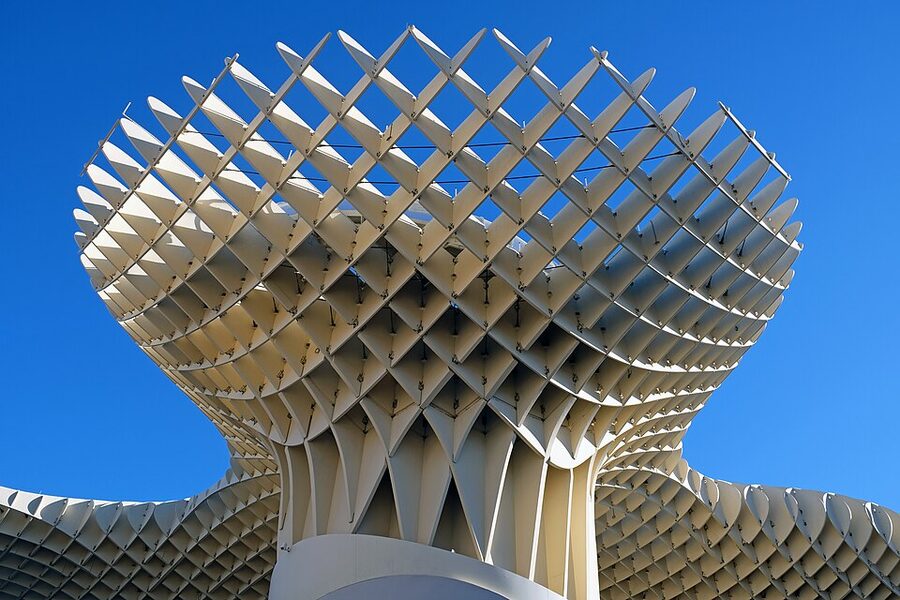
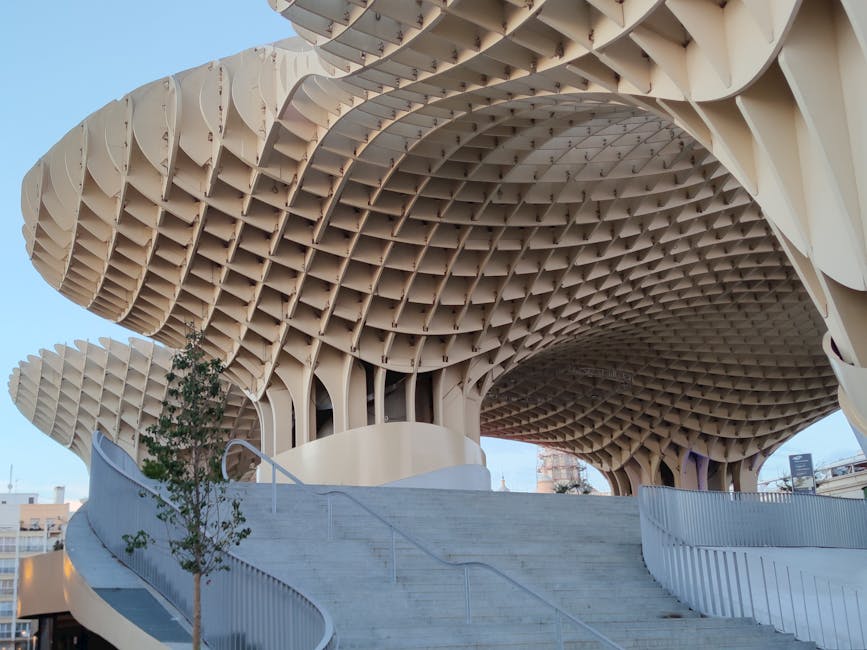
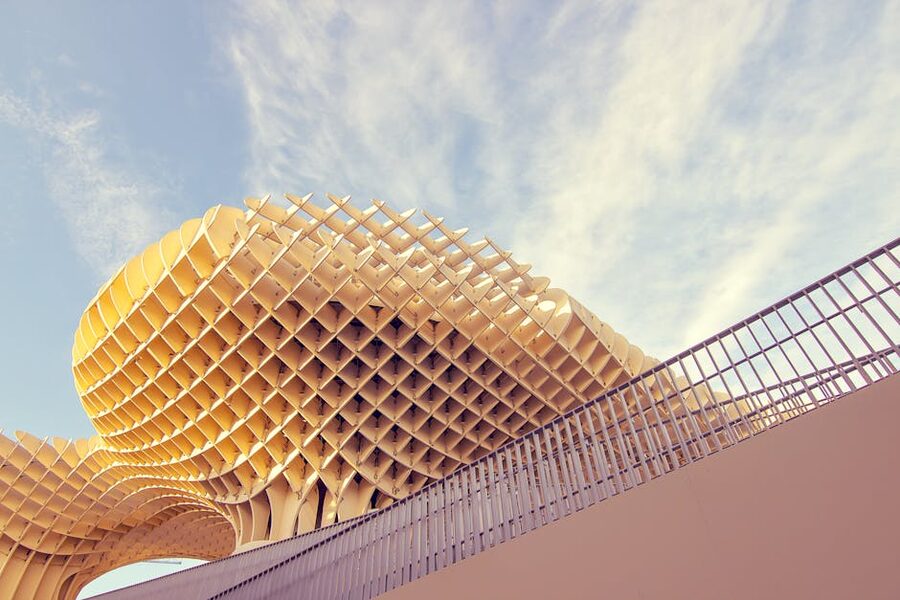
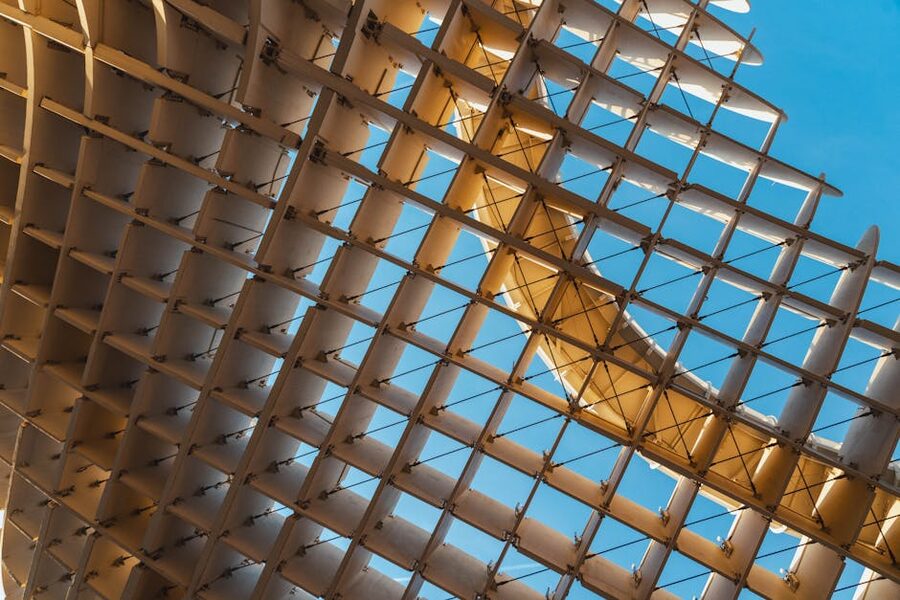
The structure is the largest timber construction in the world by volume — about 3,500 cubic metres of laminated birch. It’s 150 metres long and 28 metres tall at its highest. It holds up through six concrete core pillars. The cellular design is inspired partly by trees, partly by the vaults of Seville Cathedral.
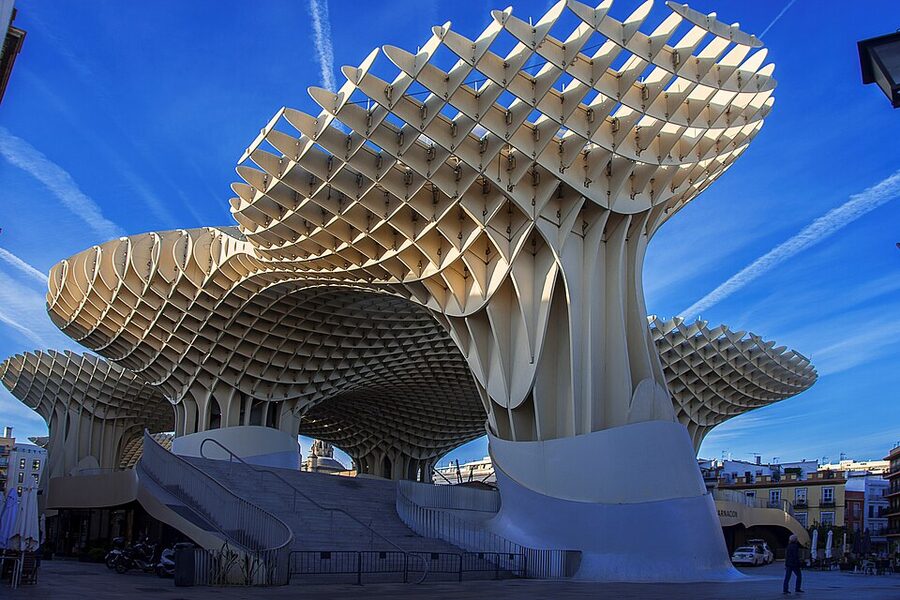
In 2020 the name was officially changed to Las Setas de Sevilla — embracing the popular nickname. Today the rooftop walkway gets about 1 million visitors a year; the market has recovered some of its former importance; the Setas is on every Seville tourist itinerary. The expensive mushroom worked.
Age-by-age guide
Under 3: fine, but skip the audio-visual show (loud soundtrack). Use a buggy; the rooftop walkway is buggy-accessible.
3-6: sweet spot. The walkway feels like an adventure, the light show is exciting, and the visit is short enough to not bore them.
7-10: full engagement. They get the “why is it weird” architecture, the walkway views, and the light show.
11-14: appreciate the design complexity, the views, and the engineering story. The Antiquarium becomes interesting at this age.
Teens: probably won’t gush about it but will enjoy the Instagram photos and the sunset light.
What to prep your kids for
It’s a weird building. This is the right framing. Don’t oversell it as “cathedral-grand” — it’s not. Undersell it and kids are pleasantly surprised.
It’s new. Seville’s main landmarks are 500-1000 years old. This one opened in 2011. Some kids find this a break; some find it “not a proper Spanish thing”. Either reaction is valid.
The walkway is safe. If your child is worried about heights, tell them the path is 2m wide with a 1.5m railing. No drops, no wobbly sections. Toddlers walk it with no stress.
There’s an elevator up. No stairs up or down. Buggies welcome.
Seville from above — how does it compare to the Giralda?
The Giralda and the Setas both give you a rooftop Seville view — but they’re very different experiences. Our honest take:
Giralda: higher (70m vs 28m), older (12th century vs 2011), more historically significant. Panoramic views of the old town. 35 ramps up (no stairs). €14 including the Cathedral.
Setas: lower, newer, more playful. Longer walkable viewpoint (250m path vs a single platform). Lift up (no climbing). €18 including audio-visual show.
If you’ve only got time for one view and your kid is 7+, do the Giralda — it’s part of the Cathedral so you kill two birds. If you’ve got kids 3-6 or want a more relaxed experience, the Setas is better. If you’ve got two days, do both — the views are different enough that it’s not repetitive.
What if it rains?
The rooftop walkway closes in heavy rain (wet wood gets slippery). Light drizzle is fine. The underneath plaza is covered and the Antiquarium is fully indoors, so a partial visit is still possible.
Seville doesn’t rain much. Check the forecast the morning of; if heavy rain is predicted, push the Setas to a drier day (you can rebook tickets up to 24 hours ahead).
Before you book, an honest list
Book the entry ticket if: you’ve got any age of kid and want a flexible short visit. Default pick.
Book the guided tour if: you’ve got kids 9+ who’ll engage with architectural history.
Add the flamenco show if: you want a Setas-evening with built-in entertainment.
Skip if: you’re short on Seville time and would rather spend the €18 on the Alcázar or Cathedral (both also €14-18).
Pair with: anything. This is the most flexible Seville attraction — it fits in any half-day itinerary.
One last tip: the sunset timing makes a real difference. Walk up 30 minutes before sunset, slow-walk the walkway catching the changing light, stay for the sunset itself, come down during the LED light show as it starts. That’s the best Setas experience you can have.
Book the 6:30pm slot, take the lift, walk slowly, stay for sunset. Worth every €18.