
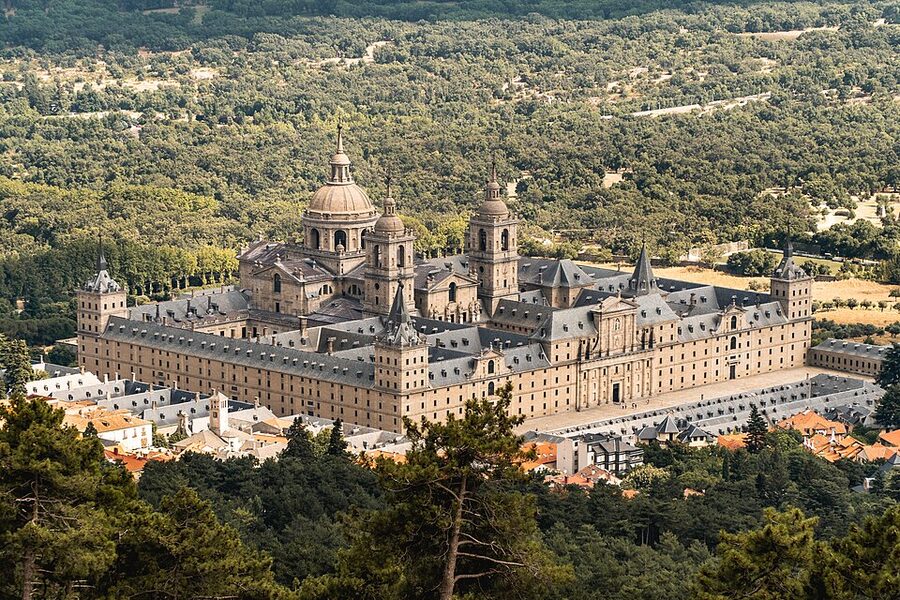
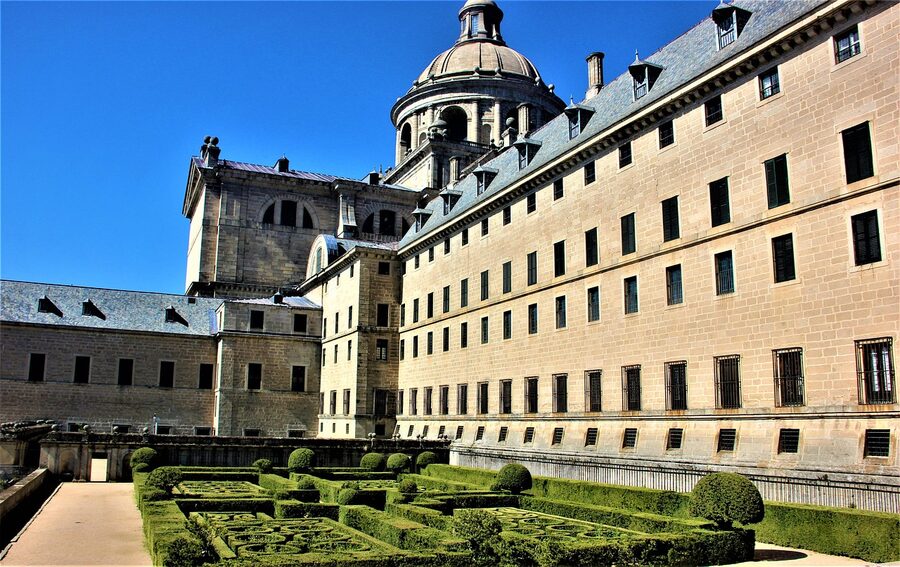
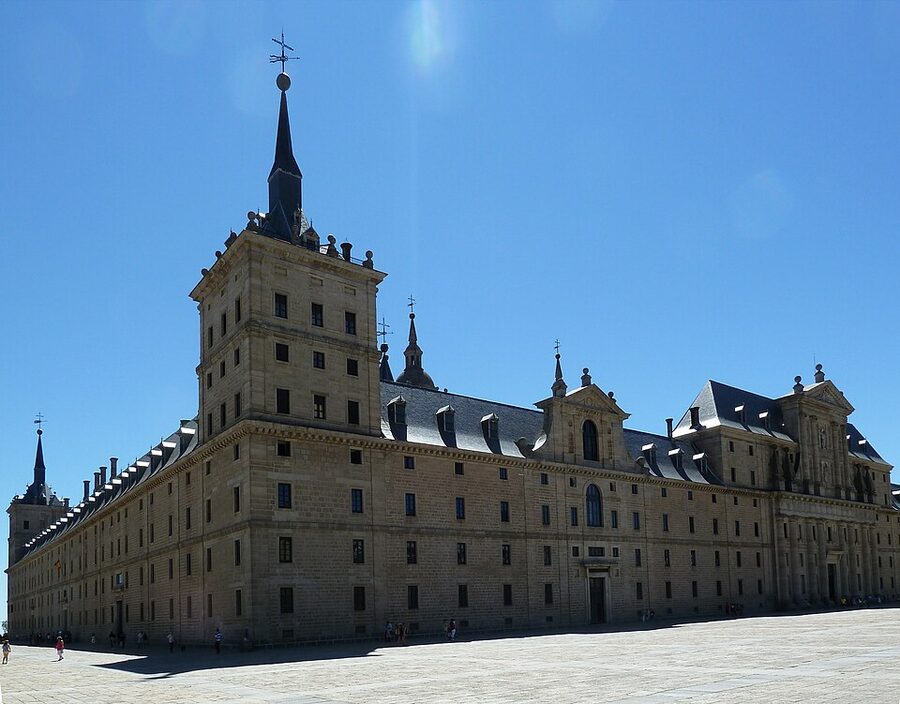
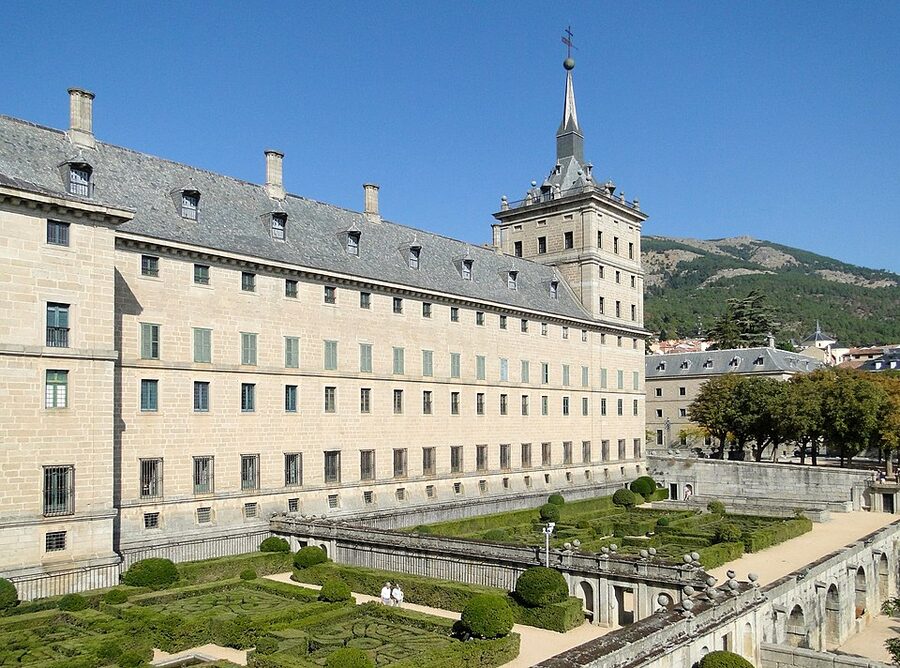
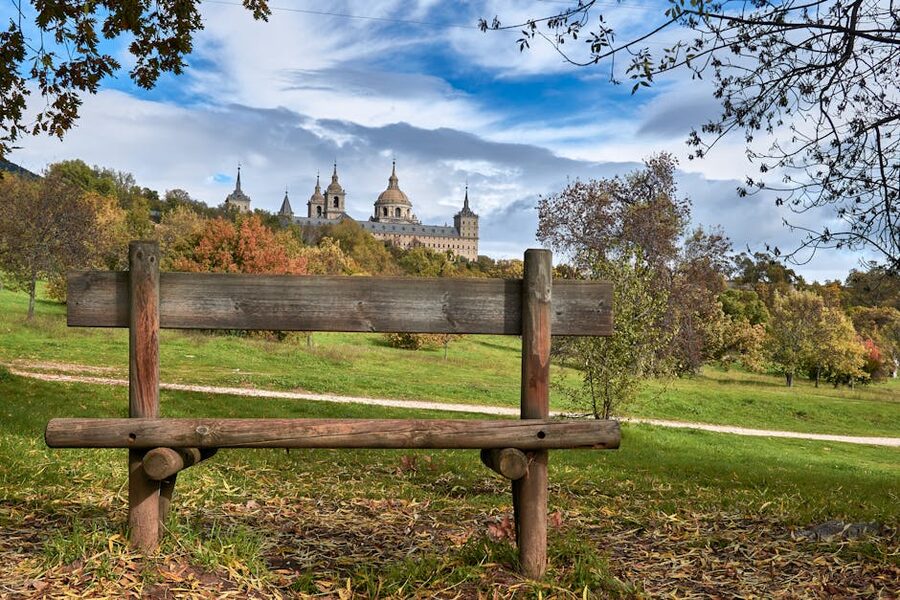
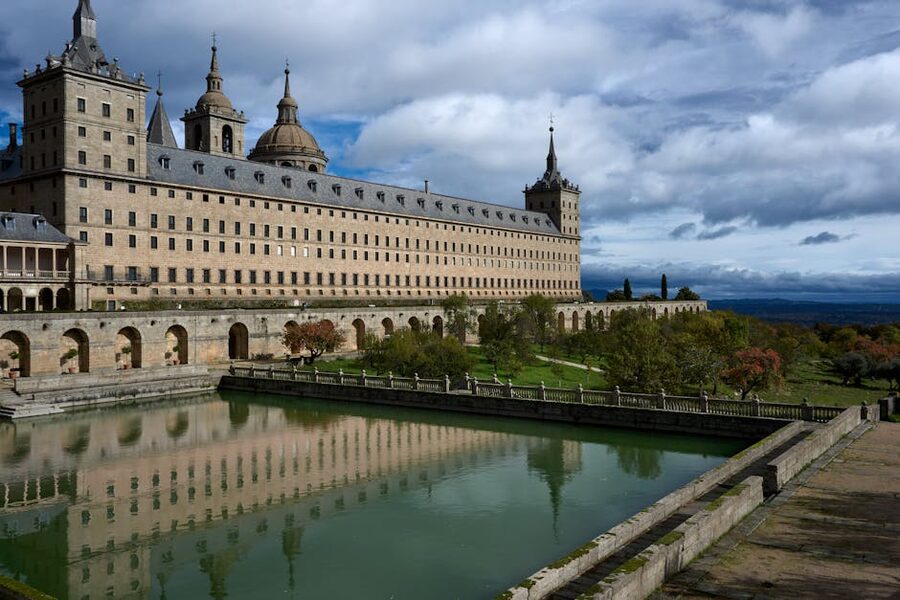
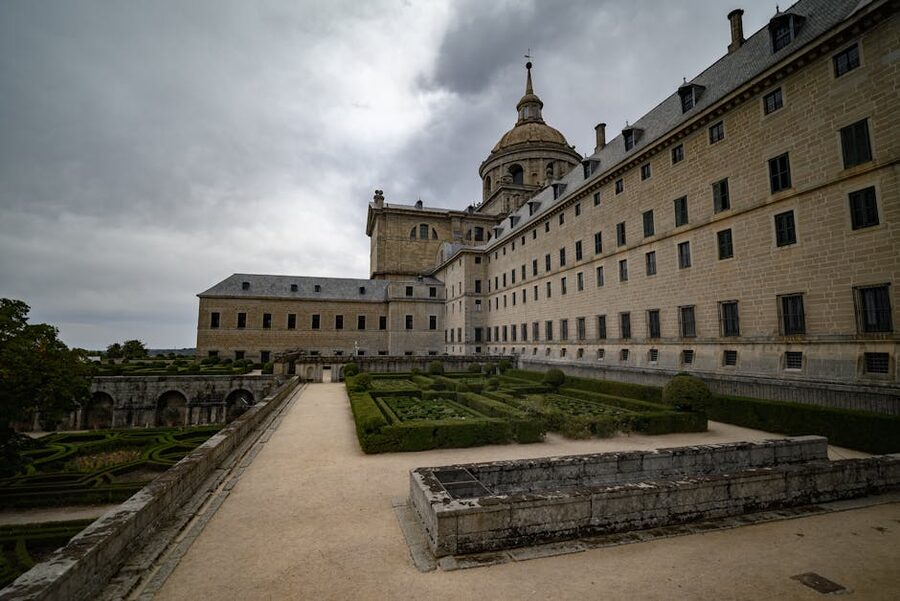
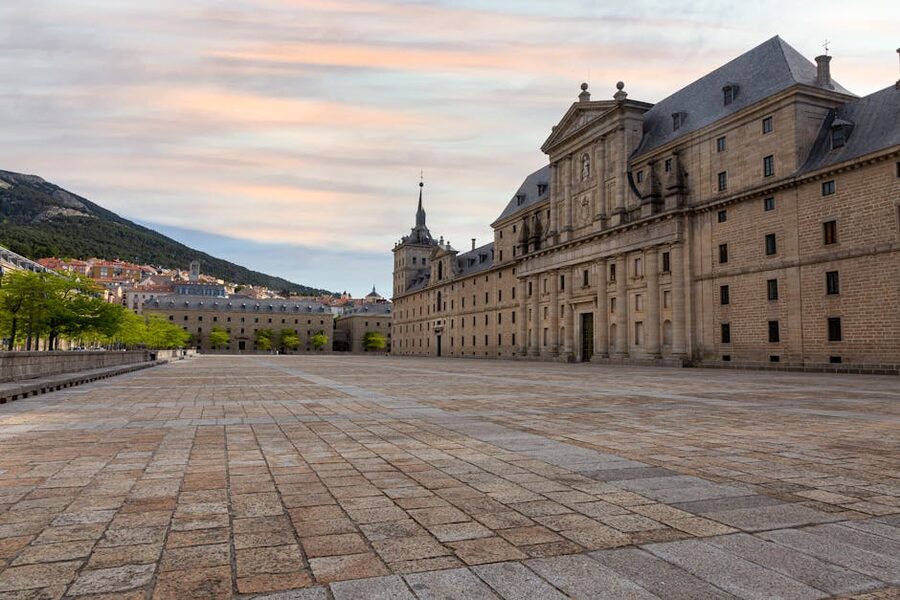
My eight-year-old took one look at El Escorial from the coach window and asked if it was a prison. In fairness, it’s enormous and grey and doesn’t exactly shout “welcome”. Ninety minutes later she was sitting cross-legged on the floor of the Royal Library trying to spot the Latin code hidden in the ceiling frescoes. This is the swing El Escorial does with kids — it starts intimidating and ends as one of the better things you’ve done on a Madrid holiday.
In a Hurry? Our Family Picks
Most popular combo tour: Escorial Monastery + Valley of the Fallen half-day tour ($75) — 5 hours round trip, tickets included, live guide, the easiest way to do both sites without driving.
Well-reviewed alternative: GetYourGuide Escorial + Valley half-day tour ($73) — same itinerary from a different operator, often easier to find availability.
Independent visit: Cercanías train C-3 from Atocha (€4 each way) plus the Royal Site entry ticket ($21) if you’d rather do it at your own pace.
- In a Hurry? Our Family Picks
- Why this day trip is worth the effort
- What actually happens inside El Escorial
- The Royal Library (the big kid win)
- The Basilica (impressive but short)
- The Royal Pantheon (divisive)
- The Kings’ Rooms (quick walk-through)
- The Art Gallery
- The Valley of the Fallen (now Valle de Cuelgamuros)
- Should you take kids here?
- Practical notes at the Valley
- Our top picks to book
- 1. Escorial Monastery + Valley of the Fallen —
- 2. GetYourGuide: Escorial + Valley Half-Day Tour —
- 3. Escorial, Valley & Segovia Full-Day Tour — 5
- Getting there without a tour
- Independent tickets
- Tips from actually doing this
- How El Escorial compares to Madrid’s other day trips
- A bit of history (for the kids who ask)
- What if it rains or snows?
- Pairing with the rest of your Madrid week
- Before you book, an honest checklist
Why this day trip is worth the effort
Most Madrid day trips for families land on the same shortlist: Toledo, Segovia, maybe Ávila. El Escorial is the less-obvious option that almost always ends up being a favourite with kids, for three reasons.
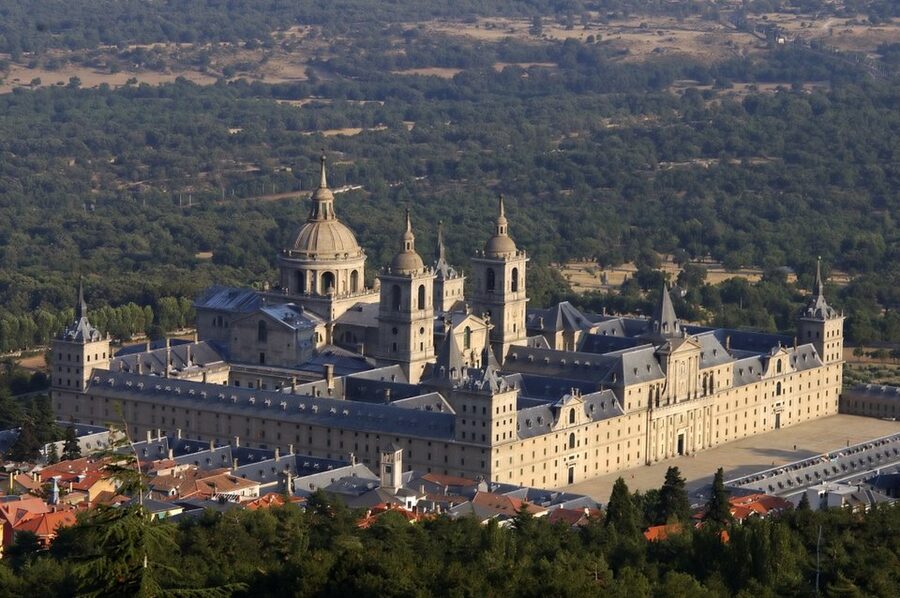
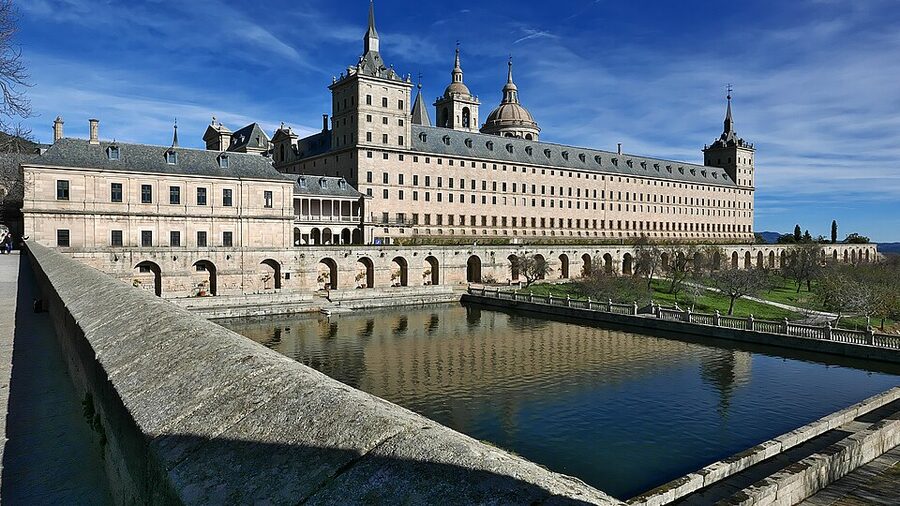
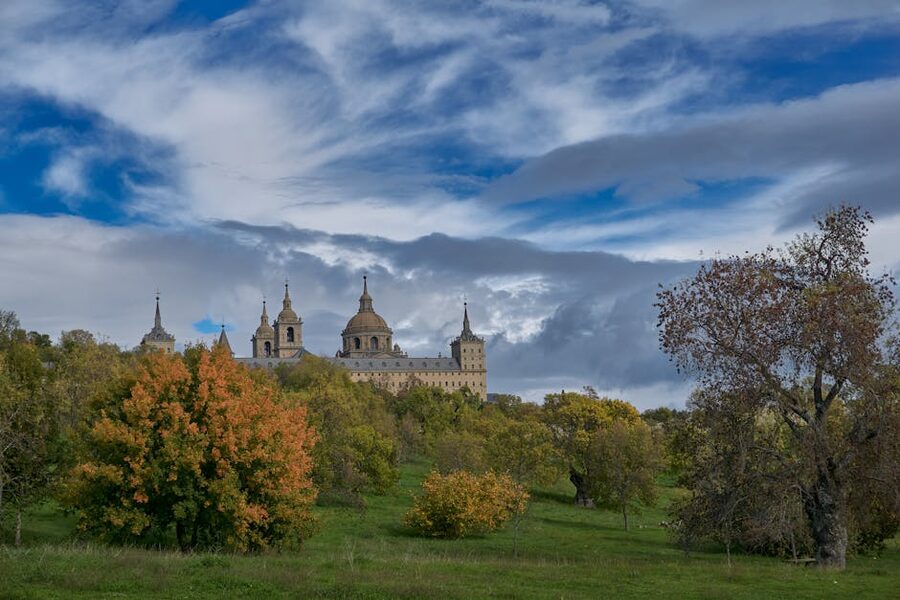
First, the scale is genuinely impressive. El Escorial is one of the biggest Renaissance buildings in Europe, and you can feel it from the moment you walk through the entrance. Kids who have been unimpressed by cathedrals and museums all week will go quiet in the nave of the Basilica.
Second, the Royal Library is basically a treasure cave of old books, globes, and astrolabes, with a painted ceiling full of hidden symbols. It’s the single most kid-friendly room in the whole complex and worth the trip on its own.
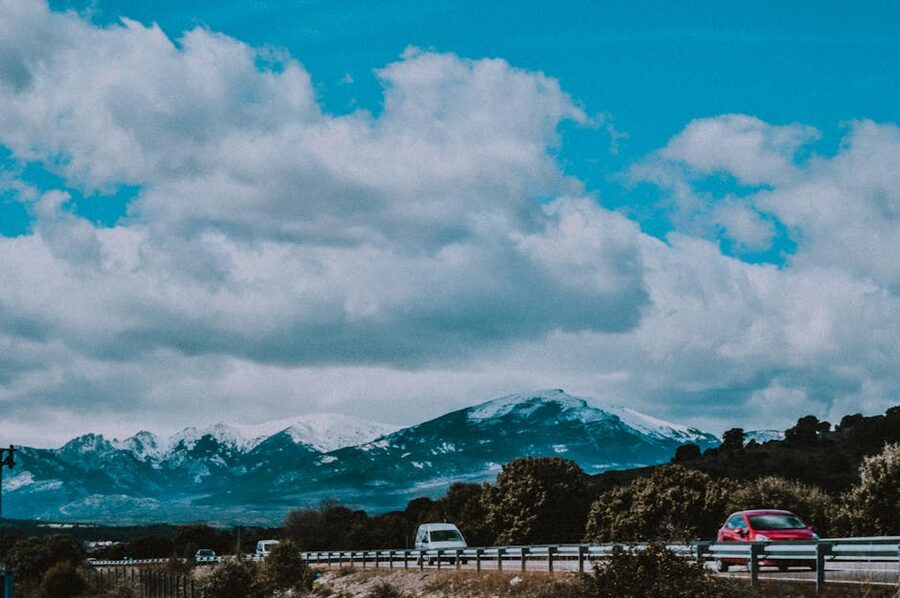
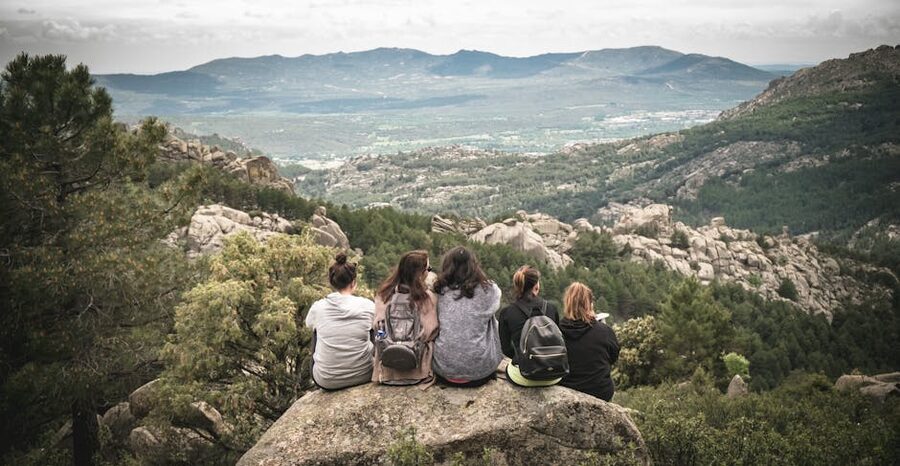
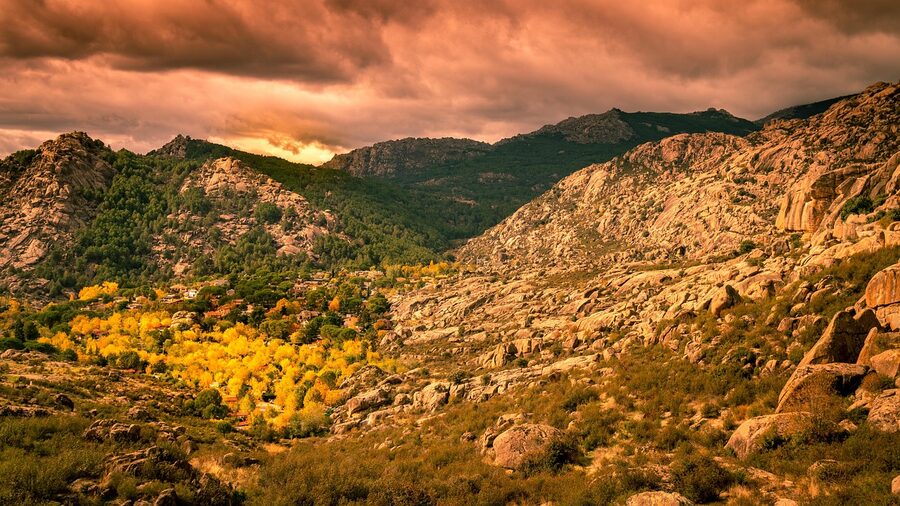
Third, it’s a short drive from Madrid through the Sierra de Guadarrama mountains, so the journey itself is scenic — unlike Toledo, which is mostly a flat hour on the motorway. If your kids get car sick the winding roads can be a problem, but for most families the drive is part of the day’s appeal.
What actually happens inside El Escorial
The monastery complex is huge, but only specific rooms are open to visitors. The standard tour route takes you through about 12 sections in a loop of roughly 90 minutes (longer if your kids linger, which they might in the library). Here’s what you’re walking through:
The Royal Library (the big kid win)
This is the single best room for children. It’s a long barrel-vaulted hall lined with dark wood bookshelves holding roughly 40,000 books — some of them 15th-century manuscripts. In the middle of the room are painted globes from the 1500s (one celestial, one terrestrial, the geography wildly wrong in ways kids find hilarious: California is drawn as an island).
Above your head, the ceiling is covered in frescoes showing the seven liberal arts — Grammar, Rhetoric, Logic, Arithmetic, Music, Geometry, Astronomy. Point these out to older kids and they’ll spend 10 minutes decoding what each panel means. The room is air-conditioned (a rare relief) and no flash photography is allowed, which cuts down the crowd noise.
The Basilica (impressive but short)
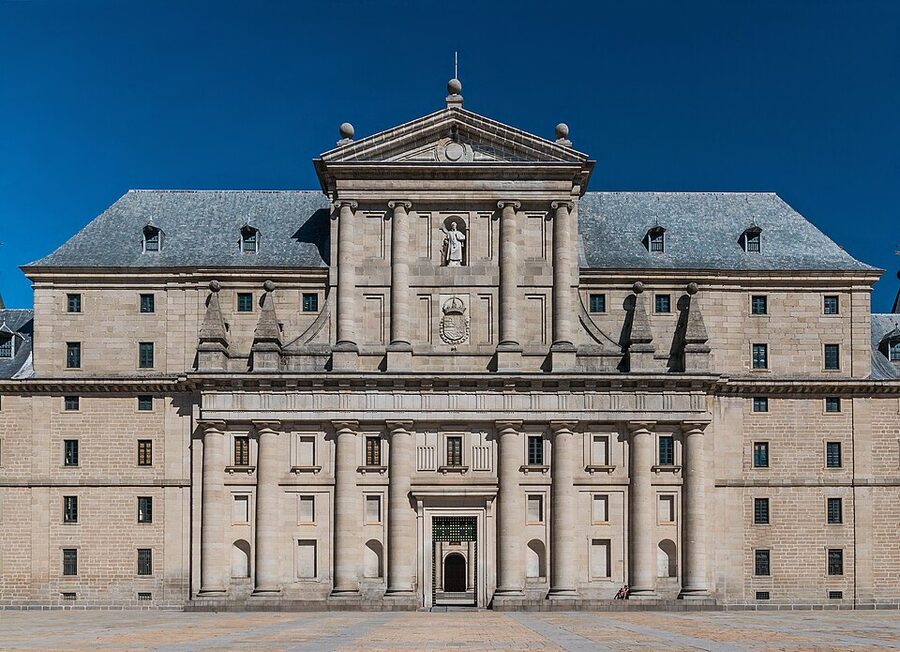
The centrepiece of the whole complex is the Basilica — a huge church with a 92m-high dome, marble columns, and a 30m-high altarpiece in red jasper and gilt bronze. It’s genuinely imposing and kids usually go quiet when they enter. Budget 10-15 minutes here. Much longer and most children will lose interest — it’s basically one big room with a lot to look at but nothing to do.
The Basilica is also free to enter separately if you’re not doing the main monastery tour — but you’d be missing 80% of the good stuff.
The Royal Pantheon (divisive)
This is where most of the Spanish kings from Carlos I onwards are buried. It’s a small octagonal room about three storeys down, with marble tombs stacked in niches. The lighting is dim, the marble is black and gold, and there are about 26 royals in here including Felipe II himself.
Some kids love it — it has an actual “real-life catacomb” vibe and they want to count the tombs. Others find it claustrophobic and weird. If your child is on the sensitive side, skip it; if they’ve just had a fun time at Rome’s catacombs or reading the Harry Potter chapter with the chamber under Gringotts, they’ll eat it up.
There’s a separate Pantheon of the Princes nearby with child royals who died before ascending the throne. This one I’d skip with kids under 10 — the sight of the small tombs is upsetting without much context to balance it.
The Kings’ Rooms (quick walk-through)
Philip II’s private apartments are small, sparse, and surprisingly modest. His actual bedroom — where he died in 1598 — has a direct view down into the Basilica altar so he could attend Mass from bed when he was ill. Kids who like stories find this strange and great; kids who don’t will walk through in five minutes. Budget accordingly.
The Art Gallery
El Escorial has a genuinely world-class collection of paintings — El Greco, Titian, Velázquez, Bosch. For families this is where the “museum fatigue” moment usually hits. A few highlights (the big El Greco altarpiece, the Bosch “Haywain” triptych) are enough; don’t try to do the whole gallery. About 20 minutes here works for most families.
The Valley of the Fallen (now Valle de Cuelgamuros)
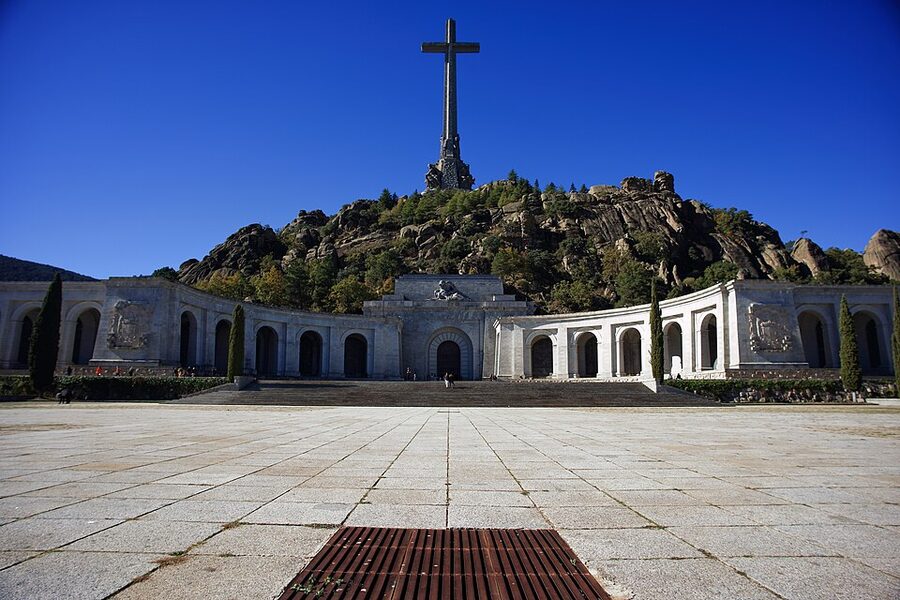
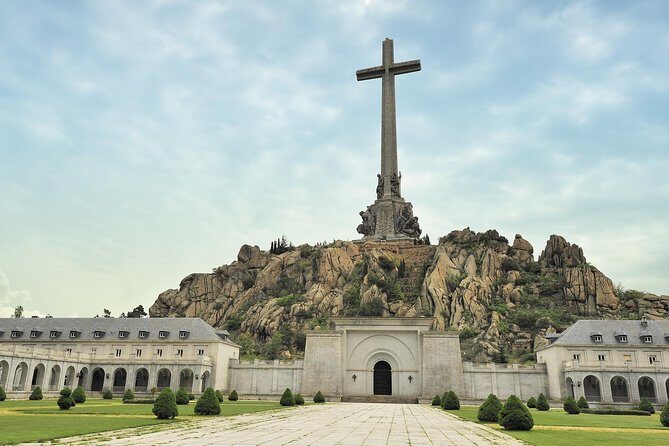
Most El Escorial tours pair the monastery with the Valley of the Fallen, which is 9km further into the mountains. This is the monument that’s often called “the big cross on the hill” — and it is exactly that, but on a scale you have to see to believe.
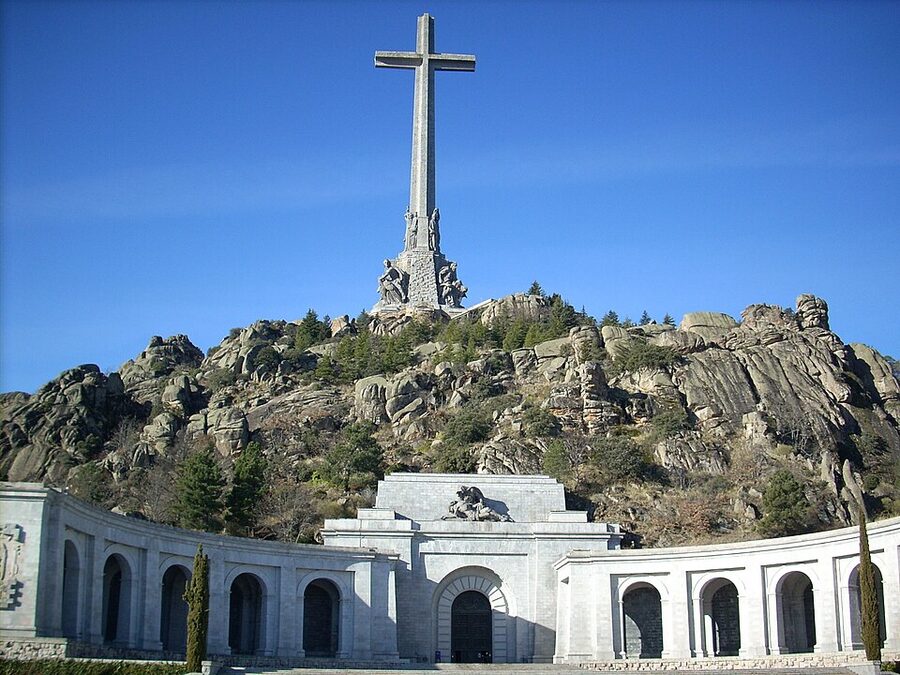
The site was officially renamed Valle de Cuelgamuros in 2023, though most guides still call it Valley of the Fallen and most tour listings use the old name. You’ll hear both. The monument was built between 1940 and 1959 under the Franco dictatorship as a memorial for Spanish Civil War dead — officially for all sides, though in practice it was built by political prisoners and heavily favoured Franco’s Nationalist side.
Franco himself was buried in the basilica when he died in 1975. His remains were exhumed and removed in October 2019 as part of Spain’s ongoing process of confronting the Franco era. The tomb is gone; the basilica remains.
Should you take kids here?
Honest answer: it depends on their age and your comfort explaining the politics.
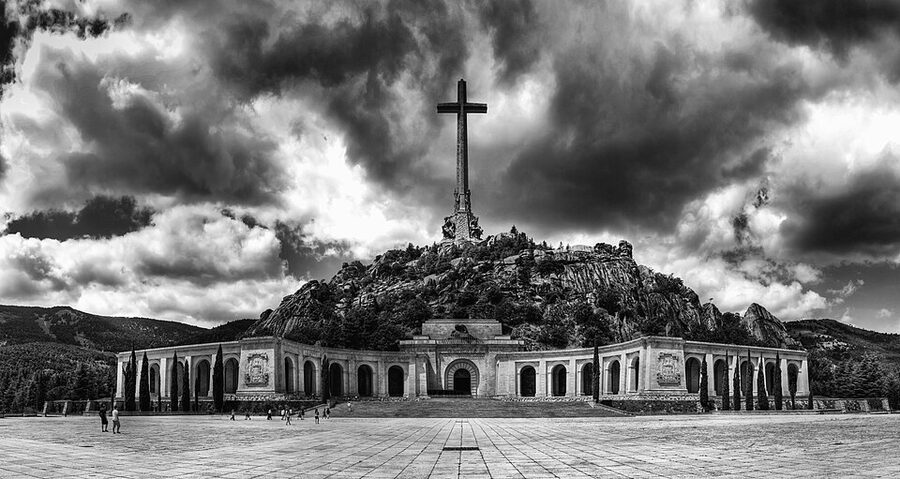
Under 10s: the scale is impressive but the context is hard to explain. We did it with two primary-age children and mostly focused on “this is the biggest cross in the world, it’s carved into a mountain, the church inside is 262 metres long”. That’s enough. They don’t need the Franco history in detail.
10-14s: this is where it gets interesting. Old enough to understand that the Spanish Civil War was a real thing, old enough to handle “this was built by forced labour and was a dictator’s tomb until 2019” without nightmares. The monument becomes genuinely thought-provoking rather than just a big cross.
Teens: full context. Explain the Francoist period, the exhumation, the ongoing debate about what to do with the site. Teens who’ve done modern European history at school will find it striking to be physically in a place that’s still being politically contested.
Most tour guides give a careful, factual overview rather than pushing any political line. If your guide is good, they’ll give you enough to answer your kids’ questions without forcing anyone to pick a side.
Practical notes at the Valley
The basilica visit is about 30-45 minutes. Cameras are allowed but no flash. There’s a small gift shop at the entrance; prices are reasonable but nothing unmissable. Toilets are at the entrance, not inside the basilica.
The road up from the main entry gate to the cross viewpoint is steep and narrow. If you’ve got a hire car, follow the signs carefully — there’s a one-way system and getting it wrong adds 20 minutes of reversing. Organised tours handle all this; this is why many families pick the tour over self-drive.
Our top picks to book
1. Escorial Monastery + Valley of the Fallen — $75
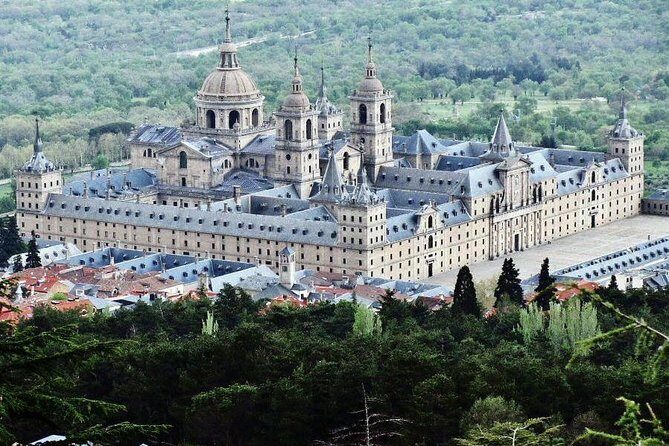
This is the default “do it once, do it right” family tour. It covers both sites, handles transport, includes skip-the-line tickets, and runs with a guide who’ll pitch the history at whatever age your kids are. Our full review of this Escorial and Valley tour has more on the pickup points and what to expect on the coach. Works for ages 7+. Younger kids can manage but the 5-hour format is long.
2. GetYourGuide: Escorial + Valley Half-Day Tour — $73
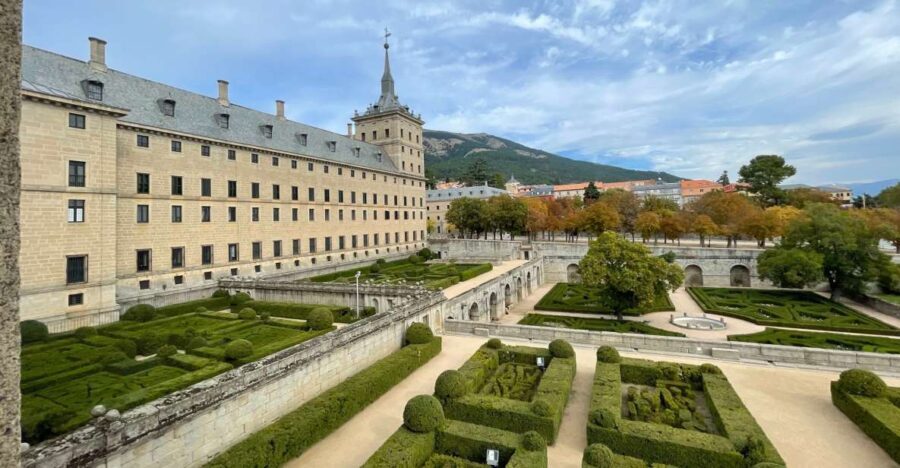
If the main tour is sold out or you’d rather use GetYourGuide for loyalty credits, this is a very capable alternative. Nearly identical content, 4.7 rating, 1,400+ reviews. The review of the GYG tour compares the two side-by-side — mostly identical, small differences in pickup timing and guide style. Pick whichever platform you already have an account with.
3. Escorial, Valley & Segovia Full-Day Tour — $105
Full-day tour, about 9-10 hours door-to-door. Works if you’re only in Madrid for a short trip and want to see several major sites in one day. Our review of the three-site tour is honest about the pace — it’s intense, it’s tiring, it’s good value if you can handle the hours. With kids under 8 we’d skip this and do two separate trips instead.
Getting there without a tour
If you’d rather do it independently, the two sensible options are train or driving:
Cercanías train C-3 — from Atocha, Sol, Nuevos Ministerios or Chamartín stations in central Madrid. Get off at El Escorial station, then a short local bus or 20-minute walk uphill to the monastery. Total journey from central Madrid is about 1 hour 15 minutes. Tickets are about €4 each way; kids under 4 are free, 4-13 pay half. The train runs every 20-30 minutes during the day.
Driving — about 50 minutes on a clear day via the A-6 and M-505. Parking at El Escorial is easy; there’s a paid lot (€2/hour, about €8 for a full day) next to the monastery. The only catch is the Valley of the Fallen — you need a separate entry ticket for the site gate and the road up to the cross viewpoint is one-way and steep.
If you’re splitting the day, do El Escorial first (mornings are better for the monastery — fewer crowds, better light for photos) and Valley of the Fallen second.
Independent tickets
You can buy the monastery entry ticket at the door (€14 adult, €6 kids 5-16) or online at the official site. Tickets for the Valley of the Fallen are sold separately at its own entrance (€9 adult, €4 kids). If you’re doing both, that’s roughly €46 for two adults and two kids — not much cheaper than the organised tour once you factor in transport, so do the maths before you commit to going solo.
Tips from actually doing this
Go on a weekday if you can. Saturdays are the busiest day by far — locals from Madrid drive up for lunch in San Lorenzo and mix with the tour groups. A Tuesday or Wednesday visit cuts the crowds roughly in half.
Pack layers. El Escorial is at 1,000m altitude and the monastery interior is genuinely cold even in summer. The Basilica and Pantheon sections can feel like 15°C when outside is 30°C. A cardigan or hoodie for each kid is worth packing.
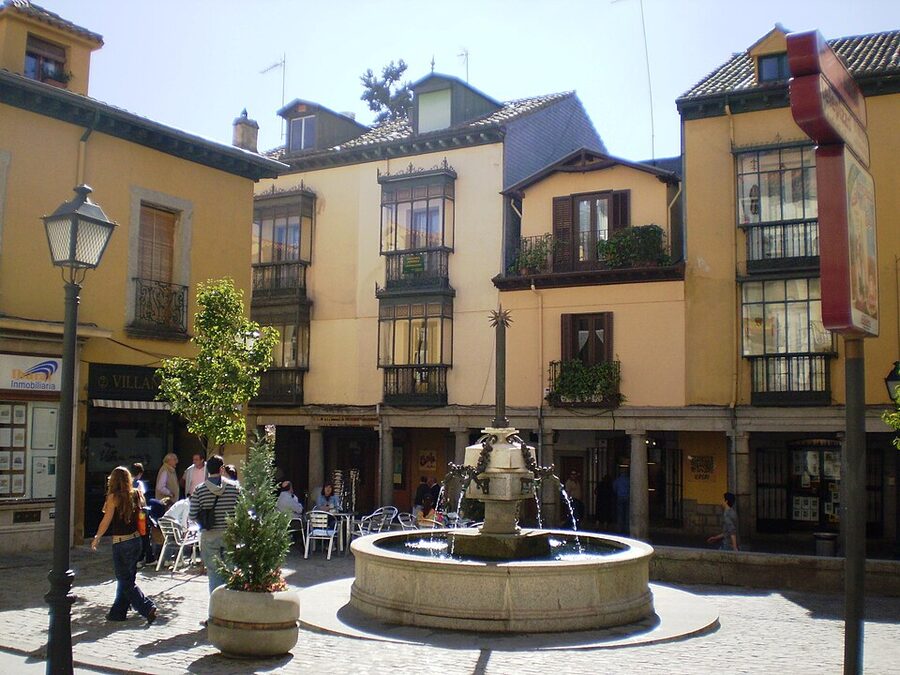
Lunch in San Lorenzo de El Escorial. The town around the monastery is lovely and has decent mid-range restaurants. We ate at Restaurante Charolés (Spanish, kid-friendly, classic decor) and the kids had the cocido madrileño, which is basically a stew with meatballs — big hit. There’s a nice plaza for post-lunch ice cream.
Skip the audio guide with kids. We tried it once and the audio content was aimed at adults with a serious history interest. The guided tour version is much more age-flexible, and if you’re on a self-paced visit, a quick pre-trip read on Wikipedia with your 8-year-old tells them more useful stuff than the audio guide will.
Buggy access. Most of the monastery route is step-free but the Pantheon of the Kings is down a staircase. You can leave the buggy at the cloister entrance; staff are generally helpful. At the Valley of the Fallen the basilica has a ramp access.
Toilets. Multiple, clean, baby-change facilities in the main monastery. At the Valley of the Fallen they’re at the entry gate — before you go into the basilica. Inside the basilica itself there are none, so toilet break kids before they go in.
Food inside. There’s a small café at the monastery and a small snack kiosk at the Valley. Both are fine but overpriced. Bring a packed lunch and snacks if you can.
How El Escorial compares to Madrid’s other day trips
If you’ve got Madrid time to fill and are choosing between the big three day trips, here’s our honest take based on doing all of them with kids.
Toledo is the most photogenic — medieval walls, narrow lanes, a castle, a cathedral, knights’ swords in every other shop window. It’s the obvious winner for pure visual appeal, and the train is fast (30 minutes). If you’ve only got one day trip, pick Toledo.
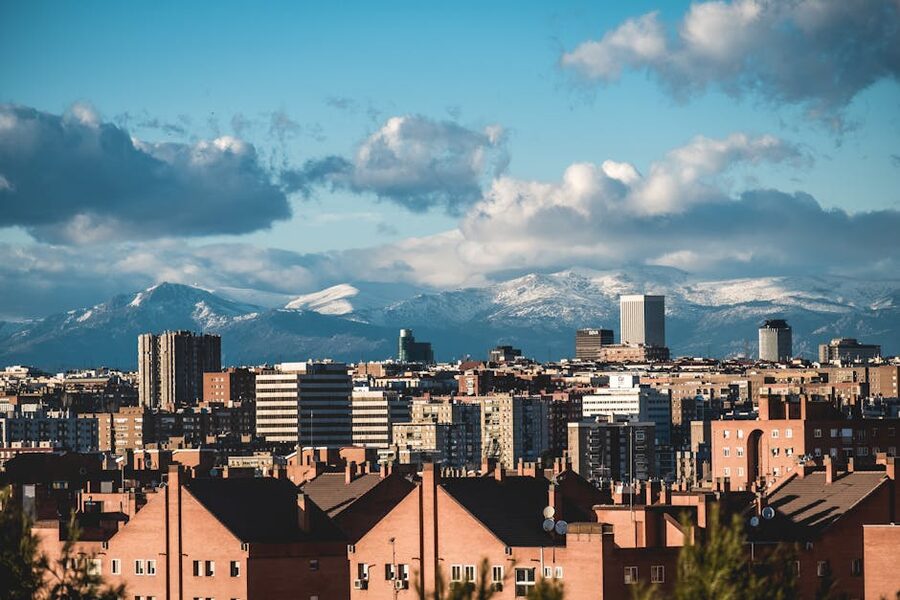
Segovia (and Ávila) has the Roman aqueduct, a storybook castle (the Alcázar said to inspire Disney), and good food. It’s a close second for families with kids under 10 — kids are easily impressed by the aqueduct.
El Escorial is the historical-depth option. Smaller visual wow than Toledo or Segovia, but more interesting if your kids are 8+ and enjoy “how did they build this?” questions. It also pairs with the Valley of the Fallen for a properly varied day — something neither Toledo nor Segovia does.
A typical Madrid week with two day trips might pair Toledo and Escorial, or Segovia and Escorial. Doing all three in one trip is too much unless your kids are 12+ and unusually patient.
A bit of history (for the kids who ask)
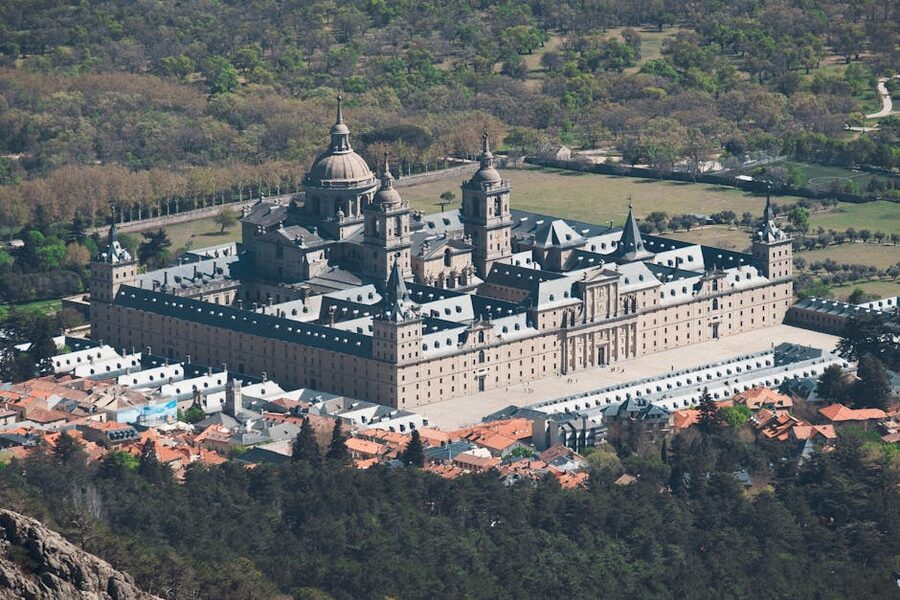
El Escorial was built between 1563 and 1584 by King Philip II of Spain, also known as Felipe II. He ordered it after a battle on 10 August 1557 — the feast day of Saint Lawrence (San Lorenzo) — which his army won against the French. He promised to build a monastery in thanks and dedicated it to the saint; the monastery is said to be designed like a grill, because Saint Lawrence was martyred by being grilled to death. (Kids love this fact. I’ve told it to every child we’ve ever taken there. All of them ask to see the “grill” layout from above.)
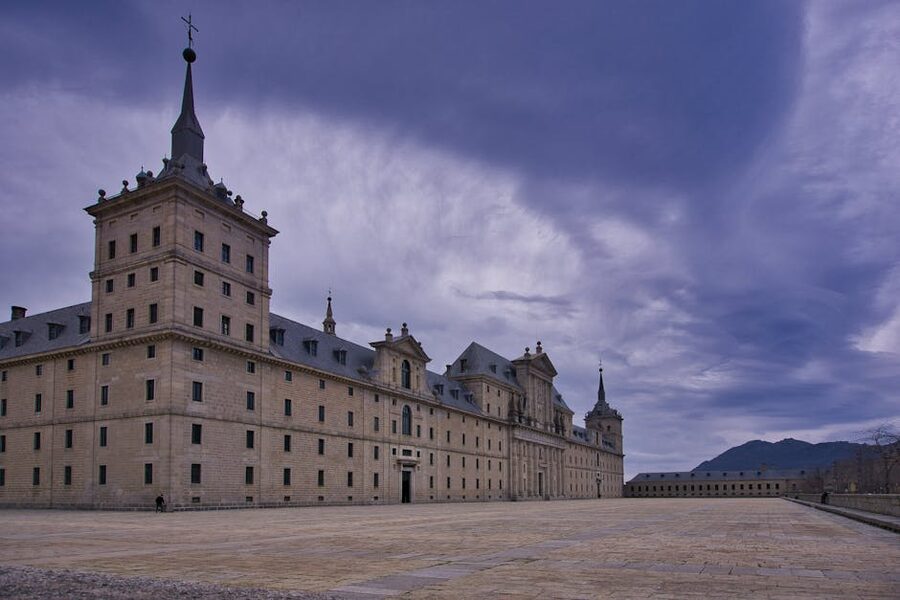
The architect was originally Juan Bautista de Toledo, who worked on St Peter’s Basilica in Rome before Philip called him back to Spain. When Juan Bautista died partway through, his pupil Juan de Herrera finished the job — and the resulting style became known as “Herrerian”, austere and grand in equal measure.
Inside, the monastery combined four functions: Spanish royal palace, monastery for Hieronymite monks, royal mausoleum, and university library. The Royal Library was one of Philip’s passion projects — he personally collected many of the rare manuscripts, including Arabic and Hebrew works that were being destroyed elsewhere in Spain during this period. The library’s preservation is his most durable intellectual legacy.
Since Philip’s death in 1598, almost every Spanish king up to Alfonso XIII has been entombed in the Royal Pantheon. The complex stayed in royal use until the 20th century, became a state site after the Second Spanish Republic, and was declared a UNESCO World Heritage Site in 1984. The Hieronymite monks left in 1837; the monastery is now run by Augustinian Recollects, who still live on-site in the parts you don’t visit.
What if it rains or snows?
El Escorial is at 1,000m elevation and San Lorenzo town is one of the snowier Madrid-area towns in winter. It does snow here (genuinely — not the Madrid city rain-snow, actual proper snow). In winter months (December-February) check the weather before you book a tour. Organised tours run in most conditions; independent visits are harder if the trains are delayed by snow.
The monastery itself is all indoors and the rain doesn’t affect the visit. The Valley of the Fallen basilica is also mostly indoor. The walks between sites on self-drive visits are where you get wet; on an organised tour the coach drops you right at each entrance.
If the forecast looks really bad, consider swapping to a more weather-proof Madrid option — the Prado or Royal Palace are fully indoor alternatives. El Escorial can wait for a better-weather day.
Pairing with the rest of your Madrid week
On the day of the trip itself, don’t plan anything else ambitious. A 5-hour tour leaves you back in central Madrid around 3pm. Kids will need an early dinner and bed — or if they’re old enough to push through, a park run in Retiro to burn off the coach-bound restlessness.
The day before, do something lighter — the Madrid hop-on hop-off bus is a good “scenic but mostly seated” option. The day after, if your kids are still up for it, a zoo day at Casa de Campo is the right energy-level contrast.
If you’ve got a teenager interested in big history, this trip pairs well with a Bernabéu or Atlético Madrid stadium tour on a different day — different flavours of “big Spanish monument”, and the contrast tends to land well with kids at the 12+ mark.
Before you book, an honest checklist
Book the combo tour if: your kids are 8+ and you want both sites covered in half a day. This is the most common and most popular option for good reason.
Go independent by train if: your family travels better at its own pace and your kids handle public transport well. It’s slightly cheaper once you add up the train, tickets, and lunch.
Skip the Valley of the Fallen if: the political context makes you uncomfortable explaining it, or your kids are too young to get anything from the scale. It’s fine to do just El Escorial and spend longer in San Lorenzo town.
Skip El Escorial entirely if: your kids are under 6. They won’t engage with the history, the monastery is long and echoey, and you’ve got Toledo or Segovia as friendlier alternatives.
Add Segovia if: your kids are 10+ and you’ve got a full day to spare. The three-site combo (Escorial + Valley + Segovia) is intense but gets you three UNESCO sites in one go.
One last tip: if you end up in San Lorenzo de El Escorial and want a non-monastery photo, there’s a mirador (viewpoint) called Silla de Felipe II about 3km south of the town. It’s a set of stone seats carved into a rocky outcrop where, local legend says, Philip II sat to watch his monastery being built. Short walk from the road, proper views, and the kind of quirky little bit kids remember when they forget the rest.
Go, take the kids, let them complain about the walking, and watch them decode the library ceiling anyway. Worth the day.